Cladding Repair vs Cladding Replacement: Which Is Best for Commercial Buildings?

Cladding is one of the most important protective elements of any commercial or industrial building. It shields your premises from the weather, protects structural components, and plays a major role in overall appearance.

When cladding begins to deteriorate, property owners often face a key question: Should you invest in cladding repair, or is full cladding replacement the better option?

The answer depends on the condition of the building, long-term asset plans, and budget considerations. So, let’s break down the differences to help commercial property owners, facilities managers, and asset managers make an informed decision.

What Is Commercial Cladding Repair?

Cladding repair focuses on restoring existing panels without removing them entirely.

This may involve:

  • Treating cut-edge corrosion
  • Replacing damaged fixings
  • Repairing small dents or cracks
  • Sealing joints
  • Applying protective coating systems.

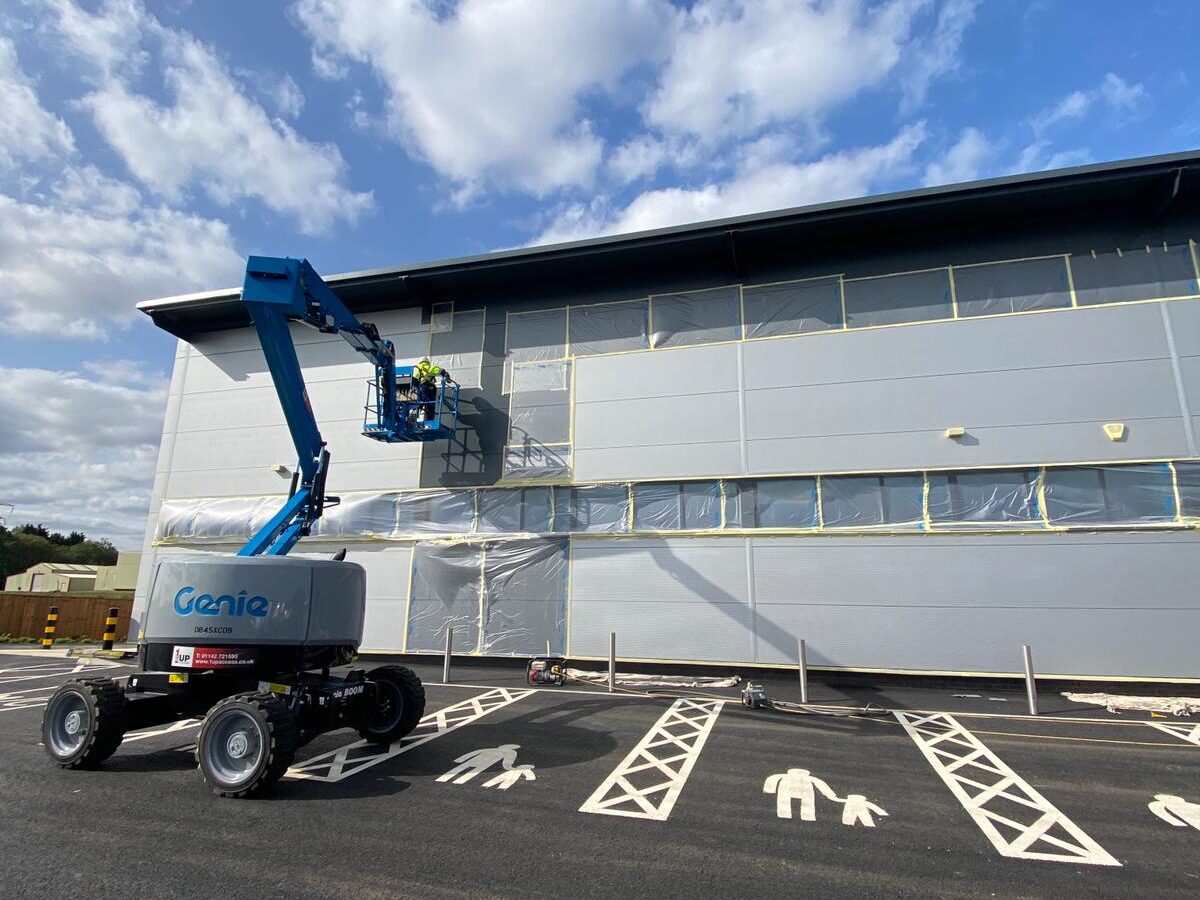
In many cases, cladding spraying forms part of the repair process. Once surfaces are cleaned and treated, a high-performance coating is applied to protect the substrate and restore visual consistency.

For structurally sound panels showing cosmetic or early-stage deterioration, commercial cladding repair can significantly extend lifespan.

What Is Cladding Replacement?

Cladding replacement involves removing existing panels and installing new ones.

This may be necessary if:

  • Structural corrosion is advanced
  • Panels are warped or unstable
  • Water ingress has compromised insulation
  • The building is undergoing full redevelopment.

Replacement is a larger project, often requiring scaffolding, waste removal, new materials, and longer project timelines. And while it can deliver a completely new exterior, it’s also the more disruptive and expensive option.

When Is Cladding Repair the Better Option?

For many commercial buildings, cladding repair is the smarter choice for a number of reasons.

1. The Structure Is Still Sound

If inspections confirm that the substrate and panel structure remain intact, repair and refurbishment are often sufficient. Industrial cladding refurbishment through cleaning, rust treatment, and coating can extend service life by 10 to 15 years or more.

2. Corrosion Is Surface-Level

Surface rust or coating failure does not automatically mean replacement is required. Professional commercial cladding contractors can treat corrosion, stabilise the surface, and apply protective systems that prevent further deterioration.

3. Budget Control Is a Priority

Cladding repair and spraying are typically far more cost-effective than full replacement. For facilities managers working within annual maintenance budgets, repair offers improved asset protection without large capital expenditure.

4. You Want Minimal Disruption

On-site cladding spraying and repair are often completed while the building remains operational. By contrast, replacement can require phased works, access restrictions, and longer completion times.

For warehouses, retail units, and production facilities, operational continuity is often a decisive factor.

When Is Cladding Replacement Necessary?

Although repair is often viable, there are situations where replacement is unavoidable. These include:

Severe Structural Corrosion

If corrosion has penetrated through panels or compromised fixings and supports, repair may not provide a long-term solution.

Persistent Water Ingress

Repeated leaks caused by failed panel systems or insulation breakdown may require partial or full cladding replacement.

Major Refurbishment or Rebranding

Some commercial buildings undergo full redevelopment or aesthetic transformation. In these cases, replacement may align better with the broader asset strategy.

Compliance or Safety Concerns

Where cladding systems no longer meet building regulations or fire safety requirements, replacement may be required to ensure compliance. However, a professional inspection from experienced commercial cladding contractors is essential to determine the correct approach.

Cost Comparison: Cladding Repair vs Cladding Replacement

Cost is often the first consideration when comparing cladding repair vs replacement. Let’s break these down.

Cladding Repair & Spraying

  • Lower upfront cost
  • No need for full panel removal
  • Reduced waste and disposal fees
  • Faster completion.

For many industrial building cladding projects, repair and spraying can cost significantly less than replacement while delivering strong performance outcomes.

Cladding Replacement

  • Higher material costs
  • Labour-intensive installation
  • Longer project timelines
  • Increased disruption.

All in all, if panels are beyond repair, replacement becomes the necessary long-term investment.

Lifespan & Long-Term ROI

A key concern for asset managers is lifecycle performance. For example, professionally executed commercial cladding repair combined with protective coating systems can extend panel life substantially.

And while replacement may offer a longer theoretical lifespan, the return on investment must consider:

  • Capital cost
  • Downtime
  • Energy performance
  • Sustainability targets.

Extending the life of existing cladding reduces waste and embodied carbon, too, supporting ESG goals for commercial property portfolios.

Sustainability Considerations

Industrial cladding refurbishment is often the more sustainable option of the two. By retaining existing panels and applying high-performance protective systems, you avoid:

  • Large amounts of material waste
  • Transportation emissions
  • Manufacturing impact of new panels.

For businesses working towards carbon reduction targets, repair and coating systems align well with environmental objectives.

The Importance of Professional Assessment

The decision between cladding repair and cladding replacement should never be made based on appearance alone.

An experienced commercial specialist will assess:

  • Panel integrity
  • Corrosion depth
  • Joint condition
  • Fixings and structural supports
  • Water ingress history.

This guarantees that the chosen solution protects your building for the long term rather than acting as a temporary fix.

Which Is Best for Your Commercial Building?

In many cases, cladding repair combined with professional cladding spraying offers the best balance of:

  • Cost efficiency
  • Longevity
  • Sustainability
  • Minimal disruption.

Replacement becomes necessary where structural integrity is compromised or regulatory compliance demands it.

The key to deciding and preventing full replacement is early intervention. Addressing deterioration before it becomes structural damage gives you more options and better financial outcomes.

At ACS Coatings, we work with commercial property owners, facilities managers and asset managers across the UK.

Whether you need targeted commercial cladding repair, full industrial cladding refurbishment, or advice on cladding replacement, our team provides honest recommendations based on your building’s condition.

If your commercial cladding is showing signs of corrosion, fading, or damage, get in touch today to arrange a site survey and discover the most cost-effective path forward.
5 Signs Your Commercial or Industrial Building Needs Attention Before Spring

Winter weather can be incredibly harsh on commercial and industrial building exteriors. The combination of heavy rain, freezing temperatures, and wind-driven moisture often exposes vulnerabilities in a property’s envelope that go unnoticed in summer.

On top of this, by the time spring arrives, demand for building maintenance peaks, which often results in longer lead times and higher costs for clients. So, addressing these kinds of issues now is the most effective way to protect your asset and ensure your property remains structurally sound for longer.

Not sure if you need help in this department? Here are five clear signs that your building requires professional attention before the spring season begins.

1. Rust Staining and Cut Edge Corrosion

One of the most common signs of a failing building exterior is the appearance of rust staining. This often manifests as orange or brown streaks appearing beneath fixings, joints, or along the edges of metal cladding panels.

Initially, it may appear to be a cosmetic issue, but this kind of rust indicates that the protective coating has been breached. The result of this is that moisture is able to freely reach the steel substrate. If this is left untreated, it can develop into cut-edge corrosion, where the metal delaminates, and the panel begins to rot from the edge inwards.

Early intervention through professional coatings can stop this process and prevent the need for expensive full-panel replacement.

2. Internal Leaks and Water Ingress

Winter freeze-thaw cycles often cause building materials to expand and contract, which can crack old coatings or loosen fastenings. Primary indicators of these kinds of issues are drips or damp patches on internal walls and ceilings. Either of these could be warnings that your roof or wall system has failed, and even a minor leak can lead to significant damage to stock, machinery, and internal structures.

That’s why investigating roof repairs at the first sign of dampness is essential. Often, a high-performance liquid roof coating can provide a seamless, waterproof barrier that solves the issue without the disruption of a full re-roof.

3. Fading and Peeling Coatings

The appearance of your building is the first thing stakeholders and tenants use to form an opinion. That’s why they need to be at the top of their game. However, if your cladding is fading, peeling, or has a chalky residue when touched, the original factory finish has reached the end of its lifespan.

Unfortunately, once the paint film fails, the cladding is no longer protected from UV rays and pollution. This can lead to untold issues both aesthetically and structurally.

Fortunately, on-site paint spraying is a highly efficient way to restore a large building’s aesthetic and protection. And by using cladding spray painting, you can not only refresh your brand image, but also add another 15 years of life to the panels.

4. Blocked or Overflowing Gutter Systems

Throughout autumn and winter, gutters and downpipes can easily become blocked. If you notice water cascading over the sides of the building during a downpour, the drainage system is failing. This is your sign to act.

This is because overflowing water doesn’t just stay on the outside; it often tracks into the building. Regular industrial building gutter repair and cleaning are therefore vital to prevent water from pooling on the roof, which is a leading cause of corrosion and leaks.

5. Damaged Fixings and Seams

The points where panels meet or are fastened to the frame are the most vulnerable areas of any industrial unit. Over time, washers can perish, and fixings can become loose, creating direct entry points for water. Visible gaps in the seams or loose fasteners should therefore never be ignored as they’re a clear sign of potentially serious issues.

Professional refinishers can perform targeted cladding repairs, including filling dents and scratches and resealing fasteners. This can make sure that the building remains airtight and watertight before the heavier spring rains arrive.

Why Act Before the Spring Rush?

Spring is traditionally one of the busiest times for industrial painting contractors. Business budgets are released, the weather improves, and the result is that lead times for reputable contractors can extend to several months.

However, by addressing maintenance earlier and beating the rush, you can reduce costs because small repairs are significantly cheaper than reactive emergency work. You can also avoid disruption by scheduling work during quieter periods to minimise impact on business operations.

Most importantly, acting now allows you to secure your site survey and project start date before the peak season begins.

At ACS Coatings, we provide a comprehensive range of services to extend the life of your commercial property. From cladding repair and on-site spraying to industrial roof refurbishment, our team delivers professional results with minimal downtime for businesses all over the UK.

And from property managers to landlords, we work with you to identify early signs of wear and provide cost-effective solutions that protect your investment.

Contact ACS Coatings today to schedule a site inspection and beat the spring lead times.

Winter Cladding Issues That Cost Building Owners Thousands (And How to Fix Them)

Winter weather is much more than an inconvenience if you own a commercial or industrial building. It exposes weaknesses in your external cladding and can turn minor issues into expensive problems that cost thousands to fix and take valuable time away from business operations.

The good news? Most winter cladding problems are preventable if they’re caught early and acted on. Here’s what to look for and how to fix it before it costs you serious money.

Cut-edge Corrosion

Cut-edge corrosion is one of the most common and costly winter cladding issues in the UK. It happens when cladding panels are cut during installation, and the protective coating at the edges gets exposed. Cold, wet weather accelerates rust formation at these vulnerable points, and once it starts, it can spread very quickly.

Before you know it, what begins as a small rust spot in autumn can spread several metres along the panel edge by spring. This happens because the rust works its way under the coating, causing blistering and delamination that extends far beyond the original damage. Left unchecked, you’re looking at full panel replacement rather than a simple repair.

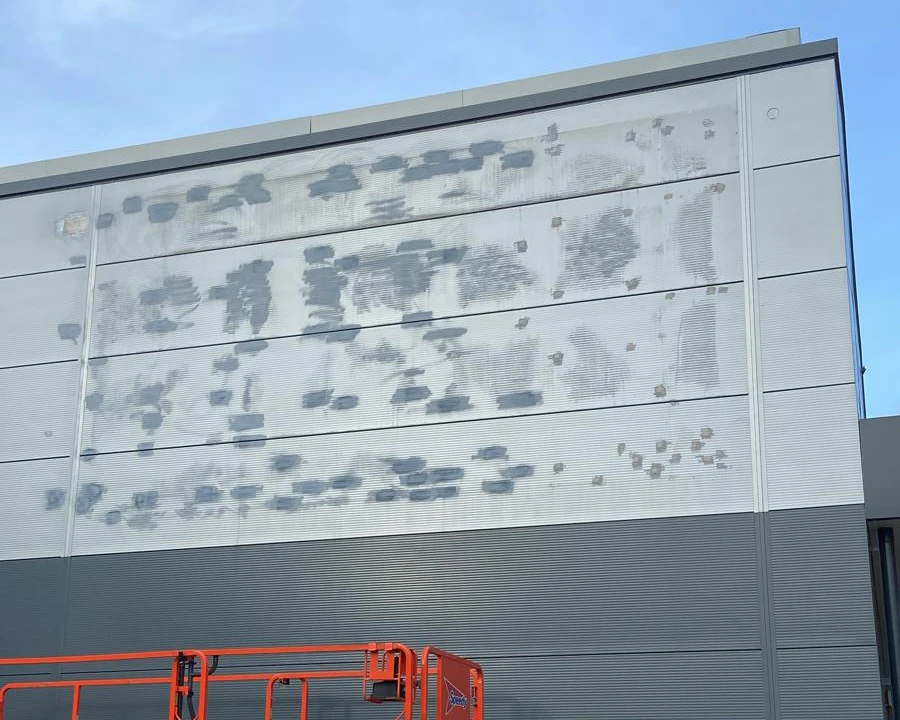
Professional cut-edge corrosion treatment involves cleaning affected areas, removing active corrosion, and applying protective coating systems. This approach costs a fraction of panel replacement and can extend your cladding’s lifespan by 15 years or more.

Water Ingress Behind Panels

Winter rainfall finds its way into the smallest gaps. As such, damaged sealants, loose fasteners, and compromised panel joints all provide entry points for water during persistent rain. And unfortunately, once water gets behind your cladding panels, it becomes trapped against the building structure.

In winter, this is more of an issue because drying times can be slow. So, moisture stays in contact with metal components and insulation for weeks at a time, which causes rust on the reverse side of panels and damages insulation performance. This often leads to internal water damage that’s far more expensive to fix than the original cladding issue.

Early warning signs include staining on internal walls, damp patches during heavy rain, and visible water trails on the exterior. If you’re seeing any of these, on-site repairs should be your priority. Fixing water ingress early prevents structural damage and avoids the need for full panel replacement.

Fading and Failing Coatings

UV exposure during summer weakens cladding coatings, but winter weather often finishes the job. Rain penetrates tiny cracks in older coatings, frost causes expansion, and the cycle repeats until large sections start peeling away.

That’s why faded coatings aren’t just an aesthetic problem. Once the protective layer fails, the substrate beneath becomes vulnerable to corrosion and water damage. From here, what starts as discolouration can become a structural, expensive issue.

Cladding spraying addresses this before replacement becomes necessary. Professional spray coating restores the protective barrier and refreshes your building’s appearance at up to 80% less cost than panel replacement. Modern coating systems also offer superior UV and weather resistance compared to original finishes, providing better long-term protection.

Blocked Gutters and Drainage

Winter leaves, debris, and standing water in blocked gutters cause overflow that runs directly down cladding panels. This constant exposure accelerates all the problems mentioned above, particularly around fixing points and panel joints.

Blocked drainage also increases the load on gutter systems, causing sagging and joint failures that lead to more serious water ingress issues. Regular gutter maintenance and replacement prevent these cascading problems and protect your cladding investment.

Rust Staining and Surface Contamination

Rust staining appears on cladding for two reasons:

  1. Corrosion from the panels themselves.
  2. Rust run-off from other building elements like fixings, flashings, and adjacent metalwork.

Winter rain spreads these stains across large areas, which makes them highly visible and difficult to remove without professional help.

Surface contamination from algae, moss, and atmospheric pollution also becomes more apparent in winter. These hold moisture against the cladding surface, accelerating deterioration and creating an unprofessional appearance that affects your property’s value.

Commercial pressure washing removes surface contamination and prepares cladding for protective treatments. Combined with rust treatment and protective coatings, it can effectively restore appearance while preventing future damage.

How On-Site Spraying Prevents Replacement

Many building owners assume that weathered or damaged cladding means replacement is inevitable. That’s rarely true. Because on-site paint spraying can restore cladding to better-than-new condition at a fraction of replacement cost.

The process involves thorough cleaning, surface preparation, repair of any damage, and application of high-performance coating systems. These modern coatings bond with existing panels to create a protective barrier that resists UV damage, prevents water ingress, and stops corrosion before it starts.

Professional cladding spraying also avoids the disruption and downtime associated with replacement. Most buildings remain operational throughout the work, with projects completed in weeks rather than months.

So, for businesses that can’t afford extended closures, spraying becomes the obvious choice.

Why Act Now

Warmer months bring longer lead times for maintenance work as every property owner tries to address winter damage at once. Contractors get booked up, costs increase, and you’re left waiting for availability while problems continue to get worse.

As a result, addressing cladding issues earlier means you avoid the busy period, get better contractor availability, and prevent minor problems from becoming major expenses. It also means your building looks its best when the weather improves, and business activity picks up.

Don’t wait for small issues to become expensive problems. A professional cladding inspection identifies vulnerabilities before they cause serious damage and gives you a clear plan for cost-effective maintenance.

At ACS Coatings, we provide free winter cladding inspections for commercial and industrial properties. Our experienced team will assess your building, identify any issues, and recommend the most cost-effective solutions to protect your investment.

Get a quote or contact ACS Coatings on 0800 987 5886 to beat the spring lead times.

Can Cladding Be Repaired?

Yes, cladding can be repaired from weather damage, corrosion and general wear and tear, all of which are common for buildings in the UK. Incredibly effective, cladding repair gives business owners a way to restore panels without the cost, downtime, and stress of cladding replacements.

Cladding repair typically starts with the identification of damage before an application of protective finishes like spraying or coating. These can be used to future-proof cracked coatings, rusted or dented panels, peeled paint, and more. When the correct materials and processes are implemented, repair work can be carried out with minimal disruption to business operations.

At ACS Coatings, we have years of experience with cladding repair in commercial and industrial premises. Assessing each property based on its unique set of requirements, we work hard to protect the integrity of your building with a comprehensive service that minimises downtime and limits business disruption. 

In this article, we’ll explore how the cladding repair process works, and why cladding spraying is key to getting long-lasting results for your commercial or industrial property.

The Cladding Repair Process

Cladding Inspection

Every cladding repair should begin with a detailed site inspection. Here, experts will assess the extent of the damage and identify affected areas on roofs, exterior walls, or both. 

Once this information is confirmed, a suitable cladding repair method will be recommended. This may be cladding patching, replacement of panels, or other forms of restoration. 

Surface Cleaning and Prep

Before any cladding repair work starts, all panels must be properly cleaned by experienced specialists. This can be achieved with industrial-grade pressure washing equipment and products tailored to the property and materials at play.

Proper cleaning removes the most common cladding contaminants like dirt and algae, among others, and loose coatings are also removed to prepare the area effectively.

Repairs or Replacements

If cladding panels are dented, cracked, or seriously corroded, repairs or replacements will be needed. Commercial fillers are often used for repairs while large sections may need to be replaced entirely.

The approach for cladding repair or replacement will depend on the material type, location, and damage involved. The goal should always be to minimise disruption and reduce costs wherever possible.

Sealing and Priming 

Once repairs or replacement work is completed, joints and edges must be sealed properly, and fasteners should be put in place to prevent future water ingress. 

Where required, primer coats may be applied to encourage adequate adhesion and protect the underlying surface of the cladding. This is particularly important when it comes to industrial roof cladding repair, which is more susceptible to allowing the elements into a building.

Spraying and Finishing

The final step of the cladding repair process is the spraying of repaired or replaced panels to match the colour and finish of the rest of the building. 

Doing this means that your business has a seamless visual aesthetic and ensures that repairs blend in effectively. Leaving no visible trace of the work carried out, cladding spraying can also go a long way to fortifying your panels against damage in the future.

Is Colour Matching Often an Issue?

At ACS Coatings, we provide a full colour-matching service with all of our cladding repair or cladding spraying services. Why? Because we understand that consistency is crucial for business branding and that business owners are rightfully concerned about cladding repairs or replacements, especially when it’s only partial. 

That’s why we place great emphasis on our colour matching capabilities and offer options for all materials and finishes for our clients.

To achieve the best colour match possible, we use professional colour matching apparatus, and we work directly with leading paint suppliers to source or mix the exact shade. We also consider existing weathering of the cladding, so the new finish aligns perfectly with it.

For even more peace of mind, before any cladding repair or spraying is started, our experts can test sample patches for visual accuracy and seek your approval before starting any work. This means you can be confident the final result will look cohesive and professional. 

The Importance of Spraying

Most of the time, spraying is a crucial aspect of the cladding repair process and helps protect your building for longer. It’s carried out after cladding repair has taken place and acts as a sealant and reinforcement that not only looks great but protects your building against adverse weather conditions and corrosion. 

Cladding spray coatings are also designed to bond with original and newly repaired surfaces, forming a protective barrier to tackle water and UV rays from the weather. This helps your building look the part and perform for longer, reducing the risk of future damage on walls and roofing areas. 

All in all, as well as robust performance and protection, cladding spraying delivers consistency of colour by covering joints, fillers, and repaired patches uniformly. 

At ACS Coatings, we work with property owners, facilities managers, and retailers across the country with a fast and effective cladding repair service. With the highest quality and minimal business downtime, our team is here to help you with industrial roof cladding repair, wall panel renovation, or entire building cladding spraying, and we provide a comprehensive service from site inspection to completion.

Our experienced team understands the pressures of managing large sites, too, and that most of the time, downtime simply isn’t an option. Because of this, our approach is flexible around your needs and tailored to your building’s requirements. On top of this, we always use established techniques to get the job done, not to mention high-performance coatings and using industry-leading safety standards.

Once the cladding repair service is completed, we’re also able to offer scheduled maintenance and full spraying services to protect your building well into the future. 

So, if you’re dealing with worn or damaged cladding for your commercial or industrial property, don’t leave it too late and be forced into a full replacement. Instead, speak to ACS and let’s get your cladding repaired and up to scratch.

How Landlords Can Protect The Exterior Of Their Properties

Industrial and commercial building security is much more than what’s on the inside. Even though this is the case, many landlords neglect the building exterior when it comes to protection, which is a big no-no.

From damaged cladding to leaky gutters, dodgy roof panels, and more, seemingly harmless issues can reduce property safety and lead to various building security risks. This can not only cause damage to your building itself, but to your reputation as a landlord, resulting in less trust and less tenants.

That’s why a clear assessment and maintenance process is crucial for landlords who own industrial and commercial premises, just as much as reactive repairs. Preventing action today can reduce issues in the future, helping you maintain asset value and do right by your tenants for longer. 

In this article, we’ll provide an exterior protection checklist, break down the most common causes of damage, and demonstrate how ACS Coatings can help you safeguard your property investments for the long term.

The Property Exterior Protection Checklist

Carry Out Regular Inspections

Building security doesn’t have to be complicated, and you can start with scheduled walk-arounds of your property to visually inspect its state. 

Check for signs of peeling paint, algae growth, corrosion, and damaged cladding, and if you spot any problems, get your property inspected by a professional as soon as possible. 

This prevents issues from manifesting into something more serious, and something as simple as cladding spraying services can restore and protect vulnerable exterior sections.

Maintain Gutters and Roof Panels

Blocked gutters and damaged roof panels can cause leaks and damp inside commercial buildings, both of which can be harmful to property safety and cause costly issues for landlords. 

To get around this common commercial building security issue, carry out seasonal checks where damage is more common. Our industrial roof guttering team can help with inspection, repair, and relining, tailoring every job around your needs and schedule.

Keep External Surfaces Clean

Dirt and build-up make commercial properties look old and neglected, but they can also accelerate building decay and create building security vulnerabilities. 

Our pressure washing service is ideal for keeping all kinds of industrial and commercial surfaces clean and safe, removing contaminants and extending the lifespan of cladding, paving, and more.

Seal and Protect Cladding and Façades

Once building exteriors have been sufficiently cleaned, panels should be sealed with protective coatings to reduce UV damage, water ingress, and chemical damage. 

The experts at ACS Coatings deliver high-performance spray coatings tailored to commercial properties and site-specific requirements. This can go a long way to improving the appearance and security of landlord’s premises with minimal disruption.

Check for Signs of Subsidence or Structural Movement

Cracks on external property cladding often mean visual and structural problems and put building security at risk. While not always at the top of a landlord’s to-do list, these issues should be regularly reviewed and repaired when needed. Doing so will help you avoid expensive repairs and replacements later. 

At ACS Coatings, we can assist with commercial and industrial building façade repair and advise on maintenance steps to protect your premises for longer.

Reassess Access Points and Fixtures

Just like at home, you should make sure that all your business; doors, windows, and external fixings like lights and signs are safely installed and securely attached. 

Loose panels or faulty fittings can be incredibly dangerous to staff and business visitors and can impact your building security obligations as a landlord. This might put you in hot water with legal and insurance repercussions.

Log all Maintenance Work 

Keep a record of maintenance and work completed on your building exterior to create a clear history that supports compliance and asset planning. 

As well as helping you budget and plan for the future, this allows for better communication with tenants and more peace of mind given. This is particularly important in long-term lease agreements.

What Can Typically Cause the Most Damage to the Exterior of Your Property?

The Great British Weather 

Heavy rain, UV exposure, wind, frost, and pollution can all damage surfaces over time, and are all widespread in the UK. Left unchecked or poorly maintained, they often lead to peeled coatings, rust, or water ingress and damp. 

Our cladding spraying services provide long-lasting protection against the elements and can set your property up for the future with durable, resilient finishes.

Property age and previous repairs

Older buildings that haven’t been well looked after are much more likely to experience wear and tear than newer ones. Without regular restoration work and relevant building repairs, they can deteriorate and leave you with an expensive, time-consuming headache. 

But not to worry, as our pressure washing cleaning and cladding spraying services do fantastic work in bringing older buildings back to their prime. 

Blocked or poorly maintained gutters

Overflowing gutters lead to water running down walls and pooling on roofs, which leads to unwanted damp issues and even structural damage to commercial properties. 

Fortunately, our industrial roof guttering team of experts is on hand to repair and maintain drainage systems for long-term performance.

Neglect or reactive-only maintenance

Many landlords wait until a tenant complains or exterior damage is impossible to ignore before tackling it. However, this can be incredibly expensive and lead to more problems than you need. 

Instead, establishing a proactive approach can save you time and disruptions, not to mention high costs and stress. 

At ACS Coatings, we support proactive asset care with scheduled maintenance and cladding spraying services.

Biological growth and pollution

Algae and moss can not only stain, but damage external panels, particularly in damp or dark areas of your building exterior that aren’t in the sun’s direct light. 

These issues may seem small, but over time, they can contribute to problems and higher maintenance costs. That’s why landlords who act early benefit most in the long run.

Our pressure washing service is designed to remove stubborn growth safely and restore visual appeal for longer, which is great news for landlords.

External maintenance can fall down the priority list, particularly if you have tenants registered who aren’t flagging any issues. However, refurbishment and maintenance can strengthen building security and tenant relationships, keeping everybody happy.

At ACS Coatings, we work with commercial and industrial landlords across the UK to protect, maintain, and enhance properties for long-term durability. From cladding spraying and industrial pressure washing to roof guttering repair and long-term maintenance plans, our services are designed to keep your premises looking fantastic and structurally safe.

Our team of professionals provide honest advice and response times to clients across the country, whether you manage one commercial unit or a full portfolio of industrial properties. No matter your circumstances, we’re here to help you stay compliant, reduce costs, and maintain standards of property safety both inside and out.

Are you ready to boost property safety as a landlord? Get in touch with ACS Coatings today to discuss a tailored solution for your site.