Shopfront Frame Repair and Respraying: Restore Your Business Frontage

Your shopfront is the first thing customers see. So, it sets the tone for your business, communicates your brand, and influences whether people walk through the door. When frames are faded, scratched, or corroded, that first impression works against you.

However, full shopfront replacement is expensive, disruptive, and in most cases, unnecessary. Professional repair and respraying, on the other hand, restores your frontage to a standard that’s visually indistinguishable from new. Best of all, it does so at a fraction of the cost and without the downtime of a full installation.

ACS Coatings provides specialist shopfront respraying and refurbishment for retail units, shopping centres, restaurants, offices, and commercial premises across the UK. In this article, we’ll explore the most common issues affecting shop fronts, respraying vs replacement, and more.
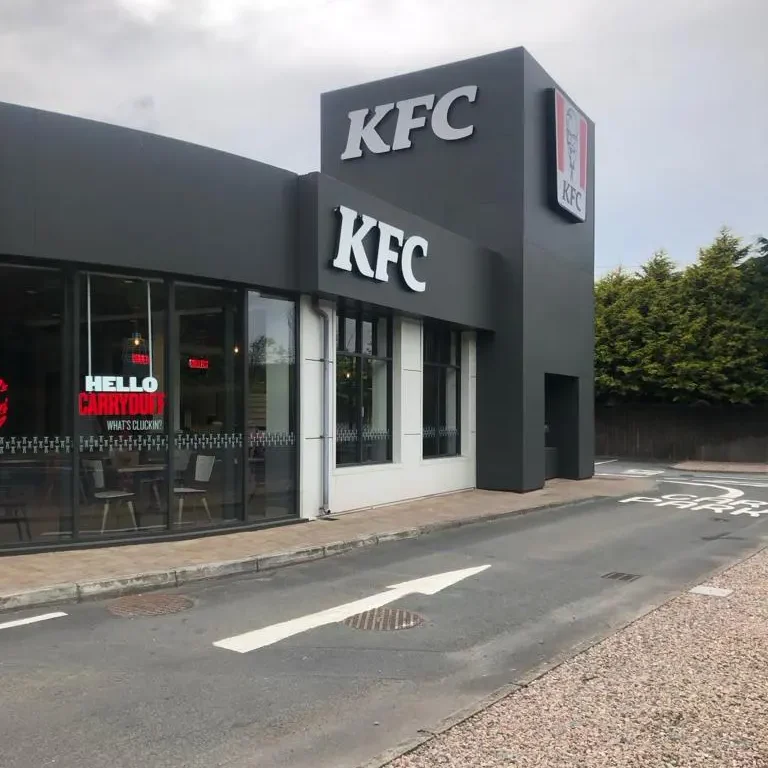
ACS-shopfront-cladding-repair1 copy

Common Issues Affecting Aluminium and Metal Shopfronts

Faded paint

UV degradation dulls powder-coated and painted aluminium frames over time, creating an obvious mismatch with brand specification. Respraying restores the original colour or introduces a new one entirely.

Scratches and impact damage

Delivery vehicles, trolleys, and general footfall create surface marks and deeper impact damage. Surface scratches can be prepared and resprayed directly.

Deeper deformation requires localised repair before finishing, but this is almost always achievable without replacing the full frame section.

Corrosion and oxidation

Aluminium develops white chalky oxidation as its finish breaks down. Steel frames rust where coatings have failed or been mechanically damaged. Both accelerate once started, particularly in coastal or urban environments.

Early intervention prevents surface corrosion from becoming structural. Where abrasive preparation is required, our abrasive blasting and sandblasting service prepares frames to the profile required for specialist coating systems.

Peeling or failed coatings

Failed coatings cannot be painted over without addressing the underlying adhesion problem. The failing material must be removed and the surface correctly prepared before a new system is applied.

General wear and weathering

The cumulative effect of minor marks, colour fade, and sealant deterioration creates an impression of neglect even where the structure remains sound. Professional refurbishment addresses this comprehensively.
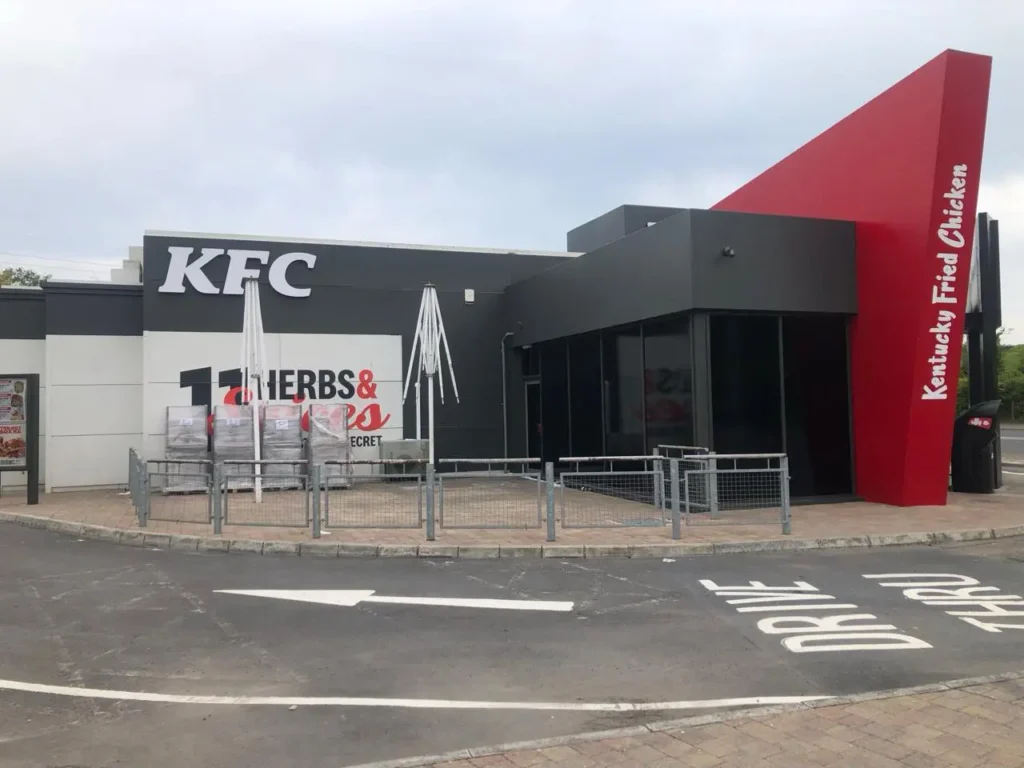
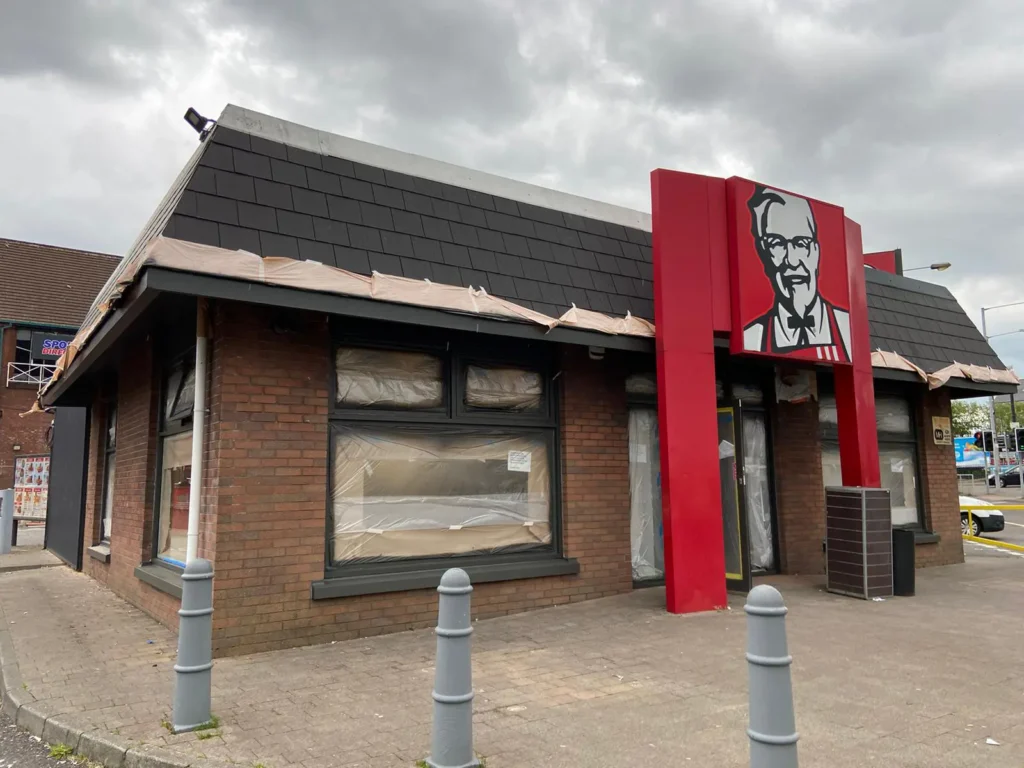
Repair and Respraying Versus Full Replacement

Professional respraying delivers comparable visual results at significantly lower cost and with far less disruption than replacement.

Full replacement involves fabrication, removal, disposal, installation, and making good of the surrounding building fabric. Respraying works with the existing frame, eliminating fabrication and installation costs entirely. For most commercial premises, the savings are in the range of 60 to 80 percent compared to replacement.

Replacement also requires partial or full closure of the shopfront during installation. Respraying, however, can typically be completed without closing, with masking and access managed around trading hours. The building fabric is left undisturbed, too, and no structural work to surrounding walls, sills, or reveals is required.

For shopping centres and retail parks with multiple units, a planned respraying program delivers consistent visual standards at a fraction of unit-by-unit replacement cost.

How Professional Shopfront Repairs Work

When frames have sustained impact damage, structural corrosion, or deformation beyond surface treatment, repair work is carried out before respraying. Respraying over unresolved structural issues or inadequately prepared surfaces leads to early coating failure.

So, getting the preparation right the first time costs less than putting it right afterwards.

That’s why our on-site repair and replacement service covers dent repair and profile straightening, replacement of individual damaged sections, corrosion treatment, and reinstatement of failed sealants and fixings.

The Respraying Process

Assessment

We inspect the frame to establish the scope of preparation and repair work and specify the correct coating system for the substrate and environment.

Masking and protection

Glazing, signage, and adjacent building fabric are fully masked before any work starts.

Surface preparation

Surface preparation is the single most important factor in how long the finished coating lasts.

Within our service, the existing coating is cleaned, degreased, and abraded or stripped. Corrosion is treated, and any filler work is completed at this stage.

Primer application

A specialist primer appropriate to the substrate is then applied. Aluminium typically requires an etch primer, while steel requires a corrosion-inhibiting primer before finishing coats.

Topcoat application

Our commercial paint spraying service applies the topcoat using specialist spray equipment, delivering a smooth, even factory-quality finish across the full frame profile.

Inspection and handover

The finished work is inspected against specification before masking is removed, with full documentation provided for maintenance records.

Colour Changes and Rebranding

Respraying is also an opportunity to change colour entirely, bringing the frontage in line with a new branding or updated corporate colours. This makes it an attractive option for businesses rebranding, new tenants removing a previous occupant’s colours, landlords bringing units to a neutral standard between tenancies, and shopping centre managers standardising fascia colours.

Colour matching to RAL, BS, or brand-specific references is standard when you choose ACS Coatings.

Minimising Disruption During Works

Works are scheduled around trading hours when required, and masking protects glazing and signage without creating an impression of closure. For multi-unit premises, a detailed works program is agreed in advance.

Our reactive maintenance solutions service is also available for urgent requirements if impact damage needs addressing quickly.

Long-Term Protection

Specialist coating systems provide UV resistance to prevent colour fading, flexibility to accommodate thermal movement without cracking, and adhesion properties designed specifically for metal substrates. General-purpose decorative paints cannot match this performance.

Our commercial waterproofing expertise informs how we approach sealing at frame junctions and sills, so the full shopfront assembly performs as well as the coating itself.

ACS Coatings provides specialist shopfront frame repair and respraying for retail and commercial premises across the UK. Our service covers condition assessment, on-site frame repair and preparation, specialist primer and topcoat application, colour matching to any RAL, BS, or brand reference, and full project documentation.

We also hold CHAS accreditation, Constructionline registration, CSCS certification, and IPAF qualification. On top of this, every project is managed with full risk assessments and method statements.

To discuss your shopfront or arrange an assessment, contact our team on 0800 987 5886 or request a quote online.
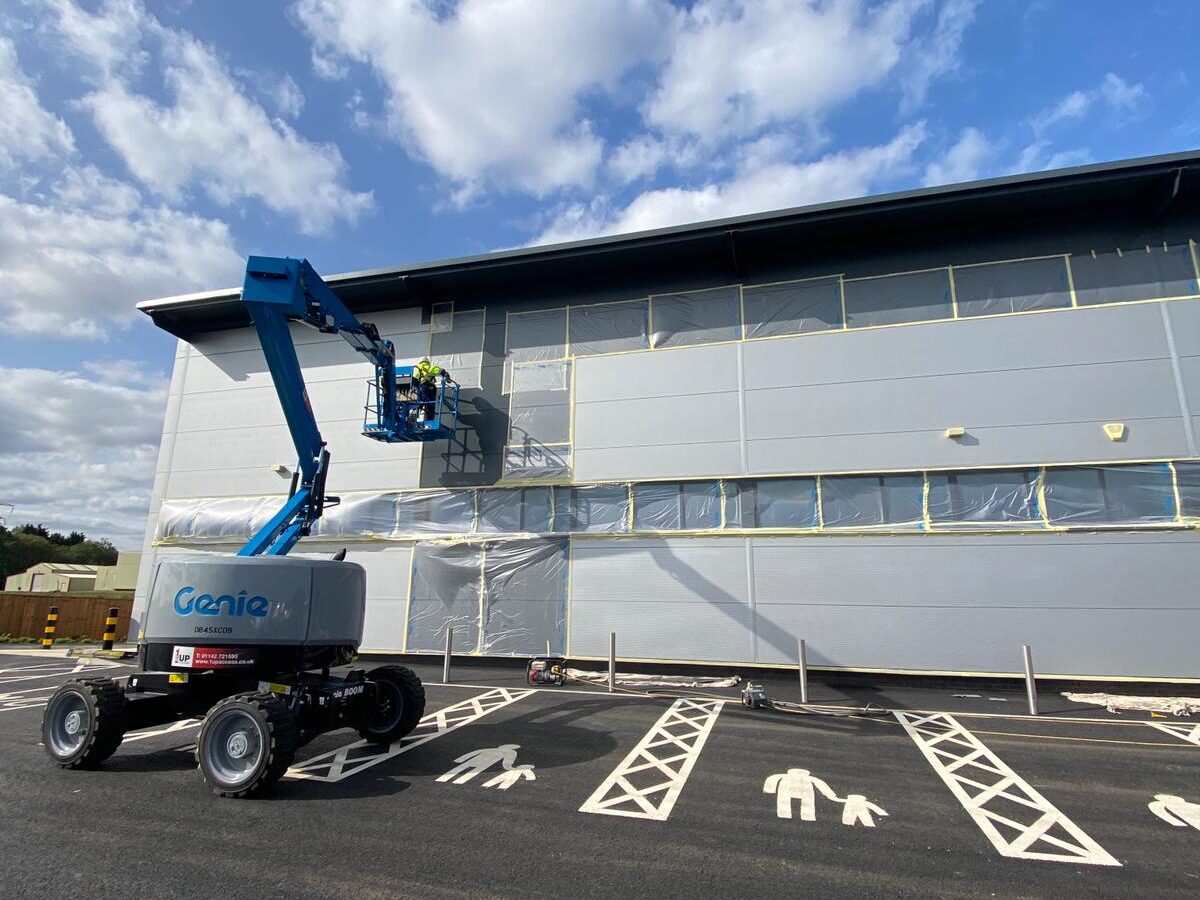
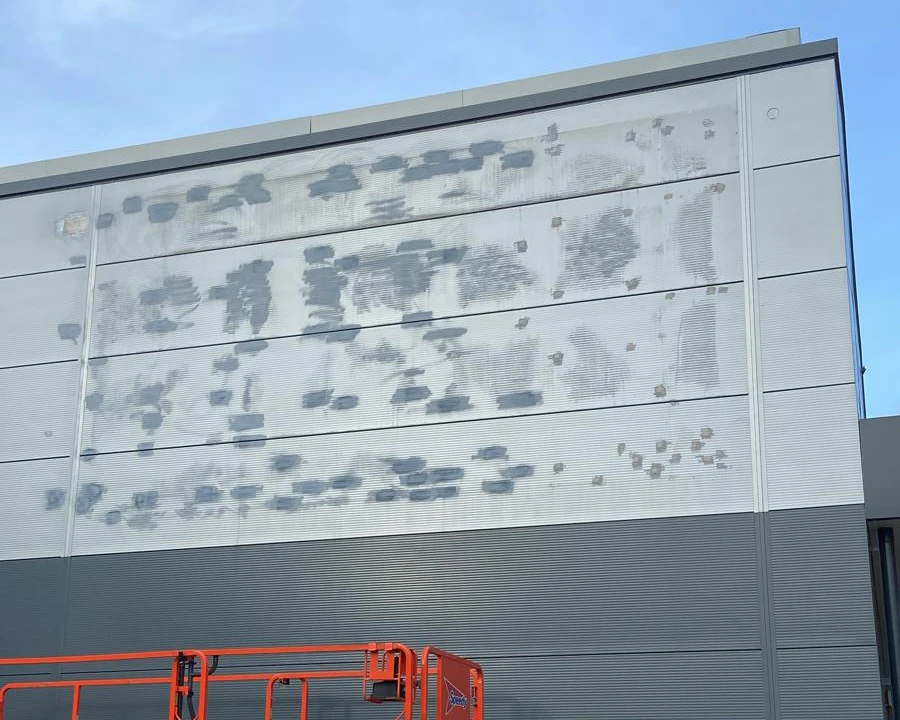
Cladding Repair vs Cladding Replacement: Which Is Best for Commercial Buildings?

Cladding is one of the most important protective elements of any commercial or industrial building. It shields your premises from the weather, protects structural components, and plays a major role in overall appearance.

When cladding begins to deteriorate, property owners often face a key question: Should you invest in cladding repair, or is full cladding replacement the better option?

The answer depends on the condition of the building, long-term asset plans, and budget considerations. So, let’s break down the differences to help commercial property owners, facilities managers, and asset managers make an informed decision.

What Is Commercial Cladding Repair?

Cladding repair focuses on restoring existing panels without removing them entirely.

This may involve:

  • Treating cut-edge corrosion
  • Replacing damaged fixings
  • Repairing small dents or cracks
  • Sealing joints
  • Applying protective coating systems.

In many cases, cladding spraying forms part of the repair process. Once surfaces are cleaned and treated, a high-performance coating is applied to protect the substrate and restore visual consistency.

For structurally sound panels showing cosmetic or early-stage deterioration, commercial cladding repair can significantly extend lifespan.

What Is Cladding Replacement?

Cladding replacement involves removing existing panels and installing new ones.

This may be necessary if:

  • Structural corrosion is advanced
  • Panels are warped or unstable
  • Water ingress has compromised insulation
  • The building is undergoing full redevelopment.

Replacement is a larger project, often requiring scaffolding, waste removal, new materials, and longer project timelines. And while it can deliver a completely new exterior, it’s also the more disruptive and expensive option.

When Is Cladding Repair the Better Option?

For many commercial buildings, cladding repair is the smarter choice for a number of reasons.

1. The Structure Is Still Sound

If inspections confirm that the substrate and panel structure remain intact, repair and refurbishment are often sufficient. Industrial cladding refurbishment through cleaning, rust treatment, and coating can extend service life by 10 to 15 years or more.

2. Corrosion Is Surface-Level

Surface rust or coating failure does not automatically mean replacement is required. Professional commercial cladding contractors can treat corrosion, stabilise the surface, and apply protective systems that prevent further deterioration.

3. Budget Control Is a Priority

Cladding repair and spraying are typically far more cost-effective than full replacement. For facilities managers working within annual maintenance budgets, repair offers improved asset protection without large capital expenditure.

4. You Want Minimal Disruption

On-site cladding spraying and repair are often completed while the building remains operational. By contrast, replacement can require phased works, access restrictions, and longer completion times.

For warehouses, retail units, and production facilities, operational continuity is often a decisive factor.

When Is Cladding Replacement Necessary?

Although repair is often viable, there are situations where replacement is unavoidable. These include:

Severe Structural Corrosion

If corrosion has penetrated through panels or compromised fixings and supports, repair may not provide a long-term solution.

Persistent Water Ingress

Repeated leaks caused by failed panel systems or insulation breakdown may require partial or full cladding replacement.

Major Refurbishment or Rebranding

Some commercial buildings undergo full redevelopment or aesthetic transformation. In these cases, replacement may align better with the broader asset strategy.

Compliance or Safety Concerns

Where cladding systems no longer meet building regulations or fire safety requirements, replacement may be required to ensure compliance. However, a professional inspection from experienced commercial cladding contractors is essential to determine the correct approach.

Cost Comparison: Cladding Repair vs Cladding Replacement

Cost is often the first consideration when comparing cladding repair vs replacement. Let’s break these down.

Cladding Repair & Spraying

  • Lower upfront cost
  • No need for full panel removal
  • Reduced waste and disposal fees
  • Faster completion.

For many industrial building cladding projects, repair and spraying can cost significantly less than replacement while delivering strong performance outcomes.

Cladding Replacement

  • Higher material costs
  • Labour-intensive installation
  • Longer project timelines
  • Increased disruption.

All in all, if panels are beyond repair, replacement becomes the necessary long-term investment.

Lifespan & Long-Term ROI

A key concern for asset managers is lifecycle performance. For example, professionally executed commercial cladding repair combined with protective coating systems can extend panel life substantially.

And while replacement may offer a longer theoretical lifespan, the return on investment must consider:

  • Capital cost
  • Downtime
  • Energy performance
  • Sustainability targets.

Extending the life of existing cladding reduces waste and embodied carbon, too, supporting ESG goals for commercial property portfolios.

Sustainability Considerations

Industrial cladding refurbishment is often the more sustainable option of the two. By retaining existing panels and applying high-performance protective systems, you avoid:

  • Large amounts of material waste
  • Transportation emissions
  • Manufacturing impact of new panels.

For businesses working towards carbon reduction targets, repair and coating systems align well with environmental objectives.

The Importance of Professional Assessment

The decision between cladding repair and cladding replacement should never be made based on appearance alone.

An experienced commercial specialist will assess:

  • Panel integrity
  • Corrosion depth
  • Joint condition
  • Fixings and structural supports
  • Water ingress history.

This guarantees that the chosen solution protects your building for the long term rather than acting as a temporary fix.

Which Is Best for Your Commercial Building?

In many cases, cladding repair combined with professional cladding spraying offers the best balance of:

  • Cost efficiency
  • Longevity
  • Sustainability
  • Minimal disruption.

Replacement becomes necessary where structural integrity is compromised or regulatory compliance demands it.

The key to deciding and preventing full replacement is early intervention. Addressing deterioration before it becomes structural damage gives you more options and better financial outcomes.

At ACS Coatings, we work with commercial property owners, facilities managers and asset managers across the UK.

Whether you need targeted commercial cladding repair, full industrial cladding refurbishment, or advice on cladding replacement, our team provides honest recommendations based on your building’s condition.

If your commercial cladding is showing signs of corrosion, fading, or damage, get in touch today to arrange a site survey and discover the most cost-effective path forward.

Winter Cladding Issues That Cost Building Owners Thousands (And How to Fix Them)

Winter weather is much more than an inconvenience if you own a commercial or industrial building. It exposes weaknesses in your external cladding and can turn minor issues into expensive problems that cost thousands to fix and take valuable time away from business operations.

The good news? Most winter cladding problems are preventable if they’re caught early and acted on. Here’s what to look for and how to fix it before it costs you serious money.

Cut-edge Corrosion

Cut-edge corrosion is one of the most common and costly winter cladding issues in the UK. It happens when cladding panels are cut during installation, and the protective coating at the edges gets exposed. Cold, wet weather accelerates rust formation at these vulnerable points, and once it starts, it can spread very quickly.

Before you know it, what begins as a small rust spot in autumn can spread several metres along the panel edge by spring. This happens because the rust works its way under the coating, causing blistering and delamination that extends far beyond the original damage. Left unchecked, you’re looking at full panel replacement rather than a simple repair.

Professional cut-edge corrosion treatment involves cleaning affected areas, removing active corrosion, and applying protective coating systems. This approach costs a fraction of panel replacement and can extend your cladding’s lifespan by 15 years or more.

Water Ingress Behind Panels

Winter rainfall finds its way into the smallest gaps. As such, damaged sealants, loose fasteners, and compromised panel joints all provide entry points for water during persistent rain. And unfortunately, once water gets behind your cladding panels, it becomes trapped against the building structure.

In winter, this is more of an issue because drying times can be slow. So, moisture stays in contact with metal components and insulation for weeks at a time, which causes rust on the reverse side of panels and damages insulation performance. This often leads to internal water damage that’s far more expensive to fix than the original cladding issue.

Early warning signs include staining on internal walls, damp patches during heavy rain, and visible water trails on the exterior. If you’re seeing any of these, on-site repairs should be your priority. Fixing water ingress early prevents structural damage and avoids the need for full panel replacement.

Fading and Failing Coatings

UV exposure during summer weakens cladding coatings, but winter weather often finishes the job. Rain penetrates tiny cracks in older coatings, frost causes expansion, and the cycle repeats until large sections start peeling away.

That’s why faded coatings aren’t just an aesthetic problem. Once the protective layer fails, the substrate beneath becomes vulnerable to corrosion and water damage. From here, what starts as discolouration can become a structural, expensive issue.

Cladding spraying addresses this before replacement becomes necessary. Professional spray coating restores the protective barrier and refreshes your building’s appearance at up to 80% less cost than panel replacement. Modern coating systems also offer superior UV and weather resistance compared to original finishes, providing better long-term protection.

Blocked Gutters and Drainage

Winter leaves, debris, and standing water in blocked gutters cause overflow that runs directly down cladding panels. This constant exposure accelerates all the problems mentioned above, particularly around fixing points and panel joints.

Blocked drainage also increases the load on gutter systems, causing sagging and joint failures that lead to more serious water ingress issues. Regular gutter maintenance and replacement prevent these cascading problems and protect your cladding investment.

Rust Staining and Surface Contamination

Rust staining appears on cladding for two reasons:

  1. Corrosion from the panels themselves.
  2. Rust run-off from other building elements like fixings, flashings, and adjacent metalwork.

Winter rain spreads these stains across large areas, which makes them highly visible and difficult to remove without professional help.

Surface contamination from algae, moss, and atmospheric pollution also becomes more apparent in winter. These hold moisture against the cladding surface, accelerating deterioration and creating an unprofessional appearance that affects your property’s value.

Commercial pressure washing removes surface contamination and prepares cladding for protective treatments. Combined with rust treatment and protective coatings, it can effectively restore appearance while preventing future damage.

How On-Site Spraying Prevents Replacement

Many building owners assume that weathered or damaged cladding means replacement is inevitable. That’s rarely true. Because on-site paint spraying can restore cladding to better-than-new condition at a fraction of replacement cost.

The process involves thorough cleaning, surface preparation, repair of any damage, and application of high-performance coating systems. These modern coatings bond with existing panels to create a protective barrier that resists UV damage, prevents water ingress, and stops corrosion before it starts.

Professional cladding spraying also avoids the disruption and downtime associated with replacement. Most buildings remain operational throughout the work, with projects completed in weeks rather than months.

So, for businesses that can’t afford extended closures, spraying becomes the obvious choice.

Why Act Now

Warmer months bring longer lead times for maintenance work as every property owner tries to address winter damage at once. Contractors get booked up, costs increase, and you’re left waiting for availability while problems continue to get worse.

As a result, addressing cladding issues earlier means you avoid the busy period, get better contractor availability, and prevent minor problems from becoming major expenses. It also means your building looks its best when the weather improves, and business activity picks up.

Don’t wait for small issues to become expensive problems. A professional cladding inspection identifies vulnerabilities before they cause serious damage and gives you a clear plan for cost-effective maintenance.

At ACS Coatings, we provide free winter cladding inspections for commercial and industrial properties. Our experienced team will assess your building, identify any issues, and recommend the most cost-effective solutions to protect your investment.

Get a quote or contact ACS Coatings on 0800 987 5886 to beat the spring lead times.

Can Cladding Be Repaired?

Yes, cladding can be repaired from weather damage, corrosion and general wear and tear, all of which are common for buildings in the UK. Incredibly effective, cladding repair gives business owners a way to restore panels without the cost, downtime, and stress of cladding replacements.

Cladding repair typically starts with the identification of damage before an application of protective finishes like spraying or coating. These can be used to future-proof cracked coatings, rusted or dented panels, peeled paint, and more. When the correct materials and processes are implemented, repair work can be carried out with minimal disruption to business operations.

At ACS Coatings, we have years of experience with cladding repair in commercial and industrial premises. Assessing each property based on its unique set of requirements, we work hard to protect the integrity of your building with a comprehensive service that minimises downtime and limits business disruption. 

In this article, we’ll explore how the cladding repair process works, and why cladding spraying is key to getting long-lasting results for your commercial or industrial property.

The Cladding Repair Process

Cladding Inspection

Every cladding repair should begin with a detailed site inspection. Here, experts will assess the extent of the damage and identify affected areas on roofs, exterior walls, or both. 

Once this information is confirmed, a suitable cladding repair method will be recommended. This may be cladding patching, replacement of panels, or other forms of restoration. 

Surface Cleaning and Prep

Before any cladding repair work starts, all panels must be properly cleaned by experienced specialists. This can be achieved with industrial-grade pressure washing equipment and products tailored to the property and materials at play.

Proper cleaning removes the most common cladding contaminants like dirt and algae, among others, and loose coatings are also removed to prepare the area effectively.

Repairs or Replacements

If cladding panels are dented, cracked, or seriously corroded, repairs or replacements will be needed. Commercial fillers are often used for repairs while large sections may need to be replaced entirely.

The approach for cladding repair or replacement will depend on the material type, location, and damage involved. The goal should always be to minimise disruption and reduce costs wherever possible.

Sealing and Priming 

Once repairs or replacement work is completed, joints and edges must be sealed properly, and fasteners should be put in place to prevent future water ingress. 

Where required, primer coats may be applied to encourage adequate adhesion and protect the underlying surface of the cladding. This is particularly important when it comes to industrial roof cladding repair, which is more susceptible to allowing the elements into a building.

Spraying and Finishing

The final step of the cladding repair process is the spraying of repaired or replaced panels to match the colour and finish of the rest of the building. 

Doing this means that your business has a seamless visual aesthetic and ensures that repairs blend in effectively. Leaving no visible trace of the work carried out, cladding spraying can also go a long way to fortifying your panels against damage in the future.

Is Colour Matching Often an Issue?

At ACS Coatings, we provide a full colour-matching service with all of our cladding repair or cladding spraying services. Why? Because we understand that consistency is crucial for business branding and that business owners are rightfully concerned about cladding repairs or replacements, especially when it’s only partial. 

That’s why we place great emphasis on our colour matching capabilities and offer options for all materials and finishes for our clients.

To achieve the best colour match possible, we use professional colour matching apparatus, and we work directly with leading paint suppliers to source or mix the exact shade. We also consider existing weathering of the cladding, so the new finish aligns perfectly with it.

For even more peace of mind, before any cladding repair or spraying is started, our experts can test sample patches for visual accuracy and seek your approval before starting any work. This means you can be confident the final result will look cohesive and professional. 

The Importance of Spraying

Most of the time, spraying is a crucial aspect of the cladding repair process and helps protect your building for longer. It’s carried out after cladding repair has taken place and acts as a sealant and reinforcement that not only looks great but protects your building against adverse weather conditions and corrosion. 

Cladding spray coatings are also designed to bond with original and newly repaired surfaces, forming a protective barrier to tackle water and UV rays from the weather. This helps your building look the part and perform for longer, reducing the risk of future damage on walls and roofing areas. 

All in all, as well as robust performance and protection, cladding spraying delivers consistency of colour by covering joints, fillers, and repaired patches uniformly. 

At ACS Coatings, we work with property owners, facilities managers, and retailers across the country with a fast and effective cladding repair service. With the highest quality and minimal business downtime, our team is here to help you with industrial roof cladding repair, wall panel renovation, or entire building cladding spraying, and we provide a comprehensive service from site inspection to completion.

Our experienced team understands the pressures of managing large sites, too, and that most of the time, downtime simply isn’t an option. Because of this, our approach is flexible around your needs and tailored to your building’s requirements. On top of this, we always use established techniques to get the job done, not to mention high-performance coatings and using industry-leading safety standards.

Once the cladding repair service is completed, we’re also able to offer scheduled maintenance and full spraying services to protect your building well into the future. 

So, if you’re dealing with worn or damaged cladding for your commercial or industrial property, don’t leave it too late and be forced into a full replacement. Instead, speak to ACS and let’s get your cladding repaired and up to scratch.

What Is Cladding Spraying And How Does It Work?

Cladding spraying is the application of fresh, protective coating to cladding panels of a building. 

Generally speaking, this is carried out using high-performance spray paint and is much cheaper than cladding replacements. Because of the combination of effectiveness and affordability, it’s a popular option by industrial and commercial building owners around the UK.

It’s used when commercial or industrial properties need their exteriors refreshing or if materials need to be strengthened for the future. Materials that can benefit from cladding spraying services include metal, uPVC, and composite surfaces. 

Not only is cladding spraying great for strengthening surfaces and materials, but it can refresh tired looking exteriors and boost the front-facing aspects of your business: your premises.

This article will explain how cladding spraying works step by step, the benefits of cladding spraying services for businesses in the commercial and industrial worlds, and how ACS Coatings can help you protect your premises for the long term.

Here’s How the Cladding Spraying Process Works

Site Assessment and Planning

Cladding spraying should always start with a site visit to assess the condition of cladding, identify damage, and figure out the best paint system and access methods. 

Environmental factors are also considered, accounting for weather exposure and other pollutants, and the best way to proceed with the job in terms of scheduling and safety.

Cleaning and Surface Preparation

Surface preparation is a building block of any successful cladding spraying service. 

All surfaces must be cleaned thoroughly with pressure washing or specialist degreasers to remove any unwanted dirt and old coatings. Rust and peelings can also be treated in this stage to ensure proper adherence from the new coatings. 

Masking and Protection

It’s important to prepare any surrounding areas before commencing cladding spraying, which means windows, doors, walls, and signage. Doing so ensures no overspray and keeps everything clean and maintained for the entirety of the project.

Application of Primer and Topcoat

Using professional, commercial-grade spray equipment tailored to your specifications, a primer coat should be applied where necessary followed by high-performance cladding paint. 

The best type of paint is established during the site assessment and will usually be solvent or water-based designed for durability, colour longevity, and weather resistance. 

Final Inspection and Quality Checks

Once the spraying service is completed, the final stage can commence; another inspection to check for quality and coverage of the new cladding spraying system in place.

Any touch-ups can be completed in this stage if needed, and the site is finally cleaned and cleared before the team leaves the premises. 

Why Is Cladding Spraying Important?

Keeps Building Materials in Good Condition

Cladding spraying works to create a barrier between your building and UV rays, rain, and pollution. This barrier means you can successfully prevent rust, corrosion, and structural damage over time, which saves your business money, and you stress.

Cheaper than Cladding Replacements

Replacing cladding panels can be expensive and disruptive, which is why so many business owners are reluctant to commit to them. Cladding spraying services are the obvious alternative, delivering a far more affordable option that restores the look and function of your exterior without major downtime or cost.

Improves First Impressions

For retail chains, industrial parks, and office blocks, exterior appearance matters and can make or break your first impression with customers. A newly sprayed exterior enhances your brand image and demonstrates professionalism.

Most importantly, it creates a welcoming experience for anybody coming to your business premises.

Supports Compliance and Safety

Damaged or peeling cladding can be signs of deeper issues making cladding spraying more than just cosmetic. 

When done right, spraying can help you address early warning signs and keep your building safe. It also helps you stay compliant with insurance and lease agreements you might have in place. 

Reduces Maintenance Needs

High-quality spray cladding paint is designed to withstand harsh conditions associated with the British weather, as well as being able to adequately resist fading and paint flaking. 

The result for your business is less maintenance requirements, fewer repainting systems and cycles, and less repeat costs to the business at large.

Minimises Disruption to Your Operations

Cladding spraying is fast and flexible, especially compared to full replacements. With minimal scaffolding required and a straightforward, quick process, the work can usually be completed around your schedule. 

This is great for premises with factories and warehousing facilities, as well as schools, hospitals, and other public sector buildings, where stopping operations can be expensive and even dangerous.

Creates a Bespoke, Consistent Appearance

With hundreds of colours and finishes available, not to mention colour-matching to suit previous or new branding needs, cladding spraying lets you match your building to your corporate colours or modernise outdated façades. 

Simply put, it’s an easy way to align your properties across multiple sites with one singular brand or make one building reflect your business as effectively as possible.

Boosts Property Value

All of the above mean that your building could be worth more thanks to cladding spraying. This can apply if you’re a building owner trying to sell or lease your commercial premises or even refinance your business.

As a result, cladding spraying services are simple, cost-effective investment that yield measurable, long-term returns, and they’re an option chosen by business owners and facilities managers across the country.

No matter what industry your business specialises in or where you’re located, our expert team of cladding spraying specialists can help. From retail premises to office blocks, warehouses and factories, as well as public sector buildings like hospitals and schools, we can boost your property’s visual appeal and strengthen it structurally.

With experience all over the UK, we’ve delivered improvements to building exteriors in all kinds of industries. Providing quality and professionalism with every job, we pride ourselves on meeting your budget and your schedule, never finishing a job outside of your timescales. 

We’re also available to talk through every stage of the cladding spraying process, from site survey to final handover, and our experienced team is here to make your life simple. We only ever use market-leading paint products and expert applicators, too, so every finish is seamless, strong, and built to last. 

With a focus on minimal disruption and clear communication throughout, we’re here to take the pressure off your facilities team and deliver exceptional value for money regarding cladding spraying services.

Need help assessing your building’s cladding requirements or want to get started with a bespoke quote? Speak to the ACS team today and discover how we can support your next project with trusted, reliable cladding spraying services.

Cladding Spraying: How It Works and Why It Matters

As commercial buildings age, their outer cladding is the first to show signs of wear. This can range from discolouration to peeling and even corrosion, but replacements can be extremely costly and impractical.

Cladding spraying offers an efficient, cost-effective alternative that can keep your business looking its best for years to come. This is probably why it’s grown in popularity over the years as more businesses look to refresh their premises without disrupting operations.

In this article, we’ll explore how cladding spraying works, what the process looks like, and where it can deliver the biggest impact. We’ll also examine the difference between cladding coating and spraying so you can decide which is best for your business.

Cladding spraying, or spray cladding, is the process of recoating external panels using specialist spraying equipment. Unlike traditional roller or brush methods, spraying delivers an even, high-quality finish across large surfaces. This makes it perfect for industrial units, warehouses, and commercial properties.

Cladding spraying is versatile and can be used on metal, aluminium, and composite cladding. Each requires a unique preparation process, and the right application can extend the lifespan of these materials.

It’s also a method commonly used in wider commercial paint spraying projects, where internal and external surfaces require a clean and consistent finish.

What are the benefits of Spray Cladding?

  • A uniform finish and improved building appearance
  • Protect your building against the elements
  • Minimal impact on day-to-day operations
  • Extended lifespan of existing materials
  • A way to modernise your site, meet branding guidelines, or comply with lease renewal obligations
  • Save money and time compared to cladding replacement.

What is the Spray Cladding Process?

Professional spray cladding or the application of cladding coatings is complex and follows a structured approach.

This includes:

  1. Cleaning and surface preparation with high-pressure cleaning systems that remove debris and failed coatings.
  2. Repairs of dents, scratches, or holes before application.
  3. Masking and protection to shield the surrounding areas from overspray.
  4. Application of cladding coatings using industrial-grade equipment and approved systems for full coverage.
  5. Curing and inspection to ensure that coatings bond effectively and meet the manufacturer’s specifications.

The choice of spray clad or cladding coatings used depends on various factors, from the substrate to the environment and the desired finish. There’s plenty of flexibility in terms of appearance, with gloss, matte, and metallic finishes available, too.

Where can Cladding Spray Solutions be used?

Clad spray solutions are generally used for industrial or commercial properties like distribution centres, logistics hubs, retail parks, shopping centres, offices, and business parks. They’re also widely used in educational and public sector buildings. In all of these situations, spray paint cladding delivers consistency and better performance against the elements. It can also complement protective treatments like roof coatings and cut-edge corrosion solutions to create a fully sealed and visually unified exterior.

How to Choose the Right Cladding Spray Service

Choosing the right spray cladding professional is incredibly important and reliable clad spray solutions should always include the following:

  • A detailed site survey
  • Clear advice on products and finishes
  • Experience with large-scale commercial properties
  • Warranties or guarantees on work
  • Use of branded, tested materials from trusted manufacturers.

If a service doesn’t offer this level of detail, it’s worth asking some questions before going ahead or exploring other options.

What’s the Difference Between Cladding Spraying and Cladding Coatings?

In short, cladding spraying is the act of applying a coating. Coating is the material being applied in the spraying process.

For a bit more detail:

  • Cladding spraying is the method and physical act of applying the coating using spray equipment. This involves surface prep, masking, and on-site spraying to deliver an even finish.
  • Cladding coatings are the materials used, such as specialist sealants and paints, used during the spraying process. These coatings are formulated to protect surfaces against corrosion, UV rays, and water ingress, and they’re available in various finishes.

So, while the pair are closely related, cladding coating and cladding spraying aren’t the same. Understanding the distinction can help you make the right decision for your building.

The external condition of your commercial building says a lot about your business. Spray clad solutions offer you the refresh you might need to boost your reputation and make the right first impression on potential customers.

To learn more about the process and whether it’s right for your property, explore our cladding spraying services.

You can also get a free quote at this link or call us on 0800 987 5886. We operate nationwide and have experience with all kinds of different commercial properties.