HD Sharman Plygene Installation Contractor: A Guide for Commercial and Industrial Properties

Commercial gutters take a beating. Years of exposure to rain, debris, and temperature changes cause even well-built systems to deteriorate. For many commercial and industrial buildings, Plygene gutter lining is the best option over full replacement. It costs less, takes less time, and delivers long-term protection without the disruption.

ACS Coatings are approved HD Sharman Plygene installation contractors, working with facilities managers, property managers, commercial landlords, and industrial building owners across the UK.

In this article, we’ll explore what it is, signs your gutters need attention, the importance of using an approved contractor, and more.
What Is the HD Sharman Plygene System?

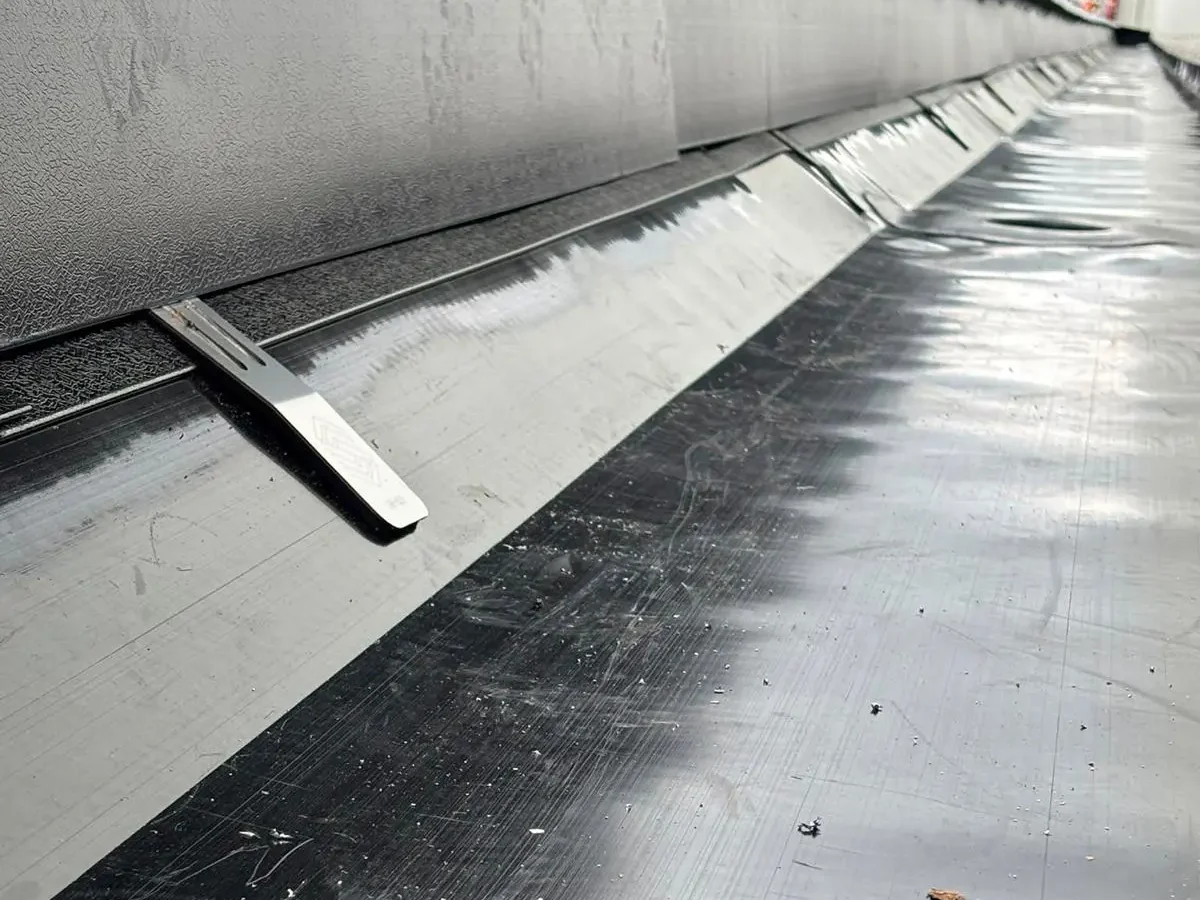
HD Sharman is a UK manufacturer specialising in gutter lining and refurbishment systems. Plygene is a reinforced membrane system that lines the interior of existing gutters with a durable, seamless, waterproof layer that seals cracks, joints, and corrosion points.

The result is a watertight gutter system that performs like new without the cost or disruption of full replacement.

The system is suitable for a wide range of gutter profiles, too, including:

  • Box gutters
  • Valley gutters
  • Parapet gutters
  • Half-round gutters
  • Boundary wall gutters.

This versatility makes it one of the most effective gutter refurbishment systems for commercial and industrial buildings in the UK.

Signs Your Commercial Gutters Need Attention

Gutter deterioration doesn’t happen overnight, so problems often go unnoticed until they cause visible internal damage. Common warning signs include:

  • Rust or corrosion along gutter surfaces or joints
  • Water stains on internal walls or ceilings below gutter lines
  • Standing water that doesn’t drain after rainfall
  • Cracked or crumbling sealant at joints and corners
  • Gutters pulling away from the roofline, and leaks during or after heavy rainfall.

A professional gutter survey will confirm whether Plygene lining is the right solution. In many cases, it is, and early action means lower costs and less disruption.

Plygene Lining vs Full Gutter Replacement

Full gutter replacement requires scaffolding or access platforms, extended project timelines, and significantly higher material and labour costs. Plygene lining rejuvenates the existing gutter from the inside, and it’s faster, less disruptive, and considerably more cost-effective.

For most those dealing with deteriorating but structurally sound gutters, Plygene lining delivers the same outcome as replacement at a fraction of the cost.

However, please note that full replacement remains the right choice if structural damage is severe or if the gutter profile itself needs changing.

How Plygene Lining Prevents Leaks and Extends Gutter Lifespan

The primary cause of commercial gutter failure is joint and seam breakdown. Sealant between sections dries out, cracks, and fails, and water finds its way through the gaps. It then runs down walls, soaks insulation, and causes internal damage.

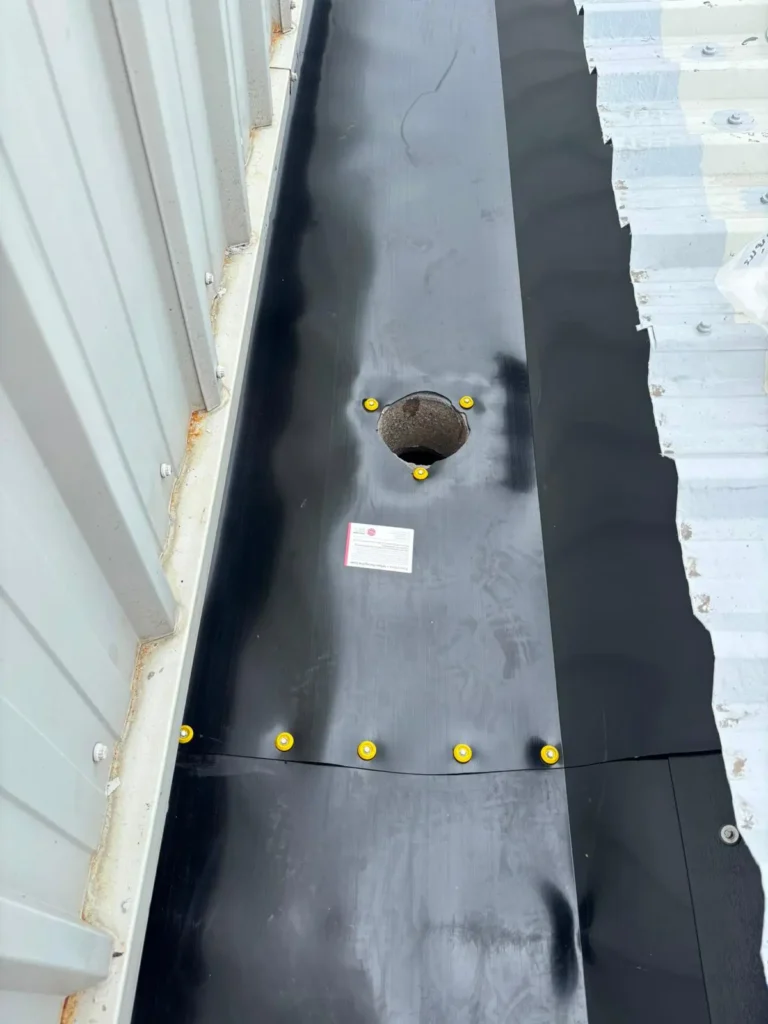
Plygene lining creates a single, continuous waterproof layer across the entire gutter interior, eliminating potential failure points. The membrane also protects the underlying substrate from further corrosion. Once sealed, the metal beneath stops deteriorating.

This is particularly important for steel and cast iron gutters, where corrosion spreads rapidly once the protective surface breaks down.

When installed correctly by an approved contractor, Plygene lining can extend the functional life of a commercial gutter system by 25 years or more. This approach works well alongside broader commercial waterproofing.

Cost Savings of Gutter Lining

Plygene lining consistently delivers savings of 50 to 70% compared to full replacement. On large industrial buildings with extensive gutter runs, the difference is massive.

Longer-term savings also include no repeated patch repairs or emergency callouts, reduced risk of internal water damage to stock and equipment, and avoided costs from business disruption.

At ACS Coatings, our reactive maintenance solutions are available for properties requiring urgent gutter attention before a planned program can begin.

The Importance of Using an Approved HD Sharman Plygene Installation Contractor

Plygene is a specialist system. Using an unapproved or inexperienced contractor risks installation failure and voids manufacturer warranties.

HD Sharman approves contractors based on demonstrated competence with the system. Approved contractors like ACS Coatings, therefore, have the training, experience, and access to HD Sharman materials required for a compliant, warranted installation.

ACS Coatings contractors also hold CHAS accreditation, Constructionline registration, CSCS certification, and IPAF qualification, giving clients confidence in both our health and safety standards and our technical capability.

Get a quote or find out more

How the Plygene Installation Process Works

Survey and assessment

We conduct a full survey of the existing gutter system, confirming the extent of deterioration and specifying the appropriate Plygene system.

Access and preparation

Safe access is set up next, in line with working-at-height regulations. Gutters are thoroughly cleaned, and any failed sealant is removed. The gutter surface is then prepared to ensure proper adhesion of the membrane.

Primer application

Next, a specialist primer is applied to improve adhesion and make sure the membrane bonds correctly to the substrate.

Membrane installation

The Plygene membrane is installed across the full gutter interior, taken up behind fascias and into outlets where required. Laps and joints are sealed to the manufacturer’s specification.

Detailing and inspection

Outlets, corners, and junctions receive additional detailing. The finished installation is inspected against HD Sharman’s quality standards before handover, with full documentation provided for your maintenance records.

Most commercial gutter lining projects can be completed while the building remains in use.

Long-Term Maintenance Benefits

Unlined commercial gutters with failing joints require regular inspection and repeated sealant repairs. The leaks keep returning because the root cause has never been properly addressed. Plygene lining eliminates this cycle, and maintenance is reduced to periodic inspection and outlet clearance, which is straightforward and inexpensive.

For properties where on-site repair and replacement work is also required, however, gutter lining can be coordinated with other planned maintenance to minimise access costs. And if roof maintenance is also needed, our roof coatings and cut-edge corrosion service can be delivered as part of the same program.

ACS Coatings are approved HD Sharman Plygene installation contractors working across commercial and industrial buildings throughout the UK. Our service includes full condition surveys, detailed project specifications, professional installation, and post-installation documentation. Every project is completed to HD Sharman’s standards and backed by manufacturer warranty support.

We also offer cladding sprayingcommercial waterproofingabrasive blasting and surface preparation, and more. This makes ACS Coatings a single point of contact for any and all commercial and industrial maintenance or refurbishment projects.

To discuss your gutter condition or arrange a survey, contact our team on 0800 987 5886 or request a quote online.
What Is a Gutter Liner System?

A gutter liner system creates a waterproof barrier inside commercial gutters, acting as an alternative to fully replacing them. They’re essentially a “gutter within a gutter”, designed to prevent leaks and extend the system’s life by up to 25 years.

For commercial and industrial building owners dealing with leaking gutters, it’s a straightforward question: do you spend tens of thousands on full replacement, or do you restore what’s already there for a fraction of the cost?

This article will explain everything you need to know about gutter liner systems, from what they are to how long they can last, and more.

How Gutter Liner Systems Work

Industrial gutter liners add a membrane that covers the entire internal surface of the gutter. Unlike traditional repairs that patch individual leaks, liner systems treat the whole gutter as one integrated unit.

There are two main types available for commercial properties:

  1. Liquid-applied systems, which use specialist coatings like polyurethane.
  2. EPDM rubber, which bonds permanently to the gutter surface.

Both are flexible, seamless, and accommodate temperature changes without cracking. The liquid nature means they conform to any gutter shape, too.

Pre-formed thermoplastic liners, on the other hand, are custom-made to fit your specific gutter profile. Systems like Plygene are installed into the existing gutter and heat-sealed at joints to create a watertight finish. They’re particularly good for box gutter lining systems with complex shapes and longer distances.

Both eliminate the weak points that cause traditional gutters to fail. The result is no more leaking joints, no more corroded seams, and no more repeated patch repairs that only last a few years.

What Causes Gutters to Fail

Commercial gutters fail for various reasons, including:

Joint Failures

Traditional gutters have multiple seams where sections connect, and these joints inevitably deteriorate. Sealants dry out, fixings corrode, and thermal movement causes gaps. A liner eliminates these weak points entirely by creating one continuous membrane.

Corrosion

This affects metal cutters, especially at cut edges or wherever standing water accumulates. Even galvanised steel eventually rusts, particularly in coastal or industrial areas. Box gutter lining protects the original substrate while providing a corrosion-resistant surface for drainage.

Substrate Degradation

This happens gradually in all gutter materials. Metal thins and weakens, concrete cracks, and GRP delaminates with age.

Rather than replacing the entire structure, a properly installed gutter liner restores waterproofing while the original gutter stays in place as structural support.

How Long Do Gutter Liners Last?

Professional gutter lining systems should last 20-25 years when properly installed. This is significantly longer than traditional gutter repairs, which can need fixing every 3-5 years as sealants fail.

However, the longevity of gutter linings depends on a few factors, such as:

  • Quality materials like premium polyurethane and thermoplastic will outlast cheaper alternatives.
  • Proper surface preparation is critical to long-term performance.
  • Gutters in colder or wetter environments may have a slightly reduced lifespan. However, no matter where it’s located, a properly installed gutter refurbishment system will significantly outlast patch repairs.

Annual inspections and regular maintenance also extend the lifespan of gutter linings. So, keep outlets clear, remove debris, and you’ll get every year of performance these systems are designed to deliver.

Cost Comparison: Lining vs Replacement

Commercial gutter lining typically costs 40-60% less than full gutter replacement, and that’s before you factor in cash lost as a result of disruptions to your operations.

Full replacement on a commercial building means removing the existing system, disposing of old materials, supplying and installing new gutters, and often disturbing roof flashings and cladding. This makes it a lot more expensive.

The same gutter run can be lined much cheaper and can be completed in days rather than weeks. The existing gutter stays in place, too, which means minimal scaffolding and no building closure.

When Replacement Makes More Sense

If your gutter has severe structural damage, extensive corrosion, or the substrate can’t support a lining system, replacement is necessary.

A professional survey identifies which option suits your situation. Honest contractors, like those you’ll find at ACS Coatings, will recommend replacement when the condition warrants it. However, for most commercial gutters showing signs of leaking or deterioration, lining provides excellent value and can be very effective.

The Gutter Lining Installation Process

Professional gutter lining installation follows a systematic process that determines long-term performance.

Preparation

It starts with a thorough cleaning of the existing gutter. All debris, dirt, and loose material must go. For metal gutters with corrosion, this might include grit blasting to remove rust and create a sound substrate. This preparation stage is critical, and liner systems only perform as well as the surface they’re bonded to.

Repairs

Next, any structural damage or holes are then repaired. For liquid systems, these repairs become part of the continuous membrane. And for pre-formed liners, repairs ensure the gutter can support the new system.

Primer Application

Liquid systems then receive primer application to promote adhesion, particularly on non-porous substrates like metal or GRP. The primer choice depends on both the substrate and the lining system being used.

Installation

The liner itself is then installed according to system requirements. Liquid systems go on in multiple coats to build up the required thickness, typically 2-4mm for polyurethane.

Pre-formed liners are positioned carefully and heat-sealed at joints. All outlets, corners, and details receive particular attention.

Final Inspection

Final inspection verifies the installation meets the required specification.

Which Gutters Can Be Lined?

Virtually any commercial gutter type can be lined, which makes these systems highly versatile.

Box gutters on industrial buildings, for example, are particularly well-suited to lining. These rectangular gutters set within the roof structure are difficult and expensive to replace but straightforward to line. The lining eliminates recurring leaks without disturbing the roof structure.

Valley gutters between pitched roof slopes can also be lined, and they present access challenges that make replacement impractical. Lining can be completed using rope access or mobile platforms, avoiding complex scaffolding.

Parapet gutters behind parapet walls similarly benefit from lining rather than replacement. The process avoids disturbing coping stones and flashing details that would need extensive work during replacement.

All in all, the substrate material doesn’t matter much. Liquid lining systems bond to steel, aluminium, GRP, lead, asphalt, and concrete. This means mixed-material gutter systems can be lined in a single operation.

Why Professional Installation Matters

Gutter liner systems require specialist knowledge to install correctly. Surface preparation determines long-term performance, and inadequate cleaning or missed corrosion prevents proper adhesion. Professional installers understand substrate requirements and have the equipment to prepare surfaces properly.

Material selection and application also require experience and relevant expertise. Different gutter conditions need different liner systems, and application techniques vary between products. What’s more, thickness, cure times, environmental conditions, and treatment all affect the final result.

At ACS Coatings, we provide professional gutter lining services for commercial and industrial buildings across the UK. Our experienced team assesses each gutter system individually, recommending the most appropriate solution based on condition, budget, and performance requirements.

We also work with leading liner system manufacturers and follow strict installation procedures. All our installations come with comprehensive guarantees, too, giving you confidence in the work completed.

If your commercial building is experiencing gutter leaks, don’t assume replacement is your only option. Gutter liner systems offer an effective, cost-efficient alternative that’s completed in days rather than weeks.

Our team can survey your gutters, provide honest recommendations on whether lining or replacement is appropriate, and deliver fixed-price quotations. We also complete most projects with minimal disruption, working around your schedule where required.

Contact ACS Coatings on 0800 987 5886 to discuss your gutter requirements, or request a free quote for professional gutter lining services.

The Complete Industrial Roof Guttering Guide

The first line of defence against water ingress and property damage, your gutters prevent leaks and corrosion, and their upkeep is vital. Because of this, industrial roof guttering plays a huge role in the protection of commercial buildings. 

But it isn’t as simple as domestic guttering at home, as it involves much larger volumes of water, larger roof areas, and more complex drainage systems. Because of this, industrial roof guttering is a specialist service that we proudly provide at ACS Coatings.

This guide is designed to inform commercial property owners and facilities managers about how industrial roof guttering works and when maintenance or replacements may be required. 

We’ll also run through how to avoid costly, common issues business owners face, and how to choose the right service. 

How is Guttering Repaired on Industrial Roofs?

Site Inspection 

Industrial roofs present many complications due to their height and width. That’s why safety is of paramount importance, which is something that should be assessed in any industrial roof guttering repair or installation

Not only can an inspection help you assess the extent of the damage and determine what’s required, but it also helps clarify access and what equipment is required. 

Clearing Blockages

Blockages come in many forms when it comes to industrial roof guttering, from leaves to moss and other built-up debris. 

At ACS Coatings, our team of experts can not only identify obstructions in your roof guttering system, but potential blockages that could cause problems down the line. We can also identify other potential weak spots like cracks and standing water, among other issues that may not be visible from the ground level.

Joint Seals and Leak Fixing

Joints and seams are prone to leaking on industrial roof systems, but our experts have worked on countless different buildings over the years and know what to expect and look out for. 

As a result, we can identify and reseal seals with high-performance sealants and install expansion joints where movement or stress has caused damage or splitting. 

Repair or Replace Sections

You don’t always need an entire gutter system replaced, and you can often just replace or repair corroded/sagging sections instead. This saves you money and can be incredibly effective. 

We can carry this kind of work out using matching materials from galvanised steel to aluminium, or industrial-grade plastics. We also guarantee secure fixing and correct pitching for waterflow and try to repair roofs instead of recommending full replacements, where possible.

Reinforce or Reline the Roof System

In rarer cases, internal roof guttering surfaces can be relined using liquid waterproof coatings. This helps restore functionality to damaged or corroded roof sections without replacing the full system or carrying out more extensive repairs. 

It can add years to the performance of industrial roof guttering, giving you peace of mind for the long-term. 

The Most Common Types of Gutters

When it comes to industrial roofs, the most common types are box gutters, valley gutters, and external eaves gutters. 

Here are the core differences between the three of them:

What are Box Gutters?

Box gutters are gutters found on top of a roof between two slopes. They’re known to block if they aren’t well-maintained, and they can be vulnerable to leaks that allow water into your building and cause damp and water damage.

What are Valley Gutters?

Valley gutters are similar to box gutters and run between two sloped, dramatically pitched roofs. The key difference is that they’re usually deeper with more precise falls. 

Because of their depth, valley gutters are more likely to pond water and experience corrosion, especially if you don’t regularly inspect them.

What are Eaves Gutters?

Eaves gutters are fixed to the outside of an industrial building, similar to a domestic property. This positioning makes them easier to access than the other two, but they are much more exposed to wind damage and leaf buildup from trees.

Understanding which kind of guttering your building has installed helps with maintenance and the right repairs can prevent future issues for your commercial or industrial property.

When is it Time for a Roof Gutter Repair?

Proactive industrial roof guttering repair is essential, and delayed action can lead to expensive structural damage. 

Here’s what to look out for:

  • Water overflow during heavy rain
  • Visible sagging or detachment
  • Staining on outside walls
  • Internal damp patches or leaks
  • Rust, flaking or corrosion
  • Birds nesting in gutters
  • Constant dripping after rainfall.

Any of these issues, no matter how subtle, can indicate something much more serious at play, putting your building at risk. 

Early repairs and regular maintenance can help reduce problems and tackle them before they become too problematic. They can also save you money in the long run and protect the integrity of your roof for the future. 

Industrial roof guttering isn’t simply about drainage. It’s about protecting your entire roof system and the rest of your premises from preventable, expensive, and stressful damage. 

Whether your business is experiencing blocked valley gutters, leaking box gutters, or worn-out eaves gutters, our expert repair and maintenance services can be tailored to your requirements and timeframes thanks to years of experience.

Carrying out detailed inspections, our teams can identify visible and hidden problems with your industrial guttering, and we can confidently deliver targeted repairs to tackle them. Using only the best, most suitable materials and equipment, we extend your industrial roof guttering’s lifespan and ensure your drainage is fit for purpose, no matter the weather.

We also offer scheduled industrial roof guttering maintenance as part of a wider roof care service, helping you avoid expensive replacements and stay compliant with insurance and lease requirements. 

All in all, we keep your property in top condition all year round, no matter where you’re located or what industry you work in.If your industrial roof guttering is showing signs of wear and tear or you haven’t had it seen to in a while, get in touch with the experts at ACS Coatings today to arrange an inspection and no obligation quote.