Warehouse Roof Defects: What to Do After Receiving a Survey Report

Receiving a roof defect report can feel overwhelming, particularly when it arrives alongside a dilapidations schedule, a lease renewal, or an acquisition. The list of defects can be long, the technical language unfamiliar, and the cost implications significant.

But a defect report is useful information. And acting on it early, with the right specialist contractor, means you can address problems in a planned and cost-controlled way rather than reacting to failures as they occur.

This guide covers the most common warehouse roof defects, what they mean, and how to efficiently move from a survey report to remedial works.
ACS-warehouse-roof-repairs featured image

Why Roof Defects Are Common in Key Lease Events

At lease end, roofs are among the highest-value items in dilapidations schedules. Tenants who have allowed defects to develop may face significant financial exposure. And landlords reletting the building may need remedial works before the property becomes marketable.

During pre-acquisition surveys, a warehouse roof in poor condition can affect valuation, create requirements for price reduction or retention, or generate conditions that must be satisfied before exchange.

As part of planned maintenance programs, periodic surveys establish baseline conditions, track deterioration over time, and allow work to be budgeted in advance rather than triggered by an emergency.

Common Warehouse Roof Defects and What They Mean

Warehouse roofs are predominantly metal sheet systems with skylights, gutters, flashings, and surface penetrations.

As a result, the defects identified in condition reports follow predictable patterns, such as:

Cut-Edge Corrosion

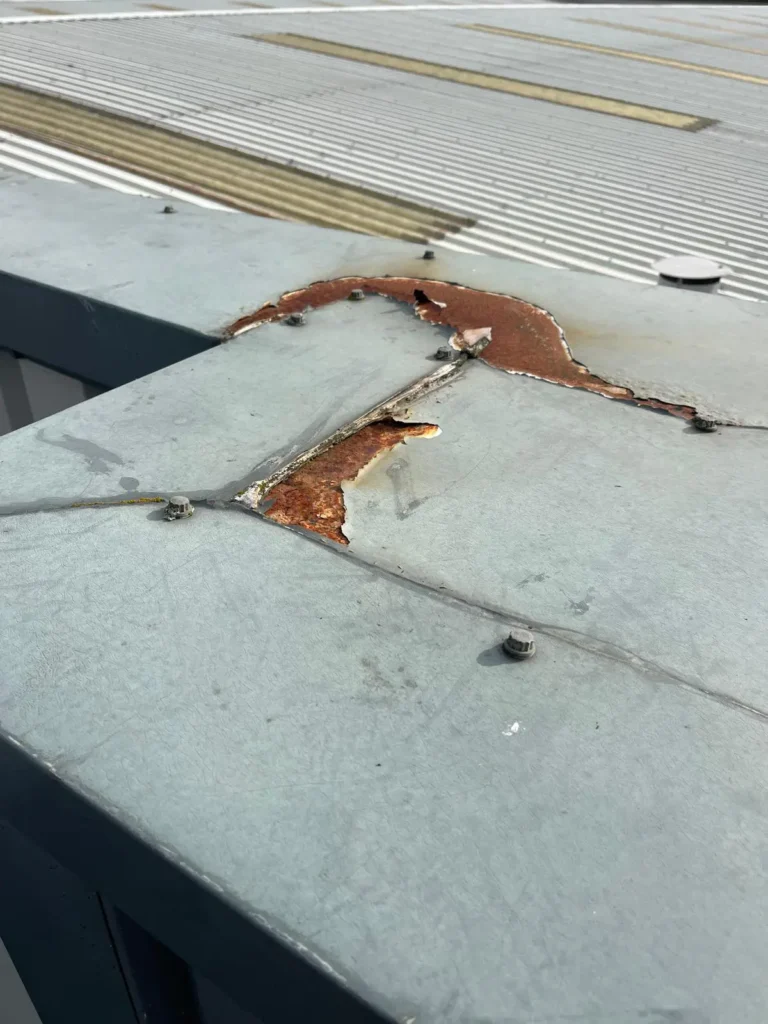
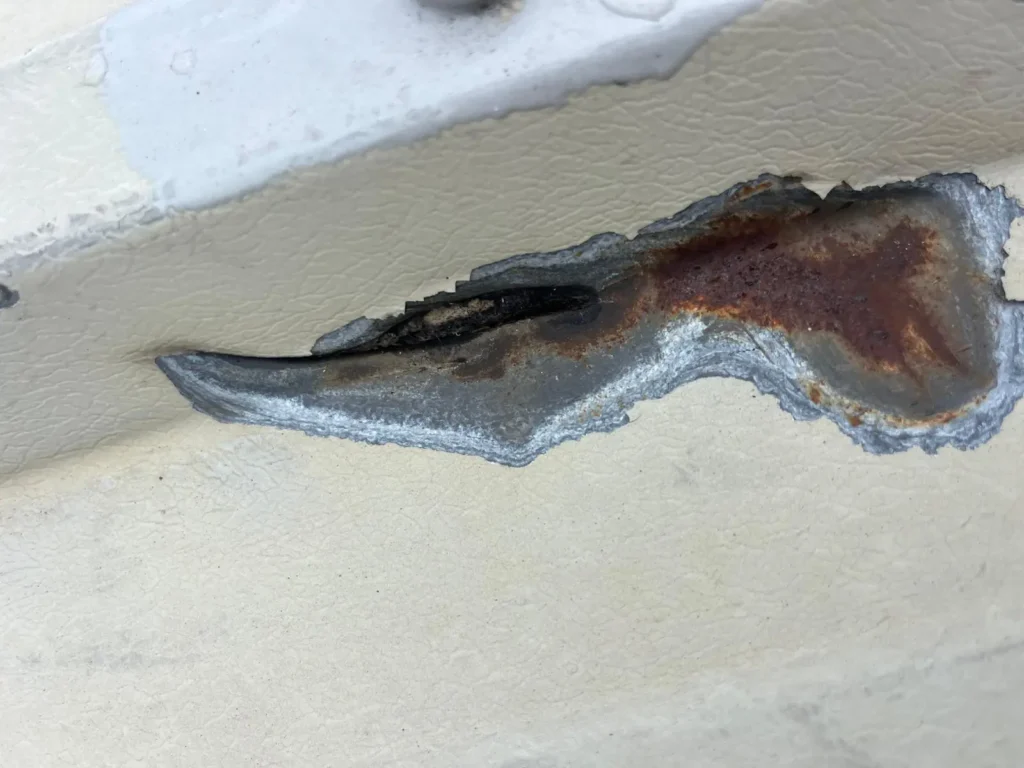
Cut-edge corrosion occurs along the cut edges of steel roof sheets, where the factory-applied protective coating doesn’t cover the raw steel exposed during manufacture.

Moisture then attacks this steel, forming rust that spreads beneath the coating and lifts it from the substrate. Left untreated, this progresses to full perforation and water ingress.

Treatment involves cleaning and preparing the affected edges and applying a specialist coating system. Our roof coatings and cut-edge corrosion treatment service addresses this directly with systems designed for the profile and condition of the affected sheets.

Failed Rooflights

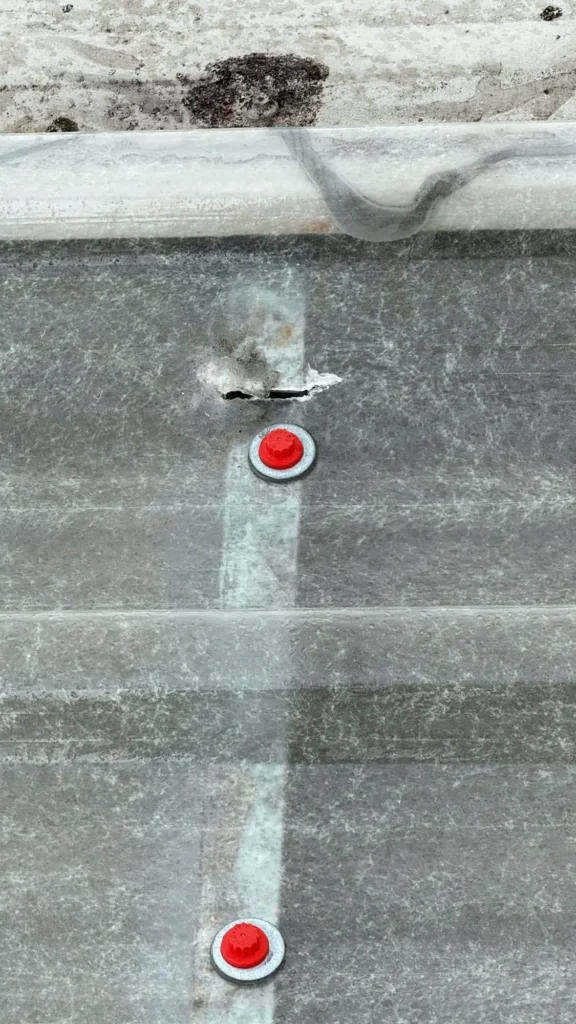
GRP or polycarbonate rooflights deteriorate with age and UV exposure. Beyond weather-related risk, delaminated rooflights are a potential fall-through hazard for anyone accessing the roof.

However, ACS Coatings’ skylight and gutter installation service covers rooflight replacement as part of broader refurbishment work.

Leaking Gutters

Box section steel gutters fail through corrosion, sealant breakdown, blockages, and thermal deformation. Specialist lining systems, such as HD Sharman Plygene, restore deteriorating gutters to full performance without full replacement.

If replacement is necessary, our skylight and gutter installation service provides a complete solution to this problem.

Damaged Flashings

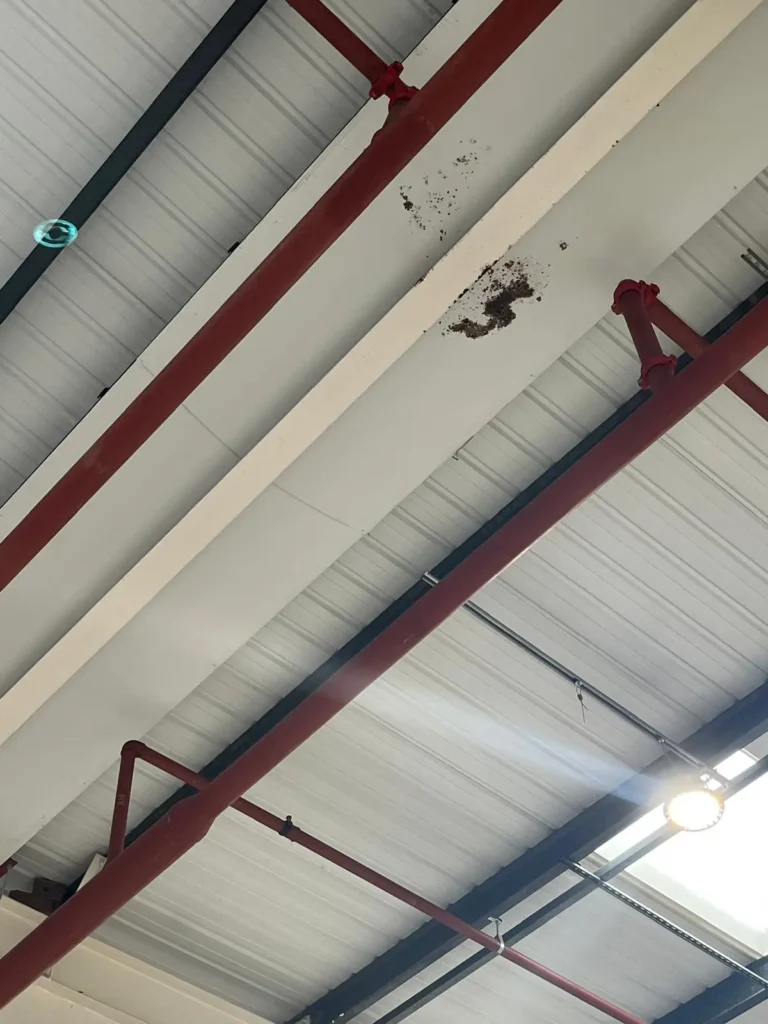
Flashings seal junctions between roof sheets and adjacent elements. Heat cracks sealant over time, and flashings can lift, deform, or corrode. This can leave gaps through which water tracks behind the facade.

Correct identification of the failure mechanism and appropriate material selection are essential, and patch repairs with inappropriate products fail quickly.

Failed Roof Coatings

When previously applied protective coatings crack, peel, or delaminate, they lose waterproofing performance and can trap moisture. However, despite sounding serious, this alone is not a reason to replace the roof.

In most cases, the failed coating can be prepared, and a new system applied over the top. At ACS Coatings, our roof coatings service includes condition assessment and system specification as part of the process.

Loose Fixings

Fixings loosen through thermal cycling, corrosion, and washer wear. They allow water to enter through the fixing hole and reduce the wind uplift resistance of the sheet. Oversized replacement fixings with new neoprene washers restore weathertightness and uplift performance.

IF corrosion around fixing points is extensive, on-site repair and replacement of affected sections may be required.

Roof Penetrations and Leaks

Every penetration through a roof sheet is a potential leak point. Cracked collars, failed mastic seals at ventilation bases, and gaps are all common failure modes.

Our reactive maintenance solutions can address urgent penetration leaks while a planned program is developed.

What Warehouse Tenants Should Do After Receiving a Defect Report

Not all defects in a survey report are automatically your liability. So, your priority is establishing which defects you are responsible for under your lease. The scope of your repairing covenant, any schedule of condition, and when the defects developed also affect your exposure. So, take legal and surveying advice before committing to work.

Once liability is established, commission a specialist contractor to assess the roof and provide a quote. This gives you accurate figures for settlement negotiations and confirms whether the surveyor’s indicative costs are reasonable.

What Landlords Should Do After Receiving a Defect Report

The first question is whether remedial works are required before the building can be occupied or sold, or whether they can be managed as a known liability. Obtain a specialist contractor’s quotation to give you accurate cost information for financial planning.

Prioritise weather tightness and safety first, including failed rooflights, active leaks, and loose fixings. Then, plan longer-term works, such as coating renewal, as part of a structured maintenance program.

Our commercial waterproofing and roof coating services can be incorporated into a planned program that reduces future maintenance costs.

ACS Coatings works with property managers, landlords, tenants, surveyors, and facilities managers who need to translate a defect report into a practical remedial works program.

Our services include cut-edge corrosion treatmentrooflight and gutter replacement, flashing repairs, on-site sheet repair and replacement, roof coating systems, and reactive maintenance for urgent defects.

What’s more, we work nationwide and can mobilise quickly where timelines are tight. Every assessment also includes a clear written report, photographic records, and accurate budget costs you can use immediately for planning, negotiation, or procurement.

To arrange a specialist roof assessment, contact us on 0800 987 5886 or request a quote through our website.

PMMA Waterproofing Systems for Balconies, Walkways & Flat Roofs

PMMA waterproofing delivers seamless, long-lasting protection for balconies, walkways, access platforms, and flat roofs. This advanced liquid waterproofing system cures rapidly, creates watertight surfaces, and provides decades of reliable performance with minimal maintenance.

For commercial buildings, occupied residential properties, and high-traffic areas, PMMA roofing systems offer unmatched installation speed and durability. The technology transforms how we protect horizontal surfaces that need both waterproofing and regular pedestrian access.

This article will explain everything you need to know about the technology, and whether or not it’s right for you.

What Is PMMA Waterproofing?

PMMA stands for polymethyl methacrylate, a resin waterproofing system that cures through a chemical reaction rather than evaporation. This means that PMMA systems can be applied and fully cured within hours, even in cold or damp conditions.

The system consists of a liquid resin mixed with a catalyst on-site. Once applied, the chemical reaction begins immediately, transforming the liquid into a solid, flexible membrane that bonds permanently to the substrate.

Unlike traditional waterproofing materials that need days to cure, PMMA flat roof systems can often be walked on within one to two hours. This rapid curing makes PMMA ideal for buildings where extended access restrictions would cause problems.

How PMMA Systems Work

The application process creates a completely seamless waterproof surface with no joints, seams, or vulnerable points where water can penetrate.

This is how:

  • Surface preparation ensures the substrate is clean and sound
  • Primer application bonds the PMMA system to the substrate
  • The base coat provides the main waterproofing layer
  • Topcoat delivers UV protection
  • Aggregate broadcast (optional) creates a slip-resistant finish.

The entire system typically measures just 2-3mm thick, which means minimal weight addition and no significant build-up on existing surfaces. This thin profile also makes PMMA perfect for refurbishment projects where height restrictions matter.

Where to Use PMMA Waterproofing

Balconies and Terraces

Balcony waterproofing requires systems that handle foot traffic, furniture, and constant exposure to weather. PMMA balcony coating provides all of this and cures fast enough to minimise disruption.

For apartment buildings and hotels, the rapid installation means balconies can be waterproofed and returned to use within a single day. This dramatically reduces inconvenience compared to traditional systems that need days to cure.

The seamless finish also looks professional and clean. PMMA creates smooth surfaces in various colours, so the waterproofing enhances appearance rather than compromising aesthetics.

Walkways and Access Platforms

Walkway waterproofing on roofs and between buildings needs to combine waterproofing with safe pedestrian access. PMMA systems achieve both through durable, slip-resistant surfaces that protect the substrate below.

Access platforms for plant equipment, maintenance routes, and service areas can also benefit from PMMA’s rapid curing. Engineers and maintenance staff can return to normal access within hours rather than being restricted for days.

Podium Decks

Podium deck waterproofing presents unique challenges. These structures often sit above occupied spaces, which means leaks cause immediate problems. The loading from landscaping, paving, and public use also demands robust waterproofing.

PMMA systems handle these demands through superior adhesion and flexibility. The membrane accommodates structural movement, resists root penetration from planting, and maintains integrity under heavy loading.

Flat Roofs

Commercial flat roof waterproofing with PMMA offers an alternative to traditional felt or single-ply membranes. The liquid application provides perfect detailing around penetrations, outlets, and upstands that can cause problems with sheet materials.

Flat roof coating systems using PMMA also eliminate the weak points that sheet materials create at overlaps and seams. Every square metre receives the same continuous protection with no vulnerable joints.

5 Benefits of PMMA Roofing Systems

Rapid Curing Installation

Traditional waterproofing systems need favourable weather and long curing periods. PMMA cures in one to two hours regardless of temperature or humidity. This means work can progress in conditions that would stop other systems.

As a result, contractors can complete work faster, reducing labour costs and site time. Buildings return to normal use quickly, too, minimising disruption. In addition, weather windows are less important.

Seamless Waterproof Protection

The liquid application creates truly seamless systems with no joints or overlaps. Water has no weak points to exploit, which means superior long-term reliability compared to sheet materials.

Complex details around outlets, upstands, and penetrations get the same continuous protection as flat areas. The resin flows and bonds to create perfect waterproofing at every detail.

Long Lifespan

PMMA systems typically provide 25-30 years of protection when properly installed and maintained. The UV-stable topcoat resists degradation from sunlight, whilst the flexible base coat accommodates building movement without cracking.

This longevity makes PMMA cost-effective despite higher initial costs than some alternatives. The lifecycle cost often proves lower than cheaper systems that need replacement after 10-15 years.

Minimal Disruption

For occupied buildings, disruption during waterproofing work creates real problems. Residents can’t use balconies, businesses lose access to roof areas, and extended restrictions frustrate everyone.

PMMA’s rapid curing minimises these issues. A balcony can be waterproofed in the morning and used again that afternoon. This speed is invaluable for hotels, apartment buildings, offices, and any property where occupant access is important.

Temperature Tolerance

PMMA systems can be applied in temperatures as low as -5°C, which extends the working season considerably. Traditional systems often require temperatures above 5°C or 10°C and dry conditions, which limits when work can take place.

Installation Considerations

Professional installation means that PMMA waterproofing systems deliver their full performance potential. The rapid curing demands experienced application teams who understand mixing ratios, working times, and proper surface preparation.

Surface preparation is also critical despite PMMA’s excellent adhesion. Substrates must be structurally sound, clean, and properly prepared. The mixing and application process also requires precision. PMMA resin and catalyst must be mixed in exact proportions, then applied quickly before the working time expires. This demands skilled operatives and proper equipment.

Whether you need a balcony waterproofing system for a residential building, walkway waterproofing for a commercial property, or flat roof coating systems for an industrial facility, PMMA offers proven performance with minimal disruption.

At ACS Coatings, we’re specialist PMMA roofing contractors with extensive experience across balconies, walkways, podium decks, and flat roofs. As such, we’ve installed PMMA systems on hundreds of commercial and residential buildings throughout the UK.

Our team therefore understands which applications suit PMMA technology and when alternative systems might be more appropriate. We also provide honest assessments, detailed specifications, and professional installation that delivers long-term performance.

Contact ACS Coatings on 0800 987 5886 to discuss your PMMA waterproofing requirements, or request a free assessment and specification for your project.

Roof Waterproofing vs Roof Replacement: Which Makes Financial Sense?

When your commercial roof starts leaking, the assumption is that you need a replacement. However, roof waterproofing systems offer a cost-effective alternative that delivers long-term protection without the expense and disruption.

Understanding the difference between roof waterproofing vs replacement helps you protect your building and keep costs down. This article will help you make the right decision depending on your roof’s condition, your budget, and longevity.

What Is Roof Waterproofing?

Roof waterproofing is the application of specialist waterproof coatings to your existing roof surface. They restore protection without removing the current roof structure.

Modern liquid waterproofing systems bond directly to existing substrates, whether that’s felt, metal, concrete, or other roofing materials. The coating fills cracks, seals joints, and creates a seamless barrier that prevents water ingress.

Installation typically takes days rather than weeks, and the existing roof remains in place. This means minimal disruption to your business. You also avoid the noise, dust, and access restrictions that come with complete roof removal and replacement.

Types of Waterproof Roof Coating Systems

Several coating technologies are available for commercial roof restoration, such as:

  • Liquid applied membranes that cure to form flexible, seamless protection
  • Acrylic roof coatings offering UV resistance and reflective properties
  • Polyurethane systems, which provide impact resistance and durability
  • Silicone coatings that offer excellent weather resistance
  • PMMA waterproofing systems for rapid curing and superior performance

Each system has specific applications and performance benefits. Professional assessment determines which suits your roof, budget, and requirements.

What Is Roof Replacement?

Roof replacement is the complete removal of the existing roof before installing a new roof system.

The process is invasive, expensive, and time-consuming. Contractors strip away all existing materials, dispose of them, and build the new roof from scratch. This takes weeks and requires significant site access, scaffolding, and weather-dependent working windows.

Full replacement is sometimes necessary when structural damage exists or when the roof deck itself has deteriorated beyond repair. However, many roofs that appear to need replacement can be restored through professional waterproofing.

Comparing Costs: Roof Coating vs Replacement

The financial difference between roof waterproofing and replacement is substantial. Roof coating systems typically cost 40-60% less than complete replacement, which represents significant savings for any commercial property.

Beyond the direct material and labour costs, roof coating vs replacement also differs significantly in indirect expenses. Replacement generates substantial waste disposal costs, requires more extensive scaffolding and access equipment, and takes longer to complete.

All of these factors add to the total project cost.

Disruption Costs

A major hidden cost of roof replacement comes from business disruption. Stripping a roof exposes the building interior to weather risks, creates noise that affects operations, and may require temporary relocation of stock or equipment.

Waterproofing systems cause minimal disruption. The building remains watertight throughout the work, noise levels are manageable, and operations continue normally. For occupied commercial buildings, this difference can be worth thousands of pounds in avoided downtime.

Performance and Longevity

A common misconception is that roof coating systems are temporary fixes, whilst replacement is permanent. In reality, modern waterproof roof coating systems offer impressive longevity when properly installed.

In real terms, high-quality coating systems usually provide 15-25 years of protection. Some advanced systems, particularly PMMA-based products, can last even longer with minimal maintenance. This rivals many traditional roof replacement systems.

Replacement systems also aren’t truly permanent. A new felt roof might last 20-25 years before requiring attention. Metal roofing can last longer, but still needs maintenance and eventually replacement. So, the performance gap between coating and replacement is far smaller than many assume.

Another major difference is that coating systems can be reapplied when needed, often over the existing coating. This creates a continuous protection strategy that extends roof life indefinitely through periodic recoating rather than complete replacements.

When Roof Waterproofing Works Best

Commercial roof restoration through waterproofing suits most situations where the roof structure remains sound. If your roof leaks but the substrate isn’t rotten or structurally compromised, coating systems deliver excellent results.

Ideal candidates for waterproofing include:

  • Metal roofs with surface corrosion or failed seams
  • Felt roofs with minor damage or age-related deterioration
  • Concrete roofs requiring updated waterproofing
  • Buildings where replacement would cause unacceptable disruption
  • Properties with budget constraints but urgent waterproofing needs
  • Roofs approaching end-of-life but with sound structure.

The assessment process involves inspecting the roof substrate, identifying problem areas, and determining whether the deck can support a coating system.

When Replacement Is Necessary

Some situations genuinely require complete roof replacement rather than waterproofing restoration, such as:

  • Severe structural damage to the roof
  • Widespread rot affecting the integrity of the roof
  • Buildings requiring thermal performance upgrades that need new insulation
  • Roofs with multiple failed waterproofing attempts, where the substrate is compromised
  • Properties undergoing major refurbishment where roof replacement fits the wider project

However, these situations are less common than property managers often assume. Many roofs that appear to need replacement can actually be restored through professional waterproofing systems at a fraction of the cost.

Environmental Considerations

Roof waterproofing offers significant environmental benefits compared to replacement. The existing roof materials remain in place rather than going to landfill, which dramatically reduces waste.

A typical commercial roof replacement generates several tonnes of waste material. Waterproofing produces minimal waste, mostly limited to cleaning materials and empty coating containers.

The reduced carbon footprint also comes from avoiding the manufacturing and transportation of new roofing materials. Coating systems need far less raw material than complete roof assemblies, which translates to lower carbon.

For businesses with sustainability commitments or environmental reporting requirements, roof restoration through waterproofing supports these objectives and delivers real building protection.

The right waterproof roof coating systems can extend your roof’s life by decades whilst costing a fraction of replacement expenses. This makes commercial roof restoration one of the most cost-effective building maintenance investments available.

Whether you choose waterproofing or replacement, professional installation means you get the performance and longevity the system can deliver.

The team at ACS Coatings specialises in commercial roof coatings and restoration across industrial, retail, and commercial properties. We assess your specific requirements, recommend appropriate systems, and install them to the manufacturer’s specifications.

Contact ACS Coatings on 0800 987 5886 to discuss your roof waterproofing requirements, or request a free assessment to determine whether waterproofing or replacement suits your building.

What Is the Best Waterproofing System for Commercial Roofs?

There isn’t a “best” waterproofing system for every commercial roof. The right choice depends on your roof type, drainage conditions, budget, and how the building gets used. Because what works for a warehouse with great drainage might fail spectacularly on a flat roof with standing water issues.

That said, most commercial roof waterproofing comes down to five main systems. Each has specific strengths and limitations that make it better suited to particular situations. And we’ll cover each of them in this article, starting with liquid polyurethane systems.

Liquid Polyurethane

Liquid roofing systems using polyurethane have become the go-to choice for many commercial applications, and there are good reasons why.

Firstly, they create a seamless, flexible membrane that bonds directly to the existing roof substrate. The liquid nature also means they conform to any shape, handle complex details, and eliminate the weak points you get with sheet systems.

Modern polyurethane coatings cure quickly, too, some in just a few hours, which minimises disruption and weather-related delays.

The flexibility is what makes polyurethane particularly effective for industrial roof waterproofing. Commercial buildings expand and contract with temperature changes, and polyurethane accommodates this without cracking. The material also handles ponding water better than many alternatives, but it’s not as tolerant as silicone in some standing water situations.

Polyurethane systems typically last 20-25 years when properly installed. They’re suitable for virtually any substrate, including metal, concrete, asphalt, and existing membranes. The material also offers excellent UV resistance and maintains its protective properties even in harsh conditions.

The main drawback, however, is cost. Polyurethane systems sit at the higher end of the price range, but the longevity and performance often justify the investment for buildings where roof failure would be very costly or disruptive.

GRP Fibreglass

GRP (glass reinforced plastic) creates a tough, rigid, waterproof layer that’s been used on commercial roofs for decades. The system uses polyester resin reinforced with fibreglass matting to form a strong, durable surface.

The installation process involves laying fibreglass matting onto a prepared substrate, then saturating it with catalysed resin. Once cured, a coloured topcoat provides UV protection and the finished appearance. The result is a hard-wearing surface that resists impact damage and can handle foot traffic well.

GRP works best on smaller commercial roofs of under 100m², if a rigid waterproofing solution is appropriate. It’s particularly suited to areas with access requirements like roof terraces, walkways, and plant access areas. The system requires a quality plywood or OSB substrate for optimal performance, but it can be applied to concrete with proper primers.

The limitations of GRP are mostly around substrate requirements and application conditions. It needs specific substrates, must be applied in dry conditions, and requires careful timing with the catalysed resin. These factors make it less versatile than liquid systems for large-scale commercial roof waterproofing projects.

Acrylic Coating Systems

Acrylic coatings are water-based systems that offer excellent UV protection and reflectivity at the cheapest price point. They’re widely used for restoring aged metal roofs and work on various substrates, such as modified bitumen, single-ply membranes, and built-up roofs.

The major advantage of acrylic systems is solar reflectivity. White acrylic coatings can reduce roof surface temperatures significantly, which lowers cooling costs and extends the underlying roof’s lifespan. They’re easy to apply, clean up with water, and can be recoated without extensive surface preparation, too.

However, acrylic also has limitations. Standing water is its primary weakness, and prolonged exposure to ponding water causes acrylic coatings to soften and eventually fail. This makes them unsuitable for roofs with drainage issues or areas where water regularly collects.

Acrylic coatings also require longer cure times than others in this list and are sensitive to rain during application. You need 4-8 hours of dry weather after application, too, which can be challenging during wet periods. Cold weather below 10°C can also affect adhesion and cure times.

For commercial buildings with properly draining roofs and moderate environmental exposure, acrylic systems provide good value. They typically last 10-15 years and represent the most budget-friendly option for waterproof roof coating systems.

Bitumen-Based Systems

Modern bitumen coatings have come a long way in the last few decades. Today’s rubber-modified bitumen emulsions provide cost-effective, high-performance waterproofing with lifespans of 20 years or more.

These systems work particularly well on built-up roofing and modified bitumen substrates where they bond effectively to the existing asphalt surfaces. The rubber modification gives them flexibility to handle thermal movement, too, which isn’t the case with older bitumen products.

Bitumen coatings are among the most economical options available and are straightforward to apply. They’re particularly suitable for industrial buildings where appearance isn’t the primary concern and where the traditional black finish is acceptable.

The main limitation is aesthetics, and bitumen systems typically come in black or aluminium-pigmented finishes. These don’t offer the solar reflectivity of lighter-coloured systems. They also have lower elasticity than polyurethane, which can be a consideration for roofs experiencing significant movement.

PMMA

PMMA (polymethyl methacrylate) is at the premium end of liquid waterproofing systems. The material cures incredibly quickly, often within 30-40 minutes, which makes it ideal for projects with fast turnaround times.

The quicker cure time means PMMA can be applied in almost any weather conditions, including rain. This flexibility eliminates weather-related delays, and PMMA also offers exceptional durability across a wide temperature range.

These systems are particularly valuable for occupied buildings where disruption must be minimised. The rapid cure means areas can be made watertight quickly, and the building can often remain operational during works.

The trade-off is cost, and PMMA systems are among the most expensive waterproofing options available, due to their quality.

Choosing the Right Commercial Roof Waterproof System

Several factors determine which waterproofing system works best for your commercial roof. Here are some of the key factors to help you make a decision

Drainage

Roofs that drain within 48 hours can use any system, but roofs with ponding water need polyurethane or silicone systems that tolerate standing water. Roofs with chronic drainage problems should address the drainage first before any waterproofing work.

Substrate type

Metal roofs work well with acrylic or polyurethane, whereas concrete roofs suit polyurethane or PMMA. Existing membrane roofs can typically accept any liquid system with proper surface preparation.

Usage

Roofs with regular foot traffic benefit from GRP or polyurethane systems that handle impact and abrasion. Roofs with minimal access, however, can use any appropriate system based on other factors.

Budget Considerations

Acrylic systems are the cheapest but may not last as long. Polyurethane costs more but delivers better long-term value through extended lifespan and lower maintenance. The total cost of ownership often matters more than the initial price.

At ACS Coatings, we assess each roof individually before recommending a waterproofing system. We also consider drainage, substrate condition, access requirements, budget, and operational constraints to identify what will work for your building.

Our team works with all major waterproofing systems, too, and has no bias towards any particular product. We recommend what’s appropriate based on your roof’s condition and your requirements, not what’s easiest to sell.

Contact ACS Coatings on 0800 987 5886 to discuss your commercial roof waterproofing requirements, or request a free quote and roof assessment.

On-Site Spraying for Warehouses & Industrial Units: What to Expect

Warehouse and industrial buildings work hard year-round. From distribution centres to manufacturing units, they face constant exposure to weather, pollution, and operational wear.

Over time, external cladding and roofing systems begin to fade, corrode, or deteriorate. When this happens, many property owners assume replacement is the only option. However, in reality, on-site spraying for warehouses and industrial units is often a faster, more cost-effective solution.

If you’re considering cladding spraying or industrial roof coating, here’s what you can expect from the process.

What Is On-Site Spraying?

On-site spraying is a professional refurbishment method where specialist coating systems are applied directly to existing roof and wall surfaces. Rather than removing panels or replacing roofing sheets, the existing substrate is cleaned, repaired, and coated using high-performance spray systems.

This approach is commonly used for:

  • Warehouse cladding spraying
  • Industrial roof spraying
  • Metal roof refurbishment
  • Industrial unit exterior restoration.

When completed correctly, commercial spraying can restore appearance, improve weather protection, and significantly extend building lifespan.

Why Warehouses & Industrial Units Benefit Most

Warehouses and industrial units are ideal candidates for on-site spraying because:

  • Roof and wall panels are often structurally sound but cosmetically poor
  • Large surface areas make full replacement expensive
  • Downtime can disrupt operations
  • Energy efficiency improvements are often needed.

For facilities managers and asset managers, industrial unit refurbishment through spraying allows you to protect your asset without the cost and disruption of full replacements.

What to Expect During the On-Site Spraying Process

Understanding the process helps you plan ahead and minimise disruption, so here’s what you can expect when you choose a professional:

1. Initial Site Survey & Condition Assessment

Every warehouse roof spraying or cladding spraying project begins with a detailed inspection.

Here, the following will be assessed:

  • Corrosion levels
  • Existing coating condition
  • Structural integrity of panels
  • Signs of leaks or water ingress
  • Access and safety requirements.

This makes sure the recommended roof and wall coating system is suitable for your building. If structural issues are identified in this part of the process, alternative solutions may be advised.

2. Surface Preparation

Preparation is the most critical stage of any commercial spraying project.

For warehouses and industrial units, this typically includes:

  • Industrial pressure washing
  • Removal of dirt, algae, and contaminants
  • Rust treatment on metal surfaces
  • Repair of minor panel damage
  • Replacement of failed fixings.

Proper preparation makes for strong adhesion and long-term performance of the industrial roof coating or cladding system. Skipping this stage leads to premature coating failure, which is why experienced contractors prioritise it.

3. Masking & Protection of Surrounding Areas

Because spraying is completed on-site while the building remains operational, protection is essential.

Professional teas will therefore always carefully mask:

  • Windows
  • Roller shutters
  • Vehicles
  • Adjacent buildings
  • Relevant equipment.

By following the above with professional warehouse cladding spraying, you can minimise overspray and disruption. As a result, most businesses can continue operating throughout the project.

4. Application of Industrial Roof & Wall Coating Systems

Once preparation is complete, specialist spray equipment is used to apply high-performance coating systems evenly across surfaces.

Depending on your building’s requirements, this may include:

  • Anti-corrosion primers
  • Elastomeric roof coatings
  • Protective wall coating systems
  • Colour-matched cladding spraying.

The coating forms a seamless protective barrier that defends against:

  • Rain and moisture
  • UV exposure
  • Corrosion
  • Temperature fluctuations.

For warehouse roof spraying projects, reflective coatings may also be used to improve energy efficiency by reducing solar heat gain.

5. Final Inspection & Handover

Once spraying is complete, a final inspection guarantees coverage consistency and that quality standards are met.

Here, you should find:

  • A clean, uniform finish
  • Restored colour consistency
  • Improved weather resistance
  • Minimal visible signs of repair.

Professional contractors will also provide guidance on ongoing maintenance to extend the lifespan of the new coating system.

How Long Does On-Site Spraying Last?

A professionally applied commercial roof and wall coating system can typically extend building life by 10 to 20 years, depending on environmental exposure, the roof type, the coating system, and maintenance.

For many warehouse and industrial unit owners, spraying is a highly attractive alternative to full replacement because of its longevity and relatively low cost.

How Much Disruption Should You Expect?

One of the biggest advantages of on-site spraying is minimal operational downtime.

Unlike roof replacement, which may require closures or internal disruption, most industrial roof coating projects are completed externally while the building is in use. To achieve this, work is often phased to suit operational hours, especially in distribution centres and manufacturing facilities.

On-Site Spraying vs Replacement for Industrial Units

When it comes to industrial units, full roof or cladding replacement may be necessary in cases of severe structural failure.

However, where panels remain structurally sound, on-site spraying offers:

  • Lower capital expenditure
  • Faster turnaround
  • Reduced waste
  • Improved sustainability
  • Extended asset life.

So, for asset managers responsible for multiple units, commercial spraying supports long-term lifecycle planning and budget control.

When Should You Consider On-Site Spraying?

You may want to explore warehouse cladding spraying or industrial roof coating if:

  • Your building looks faded or weathered
  • Corrosion is visible but not structural
  • You are experiencing minor leaks
  • Energy efficiency needs to be improved
  • You want to avoid full replacement costs.

Acting early prevents minor deterioration from becoming structural damage.

At ACS Coatings, we specialise in on-site spraying for warehouses and industrial units across the UK. Specialising in cladding spraying, industrial roof coating systems, on-site repair and replacement, and more. Whatever you need, we work around your hours to minimise disruption, and only ever provide the highest quality service with the best materials.

So, if your warehouse or industrial unit is showing signs of wear, get in touch today to arrange a site survey and discover whether on-site spraying is the right solution for your building.

Roof Coatings & Protection: Extend Roof Life Without Full Replacement

Your commercial roof protects everything underneath it, and it plays a critical role in keeping your building and business safe, compliant, and operational.

If you manage a commercial or industrial property, roof coatings and protection offer a cost-effective way to extend the roof’s lifespan. They’re also a sure-fire way to boost performance, and a professionally applied roof coating can restore and protect roofs for years without the disruption or cost of a full strip-out.

In this guide, we’ll explore the benefits of roof coatings. We’ll also compare roof coating vs roof replacement, explain how coatings improve energy efficiency, and how to choose the right roof coating system for your commercial building.

What Are Commercial Roof Coatings?

Commercial roof coatings are high-performance protective systems applied directly onto an existing roof surface. They seal, protect, and reinforce roofing materials, creating a durable and waterproof membrane that guards against weather, UV exposure, and corrosion.

Unlike temporary roof repairs, commercial roof coatings are tailored to specific roof types, including:

  • Flat roofs
  • Metal roofs
  • Industrial sheet roofing
  • Asbestos cement roofs
  • Single-ply membranes.

The Benefits of Roof Coatings for Commercial Buildings

Extend Roof Lifespan

One of the primary benefits of roof coatings is longevity. Instead of removing and replacing roofing materials that are structurally sound, coatings reinforce and protect the existing surface.

Also, by sealing cracks, protecting joints, and preventing water ingress, roof coatings slow down deterioration. This can add 10 to 20 years of life, depending on the installation, system, and conditions.

Reduce Long-Term Maintenance Costs

Reactive roof repairs often become a cycle, with small leaks leading to patch repairs, and those repairs failing over time until the issue escalates. Then, it becomes very expensive.

A professionally applied roof coating creates a seamless protective layer that reduces the frequency of emergency callouts. This leads to fewer leaks and less corrosion, making building maintenance budgets more predictable and manageable.

Improve Waterproofing Performance

Flat roofs and metal roofs can be vulnerable to water ingress, particularly at seams, fixings, and overlaps.

Roof coating systems are designed to form a continuous waterproof barrier across these vulnerable areas. This reduces the risk of internal damage, damp, insulation breakdown, and structural concerns, which can prevent larger issues down the line.

Enhance Building Appearance

Commercial roofs may not always be visible from street level, but deterioration is noticeable in other ways. For example, rust staining, patch repairs, and discolouration can be signals of neglect.

Roof coatings restore a clean, uniform finish while improving structural protection. For landlords and commercial property owners, this supports asset value and tenant confidence.

Roof Coating vs Roof Replacement: Cost, Lifespan & ROI

When signs of wear begin to appear, many property owners assume full roof replacement is the only solution. But, in reality, it’s not always necessary.

Cost Comparison

Roof replacement is the removal of existing materials, waste disposal, potential structural work, and installation. It’s therefore labour-intensive and disruptive to business operations.

Roof coatings, on the other hand, are applied directly onto the prepared surface. So, there’s no need for a complete strip-out in most cases. This often makes them significantly more cost-effective than full replacement, particularly where the roof structure remains sound.

Lifespan Considerations

A full roof replacement may offer a lifespan of 25 years or more. However, a high-performance commercial roof coating can deliver 10 to 20 years of additional life at a fraction of the cost.

Return on Investment

The return on investment for roof coatings comes from:

  • Reduced capital expenditure
  • Lower maintenance costs
  • Improved energy performance
  • Avoided disruption to operations.

In short, roof coatings allow you to preserve capital while maintaining building performance.

Replacement may be necessary in cases of severe structural damage, but in many situations, protective coatings deliver comparable performance benefits without the disruption.

How Roof Coatings Improve Energy Efficiency & Cut Bills

Energy efficiency is a growing priority for commercial property owners, and roof coatings can play a direct role in reducing energy consumption and operational costs. These include:

Reduce Heat Gain

Certain roof coating systems feature reflective properties. So, they reflect sunlight rather than absorbing it, helping to reduce internal temperatures during warmer months.

For warehouses, factories, and retail units, this can lower reliance on air conditioning systems and reduce energy usage.

Improved Insulation Performance

Wet insulation performs poorly and increases heating costs, but by sealing cracks and preventing water ingress, roof coatings help protect insulation beneath the roof surface.

This maintenance protects performance and helps stabilise internal temperatures throughout the year.

Sustainability

Extending the life of an existing roof reduces material waste and removes the environmental impact of full replacement. For businesses focused on sustainability targets, this is an important consideration.

Choosing the Right Roof Coating for Your Building

Not all roof coatings are the same, and selecting the correct system depends on roof type, building use, and environmental exposure.

For example, metal roofs may require anti-corrosion treatments and primers before coating. Flat roofs, on the other hand, often need flexible waterproof membranes to accommodate movement and thermal expansion.

An experienced commercial roofing specialist will assess substrate condition before recommending a system.

When Should You Consider Roof Coatings?

You may want to explore roof coatings if:

  • Your roof is showing signs of ageing, but remains structurally sound
  • You are experiencing minor leaks
  • You want to improve energy efficiency
  • You are planning long-term asset management
  • You want to avoid the cost of a full roof replacement.

Early intervention and professional guidance are key, and addressing roof deterioration before it leads to structural damage is highly advised.

At ACS Coatings, we work with commercial property owners, facilities managers, and asset managers across the UK to deliver professional roof coating and protection systems.

Our approach focuses on extending roof life, reducing business disruption, and protecting your asset for the long term. From detailed inspections to full commercial roof coating systems, we tailor everything to your building’s needs.

To learn more about the process and whether it’s right for your property, explore our roof coatings and refurbishment service here. You can also get a free quote at this link or call us on 0800 987 5886, no matter where in the UK you’re located.

Liquid Roof Coating: Protecting Commercial Buildings Without Costly Replacements

If your commercial roof is showing signs of wear or early signs of corrosion, liquid roof coating can be a fast, cost-effective, and long-lasting alternative to a full replacement.

By applying a seamless waterproof barrier directly over your existing roof, these coatings extend its lifespan and prevent further damage, all without disrupting your daily operations.

In this article, we’ll explain how liquid roof coating works, where it adds the most value, and how it fits into wider commercial waterproofing strategies.

A liquid roof coating is a high-performance waterproof membrane applied to an existing roof surface. It creates a flexible, seamless barrier to protect your building against water ingress, UV exposure, and thermal movement.

These coatings are commonly used on:

  • Metal roofs
  • Asbestos or fibre cement sheets
  • Bitumen and felt roofs
  • Single-ply membranes
  • Flat or low-slope roofs across commercial sites.

Modern liquid rubber roof coating systems are particularly effective and offer durability, elasticity, and crack-resistance in all areas, even those with significant temperature changes or rain exposure.

Benefits of Liquid Roof Coating Surfaces

Choosing a liquid roof coating service helps you avoid the many challenges of full roof replacements. Benefits include:

  • Minimal disruption to business operations
  • Lower cost and quicker turnaround
  • Compatibility with most existing roof materials
  • Improved energy efficiency and insulation
  • Reduced waste and environmental impact.

Since coatings are applied to the existing roof, they’re ideal for businesses that want to extend the life of their premises without shutting down or undergoing major structural work.

Where Can Liquid Roof Coatings Be Used?

Multiple industries and building types can benefit from this kind of roof coating, such as:

  • Warehouses and distribution centres
  • Public sector buildings such as schools and hospitals
  • Offices and retail units
  • Older buildings in need of commercial building waterproofing
  • Sites with difficult access or sensitive operations.

In most cases, liquid roof coating is used with another surface protection service, such as cladding spraying or on-site metalwork repair, for a comprehensive external building refresh.

The Liquid Roof Coating Application Process

Liquid roof coatings should always be applied by trained professionals using a step-by-step process to ensure durability:

  1. Inspection of the current roof condition
  2. Surface cleaning and preparation to remove debris, moss, and contaminants
  3. Priming, if required, to improve adhesion
  4. Application of the base coat and topcoat
  5. Detailing around rooflights, skylights, fixings, and guttering
  6. Final inspection to ensure coverage, thickness, and performance.

This approach ensures that the roof is fully sealed and protected as part of a broader building waterproofing strategy.

Don’t Forget Cut Edge Corrosion Repairs

In older, powder-coated aluminium installations, particularly along rooflines, the cut edges are often where deterioration begins. Over time, these exposed edges can peel, flake, and rust, which leads to water ingress and structural damage.

Cut-edge corrosion repair is designed to tackle this, and it involves stripping back failing coatings, treating the corrosion, and re-sealing edges with flexible, long-life coating systems. This is often carried out alongside commercial roof repairs and other metalwork restoration to ensure cosmetic and structural building protection.

Whether you’re planning proactive maintenance or responding to early signs of damage, liquid roof coating services are a great way to extend the life of your building’s roof. When installed by experienced professionals, they offer long-term performance with minimal disruption, making them a cornerstone of any commercial waterproofing plan.

To learn more about the process and whether it’s right for your property, explore our roof coating and waterproofing services. You can also get a free quote at this link or call us on 0800 987 5886. We operate nationwide and have experience with all kinds of different commercial properties.