HD Sharman Plygene Installation Contractor: A Guide for Commercial and Industrial Properties

Commercial gutters take a beating. Years of exposure to rain, debris, and temperature changes cause even well-built systems to deteriorate. For many commercial and industrial buildings, Plygene gutter lining is the best option over full replacement. It costs less, takes less time, and delivers long-term protection without the disruption.

ACS Coatings are approved HD Sharman Plygene installation contractors, working with facilities managers, property managers, commercial landlords, and industrial building owners across the UK.

In this article, we’ll explore what it is, signs your gutters need attention, the importance of using an approved contractor, and more.
What Is the HD Sharman Plygene System?

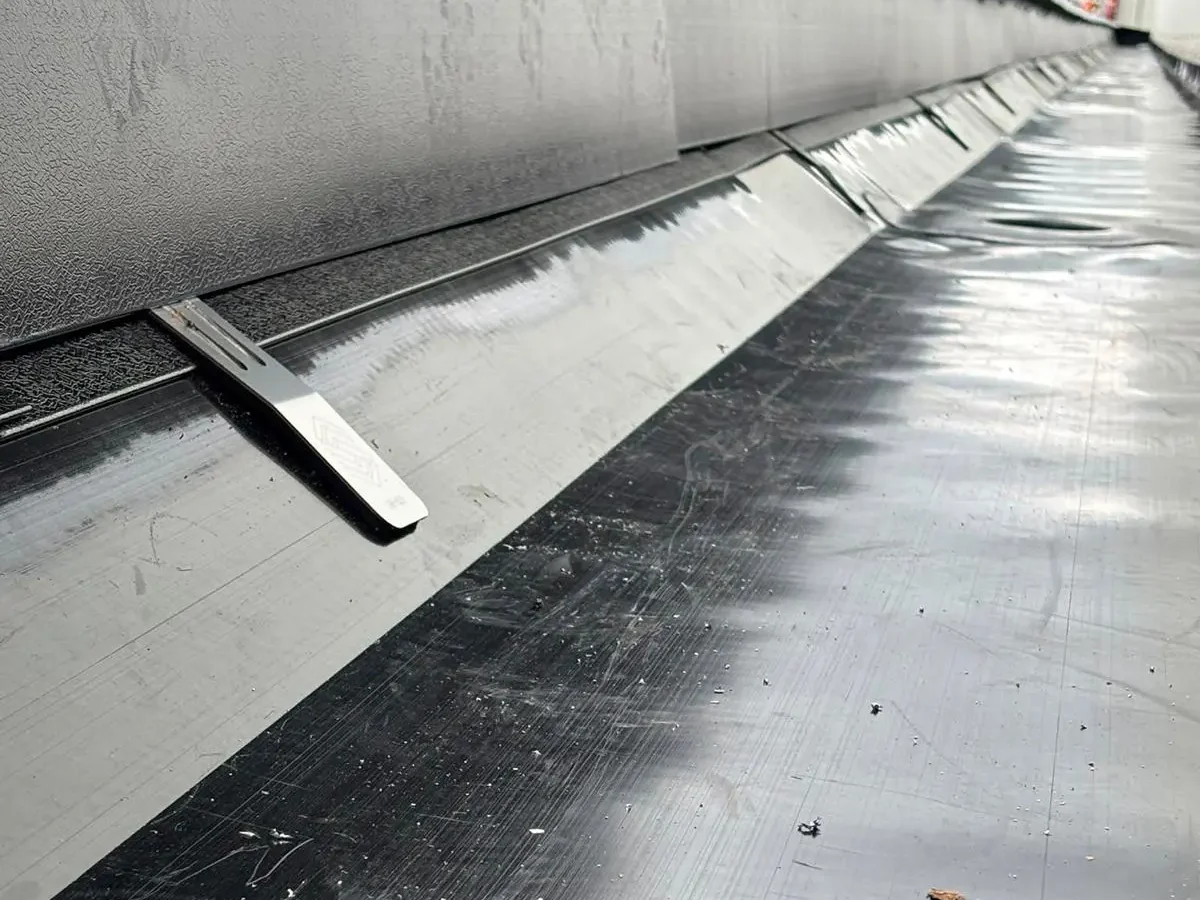
HD Sharman is a UK manufacturer specialising in gutter lining and refurbishment systems. Plygene is a reinforced membrane system that lines the interior of existing gutters with a durable, seamless, waterproof layer that seals cracks, joints, and corrosion points.

The result is a watertight gutter system that performs like new without the cost or disruption of full replacement.

The system is suitable for a wide range of gutter profiles, too, including:

  • Box gutters
  • Valley gutters
  • Parapet gutters
  • Half-round gutters
  • Boundary wall gutters.

This versatility makes it one of the most effective gutter refurbishment systems for commercial and industrial buildings in the UK.

Signs Your Commercial Gutters Need Attention

Gutter deterioration doesn’t happen overnight, so problems often go unnoticed until they cause visible internal damage. Common warning signs include:

  • Rust or corrosion along gutter surfaces or joints
  • Water stains on internal walls or ceilings below gutter lines
  • Standing water that doesn’t drain after rainfall
  • Cracked or crumbling sealant at joints and corners
  • Gutters pulling away from the roofline, and leaks during or after heavy rainfall.

A professional gutter survey will confirm whether Plygene lining is the right solution. In many cases, it is, and early action means lower costs and less disruption.

Plygene Lining vs Full Gutter Replacement

Full gutter replacement requires scaffolding or access platforms, extended project timelines, and significantly higher material and labour costs. Plygene lining rejuvenates the existing gutter from the inside, and it’s faster, less disruptive, and considerably more cost-effective.

For most those dealing with deteriorating but structurally sound gutters, Plygene lining delivers the same outcome as replacement at a fraction of the cost.

However, please note that full replacement remains the right choice if structural damage is severe or if the gutter profile itself needs changing.

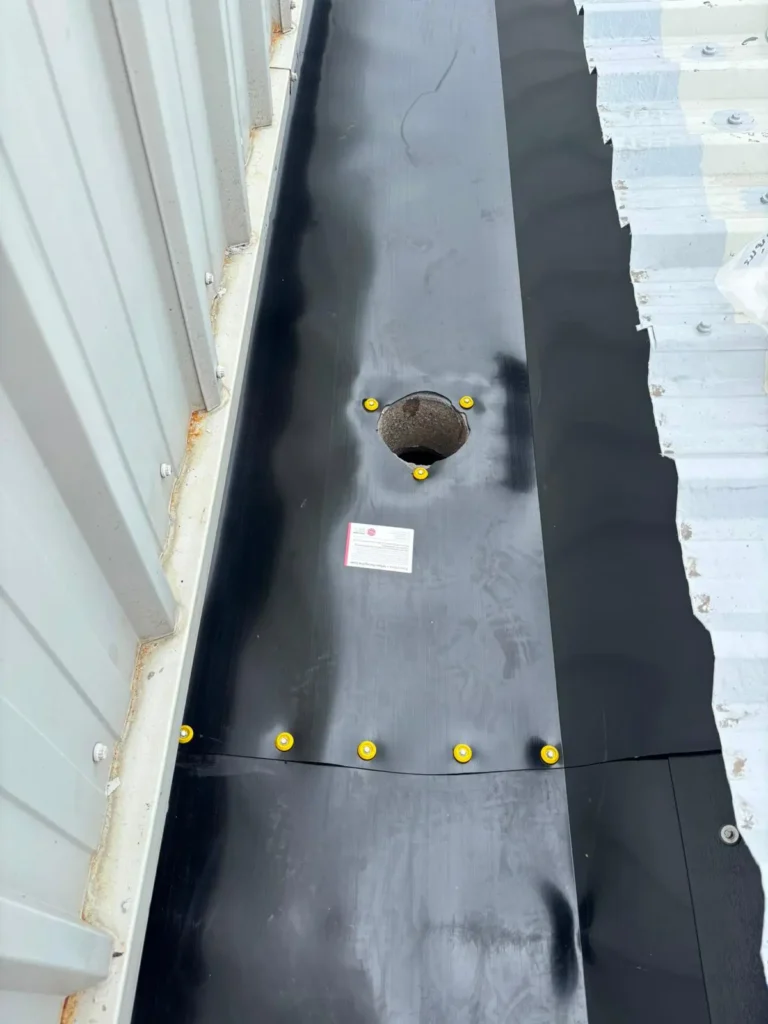
How Plygene Lining Prevents Leaks and Extends Gutter Lifespan

The primary cause of commercial gutter failure is joint and seam breakdown. Sealant between sections dries out, cracks, and fails, and water finds its way through the gaps. It then runs down walls, soaks insulation, and causes internal damage.

Plygene lining creates a single, continuous waterproof layer across the entire gutter interior, eliminating potential failure points. The membrane also protects the underlying substrate from further corrosion. Once sealed, the metal beneath stops deteriorating.

This is particularly important for steel and cast iron gutters, where corrosion spreads rapidly once the protective surface breaks down.

When installed correctly by an approved contractor, Plygene lining can extend the functional life of a commercial gutter system by 25 years or more. This approach works well alongside broader commercial waterproofing.

Cost Savings of Gutter Lining

Plygene lining consistently delivers savings of 50 to 70% compared to full replacement. On large industrial buildings with extensive gutter runs, the difference is massive.

Longer-term savings also include no repeated patch repairs or emergency callouts, reduced risk of internal water damage to stock and equipment, and avoided costs from business disruption.

At ACS Coatings, our reactive maintenance solutions are available for properties requiring urgent gutter attention before a planned program can begin.

The Importance of Using an Approved HD Sharman Plygene Installation Contractor

Plygene is a specialist system. Using an unapproved or inexperienced contractor risks installation failure and voids manufacturer warranties.

HD Sharman approves contractors based on demonstrated competence with the system. Approved contractors like ACS Coatings, therefore, have the training, experience, and access to HD Sharman materials required for a compliant, warranted installation.

ACS Coatings contractors also hold CHAS accreditation, Constructionline registration, CSCS certification, and IPAF qualification, giving clients confidence in both our health and safety standards and our technical capability.

Get a quote or find out more

How the Plygene Installation Process Works

Survey and assessment

We conduct a full survey of the existing gutter system, confirming the extent of deterioration and specifying the appropriate Plygene system.

Access and preparation

Safe access is set up next, in line with working-at-height regulations. Gutters are thoroughly cleaned, and any failed sealant is removed. The gutter surface is then prepared to ensure proper adhesion of the membrane.

Primer application

Next, a specialist primer is applied to improve adhesion and make sure the membrane bonds correctly to the substrate.

Membrane installation

The Plygene membrane is installed across the full gutter interior, taken up behind fascias and into outlets where required. Laps and joints are sealed to the manufacturer’s specification.

Detailing and inspection

Outlets, corners, and junctions receive additional detailing. The finished installation is inspected against HD Sharman’s quality standards before handover, with full documentation provided for your maintenance records.

Most commercial gutter lining projects can be completed while the building remains in use.

Long-Term Maintenance Benefits

Unlined commercial gutters with failing joints require regular inspection and repeated sealant repairs. The leaks keep returning because the root cause has never been properly addressed. Plygene lining eliminates this cycle, and maintenance is reduced to periodic inspection and outlet clearance, which is straightforward and inexpensive.

For properties where on-site repair and replacement work is also required, however, gutter lining can be coordinated with other planned maintenance to minimise access costs. And if roof maintenance is also needed, our roof coatings and cut-edge corrosion service can be delivered as part of the same program.

ACS Coatings are approved HD Sharman Plygene installation contractors working across commercial and industrial buildings throughout the UK. Our service includes full condition surveys, detailed project specifications, professional installation, and post-installation documentation. Every project is completed to HD Sharman’s standards and backed by manufacturer warranty support.

We also offer cladding sprayingcommercial waterproofingabrasive blasting and surface preparation, and more. This makes ACS Coatings a single point of contact for any and all commercial and industrial maintenance or refurbishment projects.

To discuss your gutter condition or arrange a survey, contact our team on 0800 987 5886 or request a quote online.
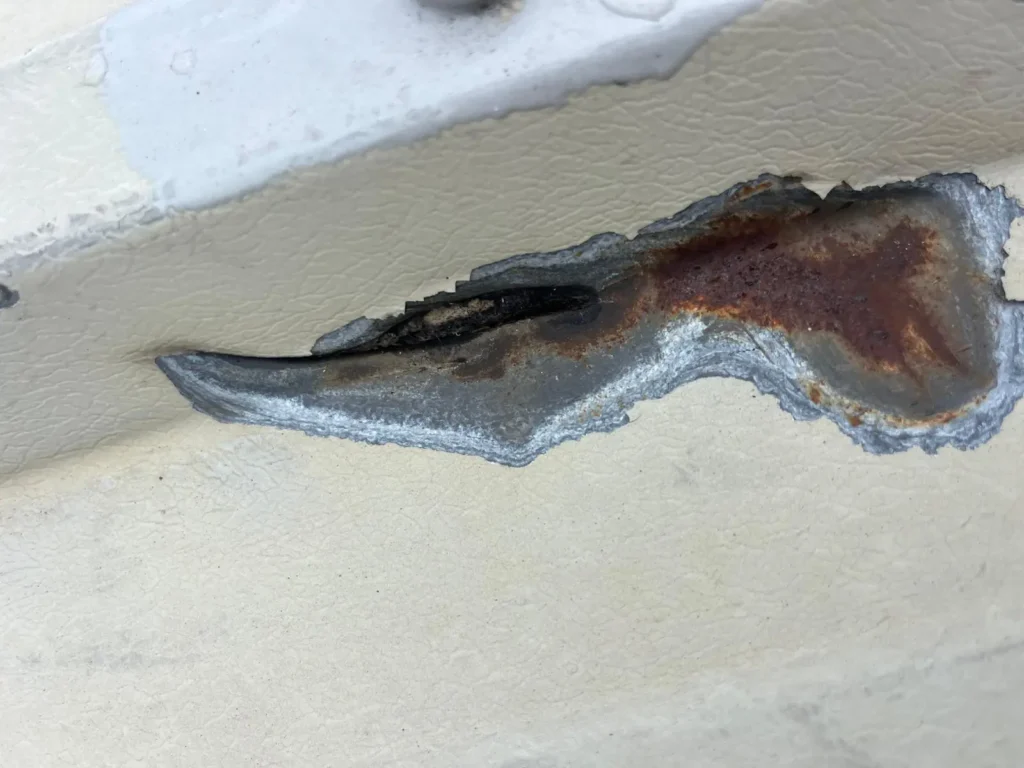
Warehouse Roof Defects: What to Do After Receiving a Survey Report

Receiving a roof defect report can feel overwhelming, particularly when it arrives alongside a dilapidations schedule, a lease renewal, or an acquisition. The list of defects can be long, the technical language unfamiliar, and the cost implications significant.

But a defect report is useful information. And acting on it early, with the right specialist contractor, means you can address problems in a planned and cost-controlled way rather than reacting to failures as they occur.

This guide covers the most common warehouse roof defects, what they mean, and how to efficiently move from a survey report to remedial works.

ACS-warehouse-roof-repairs featured image

Why Roof Defects Are Common in Key Lease Events

At lease end, roofs are among the highest-value items in dilapidations schedules. Tenants who have allowed defects to develop may face significant financial exposure. And landlords reletting the building may need remedial works before the property becomes marketable.

During pre-acquisition surveys, a warehouse roof in poor condition can affect valuation, create requirements for price reduction or retention, or generate conditions that must be satisfied before exchange.

As part of planned maintenance programs, periodic surveys establish baseline conditions, track deterioration over time, and allow work to be budgeted in advance rather than triggered by an emergency.

Common Warehouse Roof Defects and What They Mean

Warehouse roofs are predominantly metal sheet systems with skylights, gutters, flashings, and surface penetrations.

As a result, the defects identified in condition reports follow predictable patterns, such as:

Cut-Edge Corrosion

Cut-edge corrosion occurs along the cut edges of steel roof sheets, where the factory-applied protective coating doesn’t cover the raw steel exposed during manufacture.

Moisture then attacks this steel, forming rust that spreads beneath the coating and lifts it from the substrate. Left untreated, this progresses to full perforation and water ingress.

Treatment involves cleaning and preparing the affected edges and applying a specialist coating system. Our roof coatings and cut-edge corrosion treatment service addresses this directly with systems designed for the profile and condition of the affected sheets.

Failed Rooflights

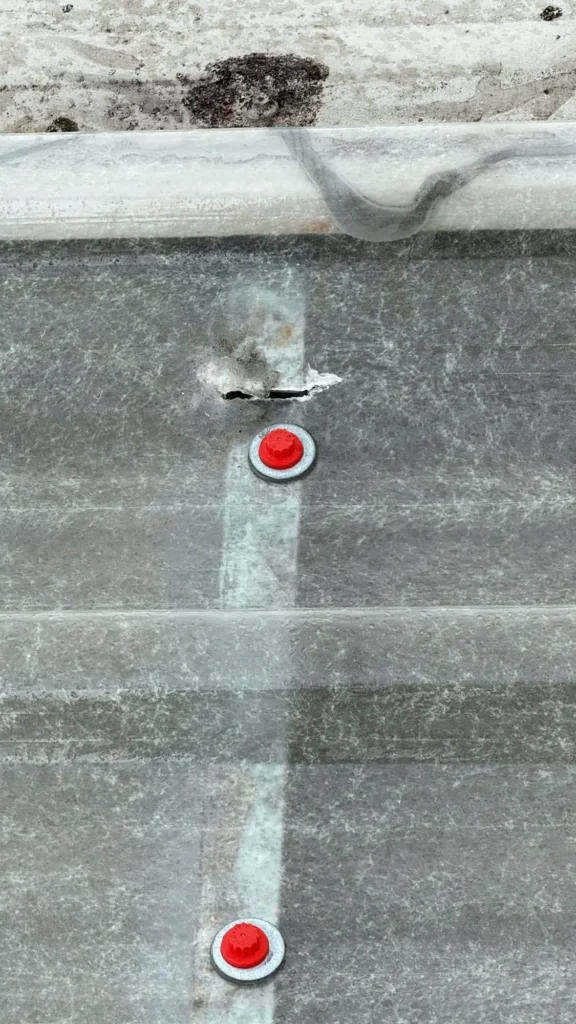
GRP or polycarbonate rooflights deteriorate with age and UV exposure. Beyond weather-related risk, delaminated rooflights are a potential fall-through hazard for anyone accessing the roof.

However, ACS Coatings’ skylight and gutter installation service covers rooflight replacement as part of broader refurbishment work.

Leaking Gutters

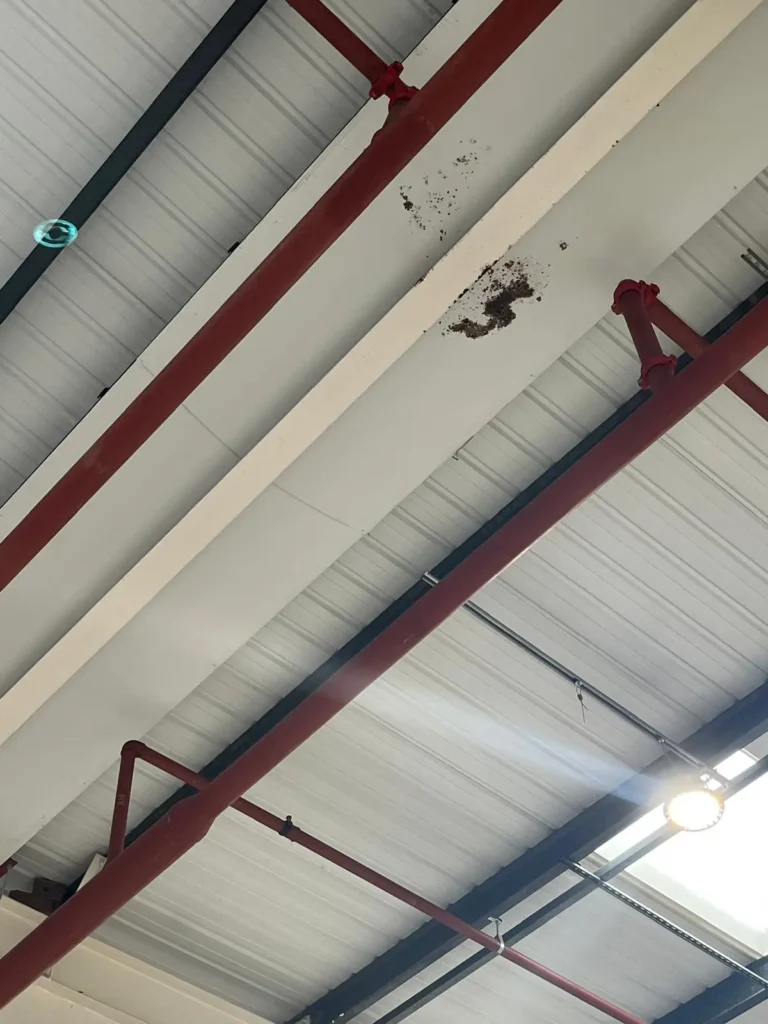
Box section steel gutters fail through corrosion, sealant breakdown, blockages, and thermal deformation. Specialist lining systems, such as HD Sharman Plygene, restore deteriorating gutters to full performance without full replacement.

If replacement is necessary, our skylight and gutter installation service provides a complete solution to this problem.

Damaged Flashings

Flashings seal junctions between roof sheets and adjacent elements. Heat cracks sealant over time, and flashings can lift, deform, or corrode. This can leave gaps through which water tracks behind the facade.

Correct identification of the failure mechanism and appropriate material selection are essential, and patch repairs with inappropriate products fail quickly.

Failed Roof Coatings

When previously applied protective coatings crack, peel, or delaminate, they lose waterproofing performance and can trap moisture. However, despite sounding serious, this alone is not a reason to replace the roof.

In most cases, the failed coating can be prepared, and a new system applied over the top. At ACS Coatings, our roof coatings service includes condition assessment and system specification as part of the process.

Loose Fixings

Fixings loosen through thermal cycling, corrosion, and washer wear. They allow water to enter through the fixing hole and reduce the wind uplift resistance of the sheet. Oversized replacement fixings with new neoprene washers restore weathertightness and uplift performance.

IF corrosion around fixing points is extensive, on-site repair and replacement of affected sections may be required.

Roof Penetrations and Leaks

Every penetration through a roof sheet is a potential leak point. Cracked collars, failed mastic seals at ventilation bases, and gaps are all common failure modes.

Our reactive maintenance solutions can address urgent penetration leaks while a planned program is developed.

What Warehouse Tenants Should Do After Receiving a Defect Report

Not all defects in a survey report are automatically your liability. So, your priority is establishing which defects you are responsible for under your lease. The scope of your repairing covenant, any schedule of condition, and when the defects developed also affect your exposure. So, take legal and surveying advice before committing to work.

Once liability is established, commission a specialist contractor to assess the roof and provide a quote. This gives you accurate figures for settlement negotiations and confirms whether the surveyor’s indicative costs are reasonable.

What Landlords Should Do After Receiving a Defect Report

The first question is whether remedial works are required before the building can be occupied or sold, or whether they can be managed as a known liability. Obtain a specialist contractor’s quotation to give you accurate cost information for financial planning.

Prioritise weather tightness and safety first, including failed rooflights, active leaks, and loose fixings. Then, plan longer-term works, such as coating renewal, as part of a structured maintenance program.

Our commercial waterproofing and roof coating services can be incorporated into a planned program that reduces future maintenance costs.

ACS Coatings works with property managers, landlords, tenants, surveyors, and facilities managers who need to translate a defect report into a practical remedial works program.

Our services include cut-edge corrosion treatmentrooflight and gutter replacement, flashing repairs, on-site sheet repair and replacement, roof coating systems, and reactive maintenance for urgent defects.

What’s more, we work nationwide and can mobilise quickly where timelines are tight. Every assessment also includes a clear written report, photographic records, and accurate budget costs you can use immediately for planning, negotiation, or procurement.

To arrange a specialist roof assessment, contact us on 0800 987 5886 or request a quote through our website.

Intumescent Coatings Contractor: Commercial Fire Protection

Structural steel is one of the most common materials in commercial and industrial construction. Why? Because it’s strong, versatile, and cost-effective. However, steel loses its load-bearing capacity rapidly when exposed to high temperatures, and without protection, this can lead to structural collapse before safe evacuation is possible.

Intumescent coatings are the primary form of passive fire protection for structural steelwork in the UK. And ACS Coatings are specialist intumescent coatings contractors with experience across commercial, industrial, and public sector buildings nationwide.

In this article, we’ll tell you everything you need to know about intumescent coatings, from what they are to how they protect steel, benefits for your premises, and more.

What Are Intumescent Coatings?

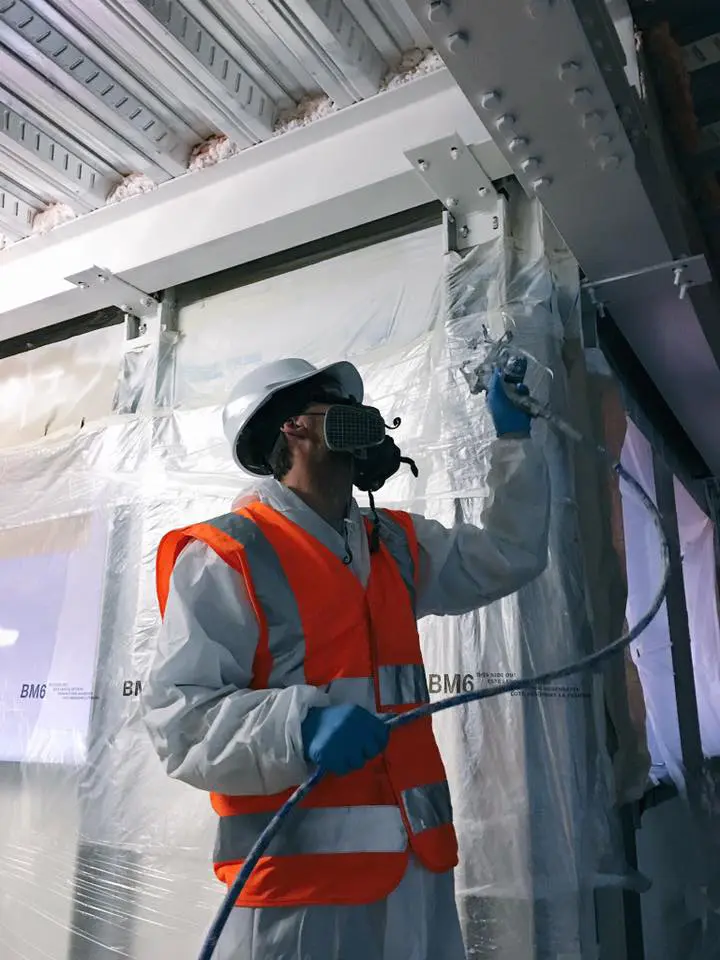
Intumescent coatings are fire-reactive protective coatings applied to structural steel and timber. Under normal conditions, they look and behave like conventional paint, but when exposed to heat, they expand significantly and form an insulating char layer on the surface.

This layer slows the transfer of heat to the steel beneath, keeping it below the critical temperature at which it loses structural integrity.

Unlike active systems such as sprinklers, passive fire protection, like intumescent coatings, requires no activation or intervention. Instead, it’s built into the building fabric and functions automatically in a fire.

How Intumescent Paint Protects Structural Steel

Steel begins to lose structural strength above 550 degrees Celsius. In an unprotected fire, steel can reach this temperature in minutes, causing structural members to deform and fail.

When heat reaches the coating, the intumescent system activates around 200 degrees Celsius. The coating expands to many times its original thickness, forming a char layer that insulates the steel and delays the critical temperature point.

And depending on the specification, intumescent coatings can provide 30, 60, 90, or 120 minutes of fire resistance.

The coating thickness required varies based on the section factor of the steel. Lighter sections need thicker coatings to achieve the same resistance period, for example. This is why specification and application by a competent contractor is a technical and safety requirement.

Fire Safety Regulations and Compliance

The key regulatory requirements for intumescent coatings in the UK are as follows.

The Building Regulations 2010 (Approved Document B) specifies minimum fire resistance periods for structural elements in commercial and industrial buildings. Intumescent coatings are an approved method of meeting these requirements.

The Regulatory Reform (Fire Safety) Order 2005 places a duty on the responsible person for a building to carry out and maintain a fire risk assessment. Where structural fire protection is a control measure, it must remain effective.

BS EN 13381-8 is the European test standard for intumescent coatings on structural steel. Products should be tested and certified to this standard.

The Building Safety Act 2022 has strengthened accountability for fire safety. It does this by placing greater responsibility on building owners and contractors to demonstrate compliance throughout a building’s lifecycle.

ACS Coatings provides full documentation on every project to support these compliance requirements.

Benefits for Commercial and Industrial Buildings

Aesthetics 

Intumescent coatings are available in a wide range of colours and finish levels, colour-matched to specification. Our commercial paint spraying service can incorporate intumescent systems as part of a broader coating program.

Thin film application

Modern thin film systems achieve up to 120 minutes of fire resistance with modest dry film thicknesses. So, this protects the visual profile of structural steelwork.

No ongoing activation

As a passive fire protection system, intumescent coating requires only periodic inspection to confirm it remains intact.

New build and refurbishment

Intumescent coatings can be applied to new steelwork off-site or to existing structural members on-site. This makes them suitable for construction and refurbishment projects.

Corrosion protection

Many systems incorporate corrosion-inhibiting primers, which provide additional protection in industrial environments. If surface preparation is required, abrasive blasting and sandblasting services prepare steel to the profiles required for intumescent application.

Applications on Structural Steelwork

Intumescent coatings are applied to structural steelwork across a wide range of building types.

These include:

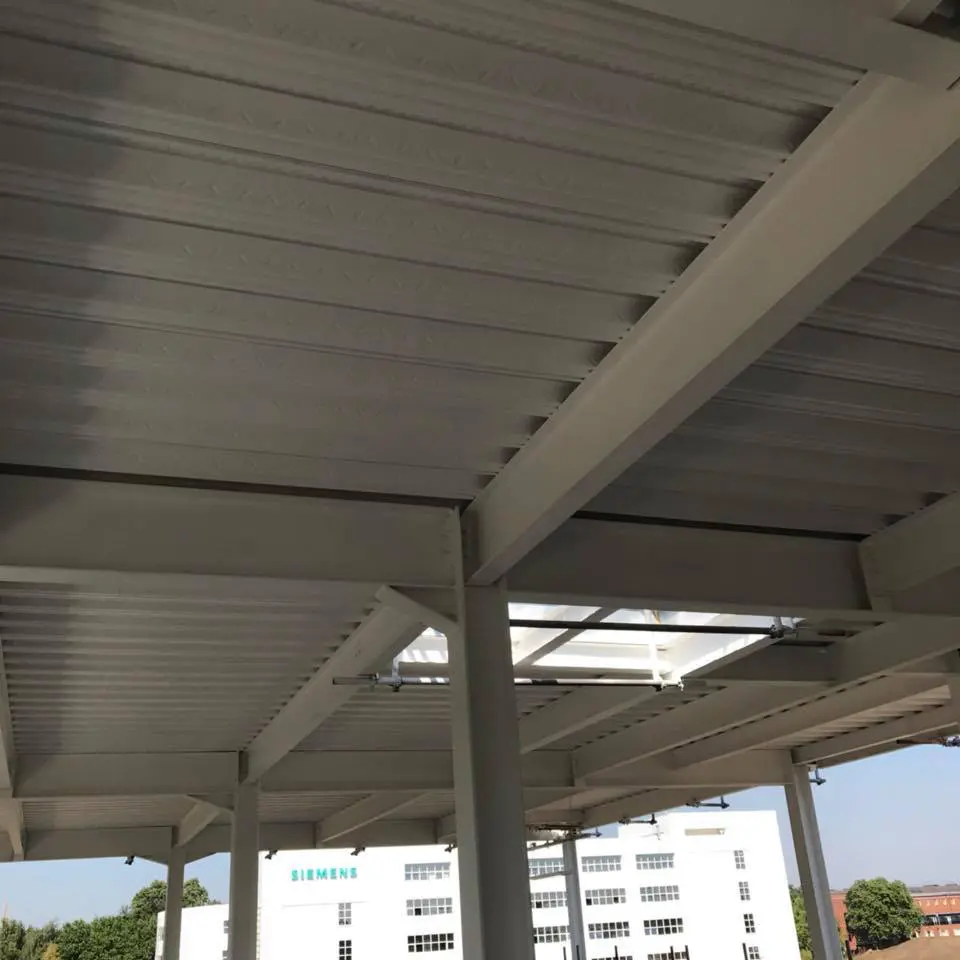
  • Steel columns and beams in warehouses, distribution centres, and commercial buildings
  • Portal frames in industrial and agricultural buildings
  • Mezzanine floors and platforms in warehouses and retail environments
  • Roof steelwork and purlins
  • Steel staircases and escape route structures
  • Exposed architectural steelwork in retail, leisure, and public buildings.

Projects range from straightforward applications in empty buildings to working around live operations, at height, and to tight programme constraints on active construction sites. At ACS Coatings, our team has the experience, accreditations, and access equipment to work safely across all of these environments.

Why Professional Application Matters

The fire resistance performance of an intumescent system depends on the specification, proper surface preparation, accurate application, and dry film thickness measurement. A system that looks okay but has been incorrectly applied will not deliver the specified fire resistance in a real fire event.

Specification requires knowledge of steel section sizes and section factors, too, the fire resistance period required for each structural element, and the dry film thickness required for each member based on certified product data. Surface preparation must also meet manufacturer requirements.

At ACS Coatings, our abrasive blasting and sandblasting service delivers the surface profiles required.

ACS Coatings operatives also hold CSCS cards and IPAF licences. In addition, every project is managed with full risk assessments, COSHH statements, and method statements. Dry film thickness is also verified and recorded throughout, providing the compliance evidence required by the responsible person for the building.

Working Alongside Other Services

Intumescent coating work is often coordinated with broader refurbishment programs. Our cladding sprayingon-site repair and replacementroof coatings and cut-edge corrosion, and commercial waterproofing services, for example, can all be delivered alongside intumescent coating programs.

This reduces time on site and access costs for facilities managers and main contractors.

With ACS Coatings, every project begins with a free site survey. Within which, we assess the steelwork, confirm specification requirements, and provide a clear fixed-price quotation with full compliance documentation.

We hold CHAS accreditation, Constructionline registration, CSCS certification, and IPAF qualification, and work across new build and refurbishment projects in commercial, industrial, and public sector environments throughout the UK.

To arrange a free site survey, contact our team on 0800 987 5886 or request a quote through our website.

Shopfront Frame Repair and Respraying: Restore Your Business Frontage

Your shopfront is the first thing customers see. So, it sets the tone for your business, communicates your brand, and influences whether people walk through the door. When frames are faded, scratched, or corroded, that first impression works against you.

However, full shopfront replacement is expensive, disruptive, and in most cases, unnecessary. Professional repair and respraying, on the other hand, restores your frontage to a standard that’s visually indistinguishable from new. Best of all, it does so at a fraction of the cost and without the downtime of a full installation.

ACS Coatings provides specialist shopfront respraying and refurbishment for retail units, shopping centres, restaurants, offices, and commercial premises across the UK. In this article, we’ll explore the most common issues affecting shop fronts, respraying vs replacement, and more.

ACS-shopfront-cladding-repair1 copy

Common Issues Affecting Aluminium and Metal Shopfronts

Faded paint

UV degradation dulls powder-coated and painted aluminium frames over time, creating an obvious mismatch with brand specification. Respraying restores the original colour or introduces a new one entirely.

Scratches and impact damage

Delivery vehicles, trolleys, and general footfall create surface marks and deeper impact damage. Surface scratches can be prepared and resprayed directly.

Deeper deformation requires localised repair before finishing, but this is almost always achievable without replacing the full frame section.

Corrosion and oxidation

Aluminium develops white chalky oxidation as its finish breaks down. Steel frames rust where coatings have failed or been mechanically damaged. Both accelerate once started, particularly in coastal or urban environments.

Early intervention prevents surface corrosion from becoming structural. Where abrasive preparation is required, our abrasive blasting and sandblasting service prepares frames to the profile required for specialist coating systems.

Peeling or failed coatings

Failed coatings cannot be painted over without addressing the underlying adhesion problem. The failing material must be removed and the surface correctly prepared before a new system is applied.

General wear and weathering

The cumulative effect of minor marks, colour fade, and sealant deterioration creates an impression of neglect even where the structure remains sound. Professional refurbishment addresses this comprehensively.

Repair and Respraying Versus Full Replacement

Professional respraying delivers comparable visual results at significantly lower cost and with far less disruption than replacement.

Full replacement involves fabrication, removal, disposal, installation, and making good of the surrounding building fabric. Respraying works with the existing frame, eliminating fabrication and installation costs entirely. For most commercial premises, the savings are in the range of 60 to 80 percent compared to replacement.

Replacement also requires partial or full closure of the shopfront during installation. Respraying, however, can typically be completed without closing, with masking and access managed around trading hours. The building fabric is left undisturbed, too, and no structural work to surrounding walls, sills, or reveals is required.

For shopping centres and retail parks with multiple units, a planned respraying program delivers consistent visual standards at a fraction of unit-by-unit replacement cost.

How Professional Shopfront Repairs Work

When frames have sustained impact damage, structural corrosion, or deformation beyond surface treatment, repair work is carried out before respraying. Respraying over unresolved structural issues or inadequately prepared surfaces leads to early coating failure.

So, getting the preparation right the first time costs less than putting it right afterwards.

That’s why our on-site repair and replacement service covers dent repair and profile straightening, replacement of individual damaged sections, corrosion treatment, and reinstatement of failed sealants and fixings.

The Respraying Process

Assessment

We inspect the frame to establish the scope of preparation and repair work and specify the correct coating system for the substrate and environment.

Masking and protection

Glazing, signage, and adjacent building fabric are fully masked before any work starts.

Surface preparation

Surface preparation is the single most important factor in how long the finished coating lasts.

Within our service, the existing coating is cleaned, degreased, and abraded or stripped. Corrosion is treated, and any filler work is completed at this stage.

Primer application

A specialist primer appropriate to the substrate is then applied. Aluminium typically requires an etch primer, while steel requires a corrosion-inhibiting primer before finishing coats.

Topcoat application

Our commercial paint spraying service applies the topcoat using specialist spray equipment, delivering a smooth, even factory-quality finish across the full frame profile.

Inspection and handover

The finished work is inspected against specification before masking is removed, with full documentation provided for maintenance records.

Colour Changes and Rebranding

Respraying is also an opportunity to change colour entirely, bringing the frontage in line with a new branding or updated corporate colours. This makes it an attractive option for businesses rebranding, new tenants removing a previous occupant’s colours, landlords bringing units to a neutral standard between tenancies, and shopping centre managers standardising fascia colours.

Colour matching to RAL, BS, or brand-specific references is standard when you choose ACS Coatings.

Minimising Disruption During Works

Works are scheduled around trading hours when required, and masking protects glazing and signage without creating an impression of closure. For multi-unit premises, a detailed works program is agreed in advance.

Our reactive maintenance solutions service is also available for urgent requirements if impact damage needs addressing quickly.

Long-Term Protection

Specialist coating systems provide UV resistance to prevent colour fading, flexibility to accommodate thermal movement without cracking, and adhesion properties designed specifically for metal substrates. General-purpose decorative paints cannot match this performance.

Our commercial waterproofing expertise informs how we approach sealing at frame junctions and sills, so the full shopfront assembly performs as well as the coating itself.

ACS Coatings provides specialist shopfront frame repair and respraying for retail and commercial premises across the UK. Our service covers condition assessment, on-site frame repair and preparation, specialist primer and topcoat application, colour matching to any RAL, BS, or brand reference, and full project documentation.

We also hold CHAS accreditation, Constructionline registration, CSCS certification, and IPAF qualification. On top of this, every project is managed with full risk assessments and method statements.

To discuss your shopfront or arrange an assessment, contact our team on 0800 987 5886 or request a quote online.
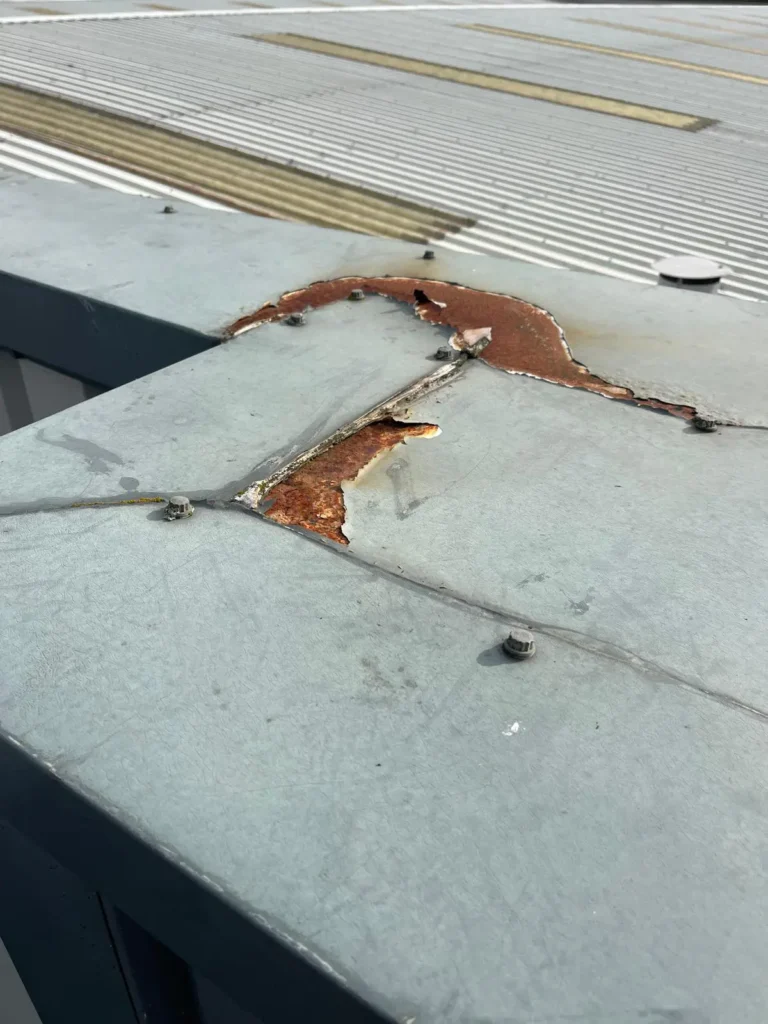
PMMA Waterproofing Systems for Balconies, Walkways & Flat Roofs

PMMA waterproofing delivers seamless, long-lasting protection for balconies, walkways, access platforms, and flat roofs. This advanced liquid waterproofing system cures rapidly, creates watertight surfaces, and provides decades of reliable performance with minimal maintenance.

For commercial buildings, occupied residential properties, and high-traffic areas, PMMA roofing systems offer unmatched installation speed and durability. The technology transforms how we protect horizontal surfaces that need both waterproofing and regular pedestrian access.

This article will explain everything you need to know about the technology, and whether or not it’s right for you.

What Is PMMA Waterproofing?

PMMA stands for polymethyl methacrylate, a resin waterproofing system that cures through a chemical reaction rather than evaporation. This means that PMMA systems can be applied and fully cured within hours, even in cold or damp conditions.

The system consists of a liquid resin mixed with a catalyst on-site. Once applied, the chemical reaction begins immediately, transforming the liquid into a solid, flexible membrane that bonds permanently to the substrate.

Unlike traditional waterproofing materials that need days to cure, PMMA flat roof systems can often be walked on within one to two hours. This rapid curing makes PMMA ideal for buildings where extended access restrictions would cause problems.

How PMMA Systems Work

The application process creates a completely seamless waterproof surface with no joints, seams, or vulnerable points where water can penetrate.

This is how:

  • Surface preparation ensures the substrate is clean and sound
  • Primer application bonds the PMMA system to the substrate
  • The base coat provides the main waterproofing layer
  • Topcoat delivers UV protection
  • Aggregate broadcast (optional) creates a slip-resistant finish.

The entire system typically measures just 2-3mm thick, which means minimal weight addition and no significant build-up on existing surfaces. This thin profile also makes PMMA perfect for refurbishment projects where height restrictions matter.

Where to Use PMMA Waterproofing

Balconies and Terraces

Balcony waterproofing requires systems that handle foot traffic, furniture, and constant exposure to weather. PMMA balcony coating provides all of this and cures fast enough to minimise disruption.

For apartment buildings and hotels, the rapid installation means balconies can be waterproofed and returned to use within a single day. This dramatically reduces inconvenience compared to traditional systems that need days to cure.

The seamless finish also looks professional and clean. PMMA creates smooth surfaces in various colours, so the waterproofing enhances appearance rather than compromising aesthetics.

Walkways and Access Platforms

Walkway waterproofing on roofs and between buildings needs to combine waterproofing with safe pedestrian access. PMMA systems achieve both through durable, slip-resistant surfaces that protect the substrate below.

Access platforms for plant equipment, maintenance routes, and service areas can also benefit from PMMA’s rapid curing. Engineers and maintenance staff can return to normal access within hours rather than being restricted for days.

Podium Decks

Podium deck waterproofing presents unique challenges. These structures often sit above occupied spaces, which means leaks cause immediate problems. The loading from landscaping, paving, and public use also demands robust waterproofing.

PMMA systems handle these demands through superior adhesion and flexibility. The membrane accommodates structural movement, resists root penetration from planting, and maintains integrity under heavy loading.

Flat Roofs

Commercial flat roof waterproofing with PMMA offers an alternative to traditional felt or single-ply membranes. The liquid application provides perfect detailing around penetrations, outlets, and upstands that can cause problems with sheet materials.

Flat roof coating systems using PMMA also eliminate the weak points that sheet materials create at overlaps and seams. Every square metre receives the same continuous protection with no vulnerable joints.

5 Benefits of PMMA Roofing Systems

Rapid Curing Installation

Traditional waterproofing systems need favourable weather and long curing periods. PMMA cures in one to two hours regardless of temperature or humidity. This means work can progress in conditions that would stop other systems.

As a result, contractors can complete work faster, reducing labour costs and site time. Buildings return to normal use quickly, too, minimising disruption. In addition, weather windows are less important.

Seamless Waterproof Protection

The liquid application creates truly seamless systems with no joints or overlaps. Water has no weak points to exploit, which means superior long-term reliability compared to sheet materials.

Complex details around outlets, upstands, and penetrations get the same continuous protection as flat areas. The resin flows and bonds to create perfect waterproofing at every detail.

Long Lifespan

PMMA systems typically provide 25-30 years of protection when properly installed and maintained. The UV-stable topcoat resists degradation from sunlight, whilst the flexible base coat accommodates building movement without cracking.

This longevity makes PMMA cost-effective despite higher initial costs than some alternatives. The lifecycle cost often proves lower than cheaper systems that need replacement after 10-15 years.

Minimal Disruption

For occupied buildings, disruption during waterproofing work creates real problems. Residents can’t use balconies, businesses lose access to roof areas, and extended restrictions frustrate everyone.

PMMA’s rapid curing minimises these issues. A balcony can be waterproofed in the morning and used again that afternoon. This speed is invaluable for hotels, apartment buildings, offices, and any property where occupant access is important.

Temperature Tolerance

PMMA systems can be applied in temperatures as low as -5°C, which extends the working season considerably. Traditional systems often require temperatures above 5°C or 10°C and dry conditions, which limits when work can take place.

Installation Considerations

Professional installation means that PMMA waterproofing systems deliver their full performance potential. The rapid curing demands experienced application teams who understand mixing ratios, working times, and proper surface preparation.

Surface preparation is also critical despite PMMA’s excellent adhesion. Substrates must be structurally sound, clean, and properly prepared. The mixing and application process also requires precision. PMMA resin and catalyst must be mixed in exact proportions, then applied quickly before the working time expires. This demands skilled operatives and proper equipment.

Whether you need a balcony waterproofing system for a residential building, walkway waterproofing for a commercial property, or flat roof coating systems for an industrial facility, PMMA offers proven performance with minimal disruption.

At ACS Coatings, we’re specialist PMMA roofing contractors with extensive experience across balconies, walkways, podium decks, and flat roofs. As such, we’ve installed PMMA systems on hundreds of commercial and residential buildings throughout the UK.

Our team therefore understands which applications suit PMMA technology and when alternative systems might be more appropriate. We also provide honest assessments, detailed specifications, and professional installation that delivers long-term performance.

Contact ACS Coatings on 0800 987 5886 to discuss your PMMA waterproofing requirements, or request a free assessment and specification for your project.

Roof Waterproofing vs Roof Replacement: Which Makes Financial Sense?

When your commercial roof starts leaking, the assumption is that you need a replacement. However, roof waterproofing systems offer a cost-effective alternative that delivers long-term protection without the expense and disruption.

Understanding the difference between roof waterproofing vs replacement helps you protect your building and keep costs down. This article will help you make the right decision depending on your roof’s condition, your budget, and longevity.

What Is Roof Waterproofing?

Roof waterproofing is the application of specialist waterproof coatings to your existing roof surface. They restore protection without removing the current roof structure.

Modern liquid waterproofing systems bond directly to existing substrates, whether that’s felt, metal, concrete, or other roofing materials. The coating fills cracks, seals joints, and creates a seamless barrier that prevents water ingress.

Installation typically takes days rather than weeks, and the existing roof remains in place. This means minimal disruption to your business. You also avoid the noise, dust, and access restrictions that come with complete roof removal and replacement.

Types of Waterproof Roof Coating Systems

Several coating technologies are available for commercial roof restoration, such as:

  • Liquid applied membranes that cure to form flexible, seamless protection
  • Acrylic roof coatings offering UV resistance and reflective properties
  • Polyurethane systems, which provide impact resistance and durability
  • Silicone coatings that offer excellent weather resistance
  • PMMA waterproofing systems for rapid curing and superior performance

Each system has specific applications and performance benefits. Professional assessment determines which suits your roof, budget, and requirements.

What Is Roof Replacement?

Roof replacement is the complete removal of the existing roof before installing a new roof system.

The process is invasive, expensive, and time-consuming. Contractors strip away all existing materials, dispose of them, and build the new roof from scratch. This takes weeks and requires significant site access, scaffolding, and weather-dependent working windows.

Full replacement is sometimes necessary when structural damage exists or when the roof deck itself has deteriorated beyond repair. However, many roofs that appear to need replacement can be restored through professional waterproofing.

Comparing Costs: Roof Coating vs Replacement

The financial difference between roof waterproofing and replacement is substantial. Roof coating systems typically cost 40-60% less than complete replacement, which represents significant savings for any commercial property.

Beyond the direct material and labour costs, roof coating vs replacement also differs significantly in indirect expenses. Replacement generates substantial waste disposal costs, requires more extensive scaffolding and access equipment, and takes longer to complete.

All of these factors add to the total project cost.

Disruption Costs

A major hidden cost of roof replacement comes from business disruption. Stripping a roof exposes the building interior to weather risks, creates noise that affects operations, and may require temporary relocation of stock or equipment.

Waterproofing systems cause minimal disruption. The building remains watertight throughout the work, noise levels are manageable, and operations continue normally. For occupied commercial buildings, this difference can be worth thousands of pounds in avoided downtime.

Performance and Longevity

A common misconception is that roof coating systems are temporary fixes, whilst replacement is permanent. In reality, modern waterproof roof coating systems offer impressive longevity when properly installed.

In real terms, high-quality coating systems usually provide 15-25 years of protection. Some advanced systems, particularly PMMA-based products, can last even longer with minimal maintenance. This rivals many traditional roof replacement systems.

Replacement systems also aren’t truly permanent. A new felt roof might last 20-25 years before requiring attention. Metal roofing can last longer, but still needs maintenance and eventually replacement. So, the performance gap between coating and replacement is far smaller than many assume.

Another major difference is that coating systems can be reapplied when needed, often over the existing coating. This creates a continuous protection strategy that extends roof life indefinitely through periodic recoating rather than complete replacements.

When Roof Waterproofing Works Best

Commercial roof restoration through waterproofing suits most situations where the roof structure remains sound. If your roof leaks but the substrate isn’t rotten or structurally compromised, coating systems deliver excellent results.

Ideal candidates for waterproofing include:

  • Metal roofs with surface corrosion or failed seams
  • Felt roofs with minor damage or age-related deterioration
  • Concrete roofs requiring updated waterproofing
  • Buildings where replacement would cause unacceptable disruption
  • Properties with budget constraints but urgent waterproofing needs
  • Roofs approaching end-of-life but with sound structure.

The assessment process involves inspecting the roof substrate, identifying problem areas, and determining whether the deck can support a coating system.

When Replacement Is Necessary

Some situations genuinely require complete roof replacement rather than waterproofing restoration, such as:

  • Severe structural damage to the roof
  • Widespread rot affecting the integrity of the roof
  • Buildings requiring thermal performance upgrades that need new insulation
  • Roofs with multiple failed waterproofing attempts, where the substrate is compromised
  • Properties undergoing major refurbishment where roof replacement fits the wider project

However, these situations are less common than property managers often assume. Many roofs that appear to need replacement can actually be restored through professional waterproofing systems at a fraction of the cost.

Environmental Considerations

Roof waterproofing offers significant environmental benefits compared to replacement. The existing roof materials remain in place rather than going to landfill, which dramatically reduces waste.

A typical commercial roof replacement generates several tonnes of waste material. Waterproofing produces minimal waste, mostly limited to cleaning materials and empty coating containers.

The reduced carbon footprint also comes from avoiding the manufacturing and transportation of new roofing materials. Coating systems need far less raw material than complete roof assemblies, which translates to lower carbon.

For businesses with sustainability commitments or environmental reporting requirements, roof restoration through waterproofing supports these objectives and delivers real building protection.

The right waterproof roof coating systems can extend your roof’s life by decades whilst costing a fraction of replacement expenses. This makes commercial roof restoration one of the most cost-effective building maintenance investments available.

Whether you choose waterproofing or replacement, professional installation means you get the performance and longevity the system can deliver.

The team at ACS Coatings specialises in commercial roof coatings and restoration across industrial, retail, and commercial properties. We assess your specific requirements, recommend appropriate systems, and install them to the manufacturer’s specifications.

Contact ACS Coatings on 0800 987 5886 to discuss your roof waterproofing requirements, or request a free assessment to determine whether waterproofing or replacement suits your building.

What Is the Best Waterproofing System for Commercial Roofs?

There isn’t a “best” waterproofing system for every commercial roof. The right choice depends on your roof type, drainage conditions, budget, and how the building gets used. Because what works for a warehouse with great drainage might fail spectacularly on a flat roof with standing water issues.

That said, most commercial roof waterproofing comes down to five main systems. Each has specific strengths and limitations that make it better suited to particular situations. And we’ll cover each of them in this article, starting with liquid polyurethane systems.

Liquid Polyurethane

Liquid roofing systems using polyurethane have become the go-to choice for many commercial applications, and there are good reasons why.

Firstly, they create a seamless, flexible membrane that bonds directly to the existing roof substrate. The liquid nature also means they conform to any shape, handle complex details, and eliminate the weak points you get with sheet systems.

Modern polyurethane coatings cure quickly, too, some in just a few hours, which minimises disruption and weather-related delays.

The flexibility is what makes polyurethane particularly effective for industrial roof waterproofing. Commercial buildings expand and contract with temperature changes, and polyurethane accommodates this without cracking. The material also handles ponding water better than many alternatives, but it’s not as tolerant as silicone in some standing water situations.

Polyurethane systems typically last 20-25 years when properly installed. They’re suitable for virtually any substrate, including metal, concrete, asphalt, and existing membranes. The material also offers excellent UV resistance and maintains its protective properties even in harsh conditions.

The main drawback, however, is cost. Polyurethane systems sit at the higher end of the price range, but the longevity and performance often justify the investment for buildings where roof failure would be very costly or disruptive.

GRP Fibreglass

GRP (glass reinforced plastic) creates a tough, rigid, waterproof layer that’s been used on commercial roofs for decades. The system uses polyester resin reinforced with fibreglass matting to form a strong, durable surface.

The installation process involves laying fibreglass matting onto a prepared substrate, then saturating it with catalysed resin. Once cured, a coloured topcoat provides UV protection and the finished appearance. The result is a hard-wearing surface that resists impact damage and can handle foot traffic well.

GRP works best on smaller commercial roofs of under 100m², if a rigid waterproofing solution is appropriate. It’s particularly suited to areas with access requirements like roof terraces, walkways, and plant access areas. The system requires a quality plywood or OSB substrate for optimal performance, but it can be applied to concrete with proper primers.

The limitations of GRP are mostly around substrate requirements and application conditions. It needs specific substrates, must be applied in dry conditions, and requires careful timing with the catalysed resin. These factors make it less versatile than liquid systems for large-scale commercial roof waterproofing projects.

Acrylic Coating Systems

Acrylic coatings are water-based systems that offer excellent UV protection and reflectivity at the cheapest price point. They’re widely used for restoring aged metal roofs and work on various substrates, such as modified bitumen, single-ply membranes, and built-up roofs.

The major advantage of acrylic systems is solar reflectivity. White acrylic coatings can reduce roof surface temperatures significantly, which lowers cooling costs and extends the underlying roof’s lifespan. They’re easy to apply, clean up with water, and can be recoated without extensive surface preparation, too.

However, acrylic also has limitations. Standing water is its primary weakness, and prolonged exposure to ponding water causes acrylic coatings to soften and eventually fail. This makes them unsuitable for roofs with drainage issues or areas where water regularly collects.

Acrylic coatings also require longer cure times than others in this list and are sensitive to rain during application. You need 4-8 hours of dry weather after application, too, which can be challenging during wet periods. Cold weather below 10°C can also affect adhesion and cure times.

For commercial buildings with properly draining roofs and moderate environmental exposure, acrylic systems provide good value. They typically last 10-15 years and represent the most budget-friendly option for waterproof roof coating systems.

Bitumen-Based Systems

Modern bitumen coatings have come a long way in the last few decades. Today’s rubber-modified bitumen emulsions provide cost-effective, high-performance waterproofing with lifespans of 20 years or more.

These systems work particularly well on built-up roofing and modified bitumen substrates where they bond effectively to the existing asphalt surfaces. The rubber modification gives them flexibility to handle thermal movement, too, which isn’t the case with older bitumen products.

Bitumen coatings are among the most economical options available and are straightforward to apply. They’re particularly suitable for industrial buildings where appearance isn’t the primary concern and where the traditional black finish is acceptable.

The main limitation is aesthetics, and bitumen systems typically come in black or aluminium-pigmented finishes. These don’t offer the solar reflectivity of lighter-coloured systems. They also have lower elasticity than polyurethane, which can be a consideration for roofs experiencing significant movement.

PMMA

PMMA (polymethyl methacrylate) is at the premium end of liquid waterproofing systems. The material cures incredibly quickly, often within 30-40 minutes, which makes it ideal for projects with fast turnaround times.

The quicker cure time means PMMA can be applied in almost any weather conditions, including rain. This flexibility eliminates weather-related delays, and PMMA also offers exceptional durability across a wide temperature range.

These systems are particularly valuable for occupied buildings where disruption must be minimised. The rapid cure means areas can be made watertight quickly, and the building can often remain operational during works.

The trade-off is cost, and PMMA systems are among the most expensive waterproofing options available, due to their quality.

Choosing the Right Commercial Roof Waterproof System

Several factors determine which waterproofing system works best for your commercial roof. Here are some of the key factors to help you make a decision

Drainage

Roofs that drain within 48 hours can use any system, but roofs with ponding water need polyurethane or silicone systems that tolerate standing water. Roofs with chronic drainage problems should address the drainage first before any waterproofing work.

Substrate type

Metal roofs work well with acrylic or polyurethane, whereas concrete roofs suit polyurethane or PMMA. Existing membrane roofs can typically accept any liquid system with proper surface preparation.

Usage

Roofs with regular foot traffic benefit from GRP or polyurethane systems that handle impact and abrasion. Roofs with minimal access, however, can use any appropriate system based on other factors.

Budget Considerations

Acrylic systems are the cheapest but may not last as long. Polyurethane costs more but delivers better long-term value through extended lifespan and lower maintenance. The total cost of ownership often matters more than the initial price.

At ACS Coatings, we assess each roof individually before recommending a waterproofing system. We also consider drainage, substrate condition, access requirements, budget, and operational constraints to identify what will work for your building.

Our team works with all major waterproofing systems, too, and has no bias towards any particular product. We recommend what’s appropriate based on your roof’s condition and your requirements, not what’s easiest to sell.

Contact ACS Coatings on 0800 987 5886 to discuss your commercial roof waterproofing requirements, or request a free quote and roof assessment.

Single Skin vs Twin Skin Rooflights: Which Is Best?

Natural light transforms industrial and commercial buildings. It reduces electricity costs, improves working conditions, and creates better environments for staff. However, the rooflights you choose can affect energy performance, maintenance costs, and more.

The choice usually comes down to single skin vs twin skin rooflights. Both bring daylight into buildings, but they deliver vastly different thermal performance, durability, and cost profiles.

Understanding these differences helps you make informed decisions that balance initial investment against long-term operational costs. And that’s exactly what we’ll help you do in this article.

What Are Single Skin Rooflights?

Single skin rooflights consist of one layer of translucent material, typically GRP (glass reinforced plastic), fixed directly to the roof structure. The simplicity of this design makes it the most economical daylighting option.

A single sheet of profiled GRP sits within the roof cladding, matching the profile of the surrounding metal sheets. The material allows natural light to pass through whilst providing basic weather protection. Light transmission levels typically reach 80-85% for standard-weight sheets, which delivers excellent natural lighting.

Single skin rooflight installation is also very straightforward. The GRP sheets are fixed using the same methods as standard roof sheets, with proper sealing and fixing details guaranteeing weather-tightness.

This simplicity means installation costs remain low and the work can be carried out quickly.

Where Single Skin Rooflights Work

Unheated buildings are ideal candidates for single skin rooflights. Agricultural buildings, storage sheds, and covered outdoor areas don’t require thermal efficiency, so the simple construction provides all the performance needed at minimum cost.

Buildings where separate internal insulation will be installed can also use single skin systems. If you’re lining the entire building internally anyway, the thermal performance of the rooflights becomes less important because the insulation addresses heat loss.

Budget-constrained projects benefit from single skin systems, too, if initial cost is the primary concern and thermal performance is secondary.

The Limitations of Single Skin Rooflights

Thermal performance is the single skin rooflight’s major weakness. They result in significant heat loss in winter and heat gain in summer, which translates to higher energy costs in heated or cooled buildings.

Condensation also becomes an issue in the UK. The cold internal surface forms condensation in heated buildings, particularly during cold weather. This condensation drips onto whatever’s below, which creates problems in many commercial and industrial buildings.

Building regulations now require specific thermal performance levels for most commercial buildings, too. Single skin rooflights often don’t meet these requirements without additional measures.

Which is why many choose twin skin rooflights instead.

What Are Twin Skin Rooflights?

Twin skin rooflights use two layers of material with an insulating layer between them. This creates what’s essentially a mini-roof system within the rooflight, which improves thermal performance and maintains natural light.

Construction and Components

Twin skin rooflights are typically made up of three main elements:

  1. Outer GRP sheet providing weather protection and UV resistance
  2. Insulating core (either foam insulation or an air gap with thermal breaks)
  3. Inner GRP liner for a nice internal appearance and vapour control.

These components are either factory-assembled or site-assembled as part of the rooflight installation process. Factory-assembled units offer better quality control, whilst site-assembled systems provide more flexibility for complex roofs.

Performance Benefits of Twin Skin Rooflights

The insulation layer transforms thermal performance. Twin skin rooflights are around 80-85% better than single skin panels for insulation, which means dramatically reduced heat loss and lower energy costs.

The warmer internal surface also prevents condensation formation. Even in heated buildings during cold weather, the inner liner stays warm enough that moisture doesn’t condense on it. This eliminates the dripping condensation problem of single skin rooflights.

Building regulations compliance also becomes straightforward with twin skin systems. Modern twin skin rooflights easily meet regulatory thermal performance requirements.

Acoustic performance improves with twin skin construction, too. The additional mass and insulating core both contribute to sound reduction. This is important for buildings near noisy environments or where internal noise control is important.

Comparing Costs of Single Skin and Twin Skin Rooflights

The initial cost difference between single skin and twin skin rooflights is substantial. Twin skin systems typically cost 2-3 times more than single skin equivalents, which makes them seem expensive.

However, lifecycle cost analysis tells a different story. In heated or cooled buildings, the energy savings from twin skin systems rapidly offset the higher initial investment. A building with 10% of its roof area as rooflights can see heating cost reductions of 15-25% by specifying twin skin instead of single skin.

For a typical warehouse or industrial unit, this translates to energy savings of several thousand pounds annually. And over a 20-25-year rooflight lifespan, the savings far exceed the initial cost premium of twin skin systems.

Maintenance costs also favour twin skin rooflights. The robust construction and condensation-free operation mean fewer problems over time.

Choosing the Right Industrial Rooflight Systems

The decision between single skin vs twin skin rooflights ultimately depends on how the building gets used and what performance you actually need.

Choose Single Skin For

  • Unheated agricultural buildings where thermal performance doesn’t matter, and basic daylight is the only requirement.
  • Temporary or budget structures to minimise initial cost.
  • Buildings with comprehensive internal insulation where a complete insulated lining addresses thermal performance across the building envelope.

Choose Twin Skin For

  • Heated or cooled buildings where energy costs matter and thermal efficiency create measurable financial benefits.
  • Occupied workspaces where condensation would create problems or where comfortable working conditions are important.
  • Buildings requiring building regulations compliance for new construction or major refurbishment projects.
  • Long-term property investments where lifecycle costs matter more than initial expenditure.

Installation and Maintenance

Both rooflight types require professional installation to ensure weather-tightness, proper sealing, and structural integrity. Single skin installation is more straightforward, but it does require basic roofing skills and standard fixing methods.

Twin skin installation demands more care and expertise. Factory-assembled units need careful handling to avoid damage. Site-assembled systems require precise coordination of multiple components and proper sealing between layers.

Both single and twin skin GRP rooflights can last 25-30 years when properly specified and installed. Single skin rooflights need regular cleaning to maintain light transmission. Twin skin rooflights also benefit from cleaning, though the superior construction means they often maintain performance better over time.

Whether you choose single or twin skin rooflights, professional installation means you get the performance and longevity these systems can deliver. Poor installation compromises even the best products, creating leaks, condensation problems, and premature failure.

At ACS Coatings, our team has extensive experience with both single and twin skin skylight installation across commercial buildings in the UK. We understand the technical requirements of each and make sure installations meet building regulations and manufacturer specifications.

We also assess your specific requirements, recommend appropriate systems, and install them to manufacturer specifications and building regulations.

Contact ACS Coatings on 0800 987 5886 to discuss your rooflight requirements, or request a free quote and site assessment.

What Is a Gutter Liner System?

A gutter liner system creates a waterproof barrier inside commercial gutters, acting as an alternative to fully replacing them. They’re essentially a “gutter within a gutter”, designed to prevent leaks and extend the system’s life by up to 25 years.

For commercial and industrial building owners dealing with leaking gutters, it’s a straightforward question: do you spend tens of thousands on full replacement, or do you restore what’s already there for a fraction of the cost?

This article will explain everything you need to know about gutter liner systems, from what they are to how long they can last, and more.

How Gutter Liner Systems Work

Industrial gutter liners add a membrane that covers the entire internal surface of the gutter. Unlike traditional repairs that patch individual leaks, liner systems treat the whole gutter as one integrated unit.

There are two main types available for commercial properties:

  1. Liquid-applied systems, which use specialist coatings like polyurethane.
  2. EPDM rubber, which bonds permanently to the gutter surface.

Both are flexible, seamless, and accommodate temperature changes without cracking. The liquid nature means they conform to any gutter shape, too.

Pre-formed thermoplastic liners, on the other hand, are custom-made to fit your specific gutter profile. Systems like Plygene are installed into the existing gutter and heat-sealed at joints to create a watertight finish. They’re particularly good for box gutter lining systems with complex shapes and longer distances.

Both eliminate the weak points that cause traditional gutters to fail. The result is no more leaking joints, no more corroded seams, and no more repeated patch repairs that only last a few years.

What Causes Gutters to Fail

Commercial gutters fail for various reasons, including:

Joint Failures

Traditional gutters have multiple seams where sections connect, and these joints inevitably deteriorate. Sealants dry out, fixings corrode, and thermal movement causes gaps. A liner eliminates these weak points entirely by creating one continuous membrane.

Corrosion

This affects metal cutters, especially at cut edges or wherever standing water accumulates. Even galvanised steel eventually rusts, particularly in coastal or industrial areas. Box gutter lining protects the original substrate while providing a corrosion-resistant surface for drainage.

Substrate Degradation

This happens gradually in all gutter materials. Metal thins and weakens, concrete cracks, and GRP delaminates with age.

Rather than replacing the entire structure, a properly installed gutter liner restores waterproofing while the original gutter stays in place as structural support.

How Long Do Gutter Liners Last?

Professional gutter lining systems should last 20-25 years when properly installed. This is significantly longer than traditional gutter repairs, which can need fixing every 3-5 years as sealants fail.

However, the longevity of gutter linings depends on a few factors, such as:

  • Quality materials like premium polyurethane and thermoplastic will outlast cheaper alternatives.
  • Proper surface preparation is critical to long-term performance.
  • Gutters in colder or wetter environments may have a slightly reduced lifespan. However, no matter where it’s located, a properly installed gutter refurbishment system will significantly outlast patch repairs.

Annual inspections and regular maintenance also extend the lifespan of gutter linings. So, keep outlets clear, remove debris, and you’ll get every year of performance these systems are designed to deliver.

Cost Comparison: Lining vs Replacement

Commercial gutter lining typically costs 40-60% less than full gutter replacement, and that’s before you factor in cash lost as a result of disruptions to your operations.

Full replacement on a commercial building means removing the existing system, disposing of old materials, supplying and installing new gutters, and often disturbing roof flashings and cladding. This makes it a lot more expensive.

The same gutter run can be lined much cheaper and can be completed in days rather than weeks. The existing gutter stays in place, too, which means minimal scaffolding and no building closure.

When Replacement Makes More Sense

If your gutter has severe structural damage, extensive corrosion, or the substrate can’t support a lining system, replacement is necessary.

A professional survey identifies which option suits your situation. Honest contractors, like those you’ll find at ACS Coatings, will recommend replacement when the condition warrants it. However, for most commercial gutters showing signs of leaking or deterioration, lining provides excellent value and can be very effective.

The Gutter Lining Installation Process

Professional gutter lining installation follows a systematic process that determines long-term performance.

Preparation

It starts with a thorough cleaning of the existing gutter. All debris, dirt, and loose material must go. For metal gutters with corrosion, this might include grit blasting to remove rust and create a sound substrate. This preparation stage is critical, and liner systems only perform as well as the surface they’re bonded to.

Repairs

Next, any structural damage or holes are then repaired. For liquid systems, these repairs become part of the continuous membrane. And for pre-formed liners, repairs ensure the gutter can support the new system.

Primer Application

Liquid systems then receive primer application to promote adhesion, particularly on non-porous substrates like metal or GRP. The primer choice depends on both the substrate and the lining system being used.

Installation

The liner itself is then installed according to system requirements. Liquid systems go on in multiple coats to build up the required thickness, typically 2-4mm for polyurethane.

Pre-formed liners are positioned carefully and heat-sealed at joints. All outlets, corners, and details receive particular attention.

Final Inspection

Final inspection verifies the installation meets the required specification.

Which Gutters Can Be Lined?

Virtually any commercial gutter type can be lined, which makes these systems highly versatile.

Box gutters on industrial buildings, for example, are particularly well-suited to lining. These rectangular gutters set within the roof structure are difficult and expensive to replace but straightforward to line. The lining eliminates recurring leaks without disturbing the roof structure.

Valley gutters between pitched roof slopes can also be lined, and they present access challenges that make replacement impractical. Lining can be completed using rope access or mobile platforms, avoiding complex scaffolding.

Parapet gutters behind parapet walls similarly benefit from lining rather than replacement. The process avoids disturbing coping stones and flashing details that would need extensive work during replacement.

All in all, the substrate material doesn’t matter much. Liquid lining systems bond to steel, aluminium, GRP, lead, asphalt, and concrete. This means mixed-material gutter systems can be lined in a single operation.

Why Professional Installation Matters

Gutter liner systems require specialist knowledge to install correctly. Surface preparation determines long-term performance, and inadequate cleaning or missed corrosion prevents proper adhesion. Professional installers understand substrate requirements and have the equipment to prepare surfaces properly.

Material selection and application also require experience and relevant expertise. Different gutter conditions need different liner systems, and application techniques vary between products. What’s more, thickness, cure times, environmental conditions, and treatment all affect the final result.

At ACS Coatings, we provide professional gutter lining services for commercial and industrial buildings across the UK. Our experienced team assesses each gutter system individually, recommending the most appropriate solution based on condition, budget, and performance requirements.

We also work with leading liner system manufacturers and follow strict installation procedures. All our installations come with comprehensive guarantees, too, giving you confidence in the work completed.

If your commercial building is experiencing gutter leaks, don’t assume replacement is your only option. Gutter liner systems offer an effective, cost-efficient alternative that’s completed in days rather than weeks.

Our team can survey your gutters, provide honest recommendations on whether lining or replacement is appropriate, and deliver fixed-price quotations. We also complete most projects with minimal disruption, working around your schedule where required.

Contact ACS Coatings on 0800 987 5886 to discuss your gutter requirements, or request a free quote for professional gutter lining services.

What Is the Best Flooring for Warehouses?

Warehouse flooring takes a battering. Forklifts, chemical spills, footfall, and heavy loads all put stress on concrete floors. The right flooring improves safety and reduces long-term maintenance costs. The wrong choice leads to premature failure, safety hazards, and expensive repairs that disrupt operations.

Most warehouse flooring systems fall into four main categories, and each offers specific benefits depending on your operation’s demands. In some cases, combining systems delivers the best results.

This article will explore them all, explain how they work, where they should be used, and more.

Epoxy Floor Coatings

Epoxy has been the workhorse of industrial flooring for decades, and there are plenty of reasons why it remains the most widely used warehouse flooring system.

How Epoxy Systems Work

Epoxy floor coatings create a hard, durable surface by bonding a resin and hardener mixture directly to prepared concrete.

Once cured, the material forms a seamless, non-porous layer that’s much stronger than bare concrete. For example, modern epoxy systems can withstand the weight of forklifts, heavy machinery, and constant traffic without cracking or deteriorating.

The application process involves thorough surface preparation, usually diamond grinding or shot blasting, followed by primer application if needed, and then the epoxy coating itself.

Depending on the system, this might involve a single coat or multiple layers built up to achieve the required thickness and performance characteristics.

Why Warehouses Choose Epoxy

Chemical resistance is one of epoxy’s strongest attributes. The coating resists prolonged exposure to oils, solvents, and many industrial chemicals, which makes it great for warehouses handling automotive products, chemicals, or places where spills are common.

Durability under load is another key benefit. A properly installed epoxy system handles the point loads from pallet racking, the rolling loads from forklifts, and the impact from dropped pallets. This resilience means the floor maintains integrity even in the most demanding warehouse environments.

Maintenance simplicity also matters for busy operations. The seamless, non-porous surface is easy to clean and doesn’t hold dust or dirt. This is important for warehouses storing food products or pharmaceuticals, where hygiene standards must be maintained.

Limitations of Epoxy Flooring

Whilst epoxy offers excellent performance, it does have limitations.

UV sensitivity is a big one and means the coating can yellow or chalk when exposed to direct sunlight. So, it’s less suitable for outdoor areas or warehouses with significant natural light.

Additionally, some epoxy formulations become slippery when wet, though this can be addressed with anti-slip additives during application.

Curing time can also impact warehouse operations. Epoxy typically requires 24-72 hours before it’s fully cured and ready for traffic, which makes careful planning essential for busy warehouses.

Polyurethane Flooring Systems

Polyurethane systems offer greater flexibility than epoxy, which means better performance in certain warehouse applications.

Advantages of Polyurethane Flooring

The flexibility of polyurethane allows it to absorb impacts better than rigid epoxy coatings. This makes it fantastic for areas where dropped loads are common.

Polyurethane also maintains its properties across a wider temperature range, which is valuable for warehouses with temperature fluctuations or cold storage areas.

Scratch resistance is another benefit of Polyurethane. Because, while epoxy can show scuff marks and scratches over time, polyurethane’s elasticity helps it resist surface damage. This keeps the floor looking better for longer in busier areas where aesthetics matter.

UV stability also gives polyurethane an edge over standard epoxy. The coating doesn’t yellow or degrade under sunlight exposure, so it works well for warehouses with skylights or outdoor loading areas where commercial floor coatings need to withstand natural light.

Where Polyurethane Works Best

Cold storage facilities benefit from polyurethane systems more than most. This is mostly because the material’s flexibility prevents cracking in sub-zero conditions where rigid coatings might fail.

Similarly, warehouses in older buildings see better performance from polyurethane’s ability to accommodate more movement.

The trade-off comes with the initial cost. Polyurethane typically costs more than epoxy, but the extended lifespan and reduced maintenance can justify the investment.

Concrete Sealers

For warehouses on tighter budgets or if full coating systems aren’t necessary, concrete sealers provide a cost-effective middle ground.

Types of Concrete Sealers

Penetrating sealers

These work by soaking into the concrete’s pore structure and chemically reacting to harden the surface. They don’t create a visible film but strengthen the concrete from inside, which improves abrasion resistance and reduces dusting.

They’re particularly suitable for warehouses where a natural concrete appearance is acceptable.

Topical sealers

These create a protective film on the concrete surface. Acrylic-based sealers offer good protection at an economical cost, but epoxy or polyurethane-based sealers provide higher performance.

Topical sealers also prevent concrete dusting, improve cleanability, and offer some chemical resistance, but not as much as full coating systems.

When Topical Sealers Make Sense

New warehouses with high-quality concrete might only need sealing rather than full coating. If the substrate is sound and traffic demands are moderate, a quality sealer can deliver years of service at a much lower cost than epoxy or polyurethane systems.

Older warehouses where full coating isn’t feasible can also benefit from sealing. The process requires less surface preparation than coatings, can often be applied whilst the warehouse remains operational, and provides immediate improvement in dust control and cleanability.

However, sealers do require more frequent reapplication than coatings. Depending on traffic levels, you might need to reseal every 2-5 years, whereas properly installed epoxy or polyurethane systems can last 10-20 years.

Anti-Slip Coatings

Safety in warehouses isn’t optional, and anti-slip coatings address one of the most common hazards: slippery floors.

How Anti-Slip Systems Work

Anti-slip coatings typically use aggregate materials in the coating during application. These aggregates create a textured surface that provides traction even when wet.

The aggregate size can be varied depending on the level of slip resistance required, such as finer aggregates for pedestrian areas, coarser grades for forklift routes or wet areas.

Some systems use broadcast aggregates that are scattered onto wet coating and then sealed with a topcoat. Others mix the aggregate directly into the coating material. Both approaches work, but broadcast systems generally provide better slip resistance.

Where Slip Resistance Matters Most

Loading bays where weather brings water into the building need enhanced slip resistance. These transition zones between indoor and outdoor spaces see the worst conditions for traction, so anti-slip commercial flooring is essential for worker safety.

Areas around cleaning stations or anywhere liquids are handled also benefit from slip-resistant surfaces. Even a small amount of liquid on a smooth floor creates a hazard, whilst properly textured surfaces maintain traction.

Production areas with frequent pedestrian traffic should consider anti-slip coatings, too. The relatively small cost increase compared to standard coatings delivers significant safety benefits that reduce accident rates and the associated costs.

Combining Systems for Optimal Performance

Many successful warehouse flooring projects don’t rely on a single system. Instead, they match different solutions to different zones.

For example, you might use:

  • Heavy-duty epoxy in main storage areas where chemical resistance and durability under racking loads matter most
  • Polyurethane with anti-slip aggregate in loading bays, where flexibility, UV resistance, and slip resistance are all required
  • Sealed concrete in low-traffic ancillary areas where full coating isn’t cost-effective
  • Anti-slip epoxy in pedestrian walkways where safety takes priority

This zoned approach optimises performance whilst managing costs effectively. You invest in high-performance systems where they’re genuinely needed, whilst using more economical solutions in areas with lower demands.

The Importance of Surface Preparation

Regardless of which flooring system you choose, proper surface preparation is crucial for long-term performance.

Mechanical preparation methods like diamond grinding, shot blasting, or scarifying remove surface contaminants, open the concrete’s pore structure, and create the profile needed for proper coating adhesion. However, they must match both the substrate condition and the coating system requirements.

Our team at ACS Coatings understands that cutting corners on preparation creates problems that emerge months or years later. That’s why we invest time in proper substrate assessment and preparation, because we know it’s the foundation that determines whether a floor coating lasts 2 years or 20.

Warehouse flooring represents a significant investment, so getting it right the first time is crucial. At ACS Coatings, we assess each warehouse individually, considering conditions, operational requirements, and budget constraints before recommending flooring systems.

Our experienced team has also completed commercial resin flooring installations across warehouses, distribution centres, and industrial facilities throughout the UK. We therefore understand the demands these environments place on flooring systems and only recommend solutions that work for the long term.


Contact ACS Coatings on 0800 987 5886 to discuss your warehouse flooring requirements, or request a free quote and site assessment.